HIV Cases Rise Among Latinos in Chicago as Community Groups Face Funding Crisis
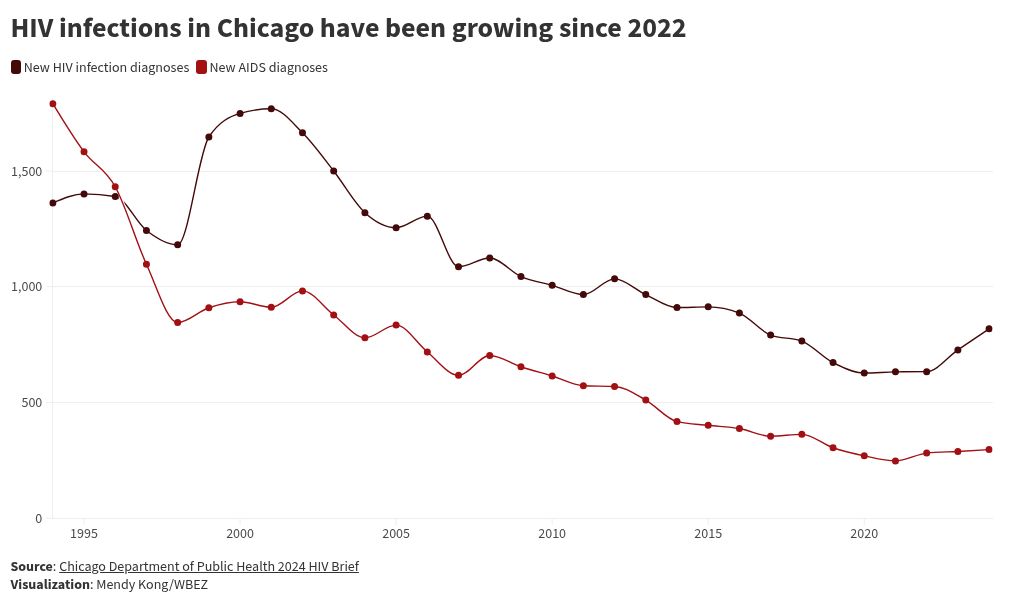
Chicago, Illinois, United States of America — HIV infections in Chicago are on the rise for the first time in nearly two decades, with a 29% increase in new cases between 2022 and 2024, according to local health data. Public health leaders and community organizations raise concerns that stalled funding and growing political backlash threaten prevention efforts, particularly in the city’s Latino communities.
Recent figures show 818 new HIV cases were reported in 2024, with almost half identified among Latinos. This marks the first time Latinos have comprised the majority of new HIV diagnoses in the city, John Peller, executive director of the AIDS Foundation of Chicago, confirmed. The number of Latinos living with HIV or AIDS in Chicago grew by nearly 17% from 2020 to 2024, while rates decreased among the city’s white and Black populations during the same period. Public health officials have also noted a rise in late diagnoses, with half of those cases among Latinos.
Health experts attribute the surge in part to recent migration patterns and disruptions in care stemming from the COVID-19 pandemic. More than 51,000 immigrants—many identifying as Latino—arrived in Chicago between 2022 and 2024. Officials believe newly arrived individuals, some of whom received HIV testing for the first time, contributed to the increased case numbers. Pandemic-related barriers, such as delayed medical care and shifts in health insurance coverage, are also cited as contributing factors.
Community organizations like the Puerto Rican Cultural Center in Humboldt Park warn that critical outreach and prevention programs are at risk due to reduced funding. According to leadership at the center, staff may soon face layoffs unless additional resources are secured. The organization historically conducts HIV testing and outreach in local venues, but outreach is threatened by expiring grants and denied municipal funding. In March, community groups publicly appealed for emergency state funding to preserve care and medication access.
The Chicago Department of Public Health confirmed it denied three grant applications from the center but will provide limited funding for mental health and emergency housing programs. State and local advocacy groups continue to push for legislative solutions. Meanwhile, public health officials stress the importance of culturally tailored prevention strategies and urge continued support for underserved communities.
As the city faces complex challenges—including increased need, escalating treatment costs, and uncertain federal support—efforts to prevent HIV among Chicago’s most vulnerable remain in jeopardy. Funding decisions for major prevention and outreach programs are still unresolved.
📰 Related Stories
- Chicago Debuts First LaSalle Street Office-to-Housing Conversion at Bellwether as City Expands Divvy Bike-Share Network Chicago • Sep 30, 2026
- Chicago Advances Historic $5.7 Billion CTA Red Line Extension as Walsh-VINCI Joint Venture Drills Foundations for Four Far South Side Stations Chicago • Sep 30, 2026
- Chicago Introduces 12-Month Data Center Moratorium Ordinance as CTA Reports 27.9% Drop in Transit Crime Chicago • Sep 30, 2026
- Chicago Transit Authority Transitions to Reconfigured Regional Board Under NITA Act as City Manages FY 2026 Fiscal Operations Chicago • Sep 26, 2026