Report Highlights High Levels of Air Pollution Impacting Chicago Area Children
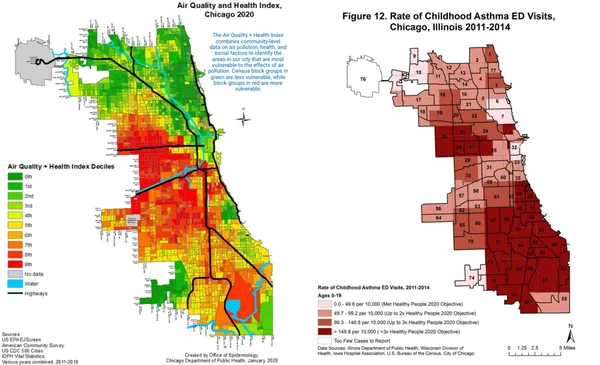
More than two million children across Illinois are exposed to unhealthy air quality, according to a new annual assessment released Wednesday by the American Lung Association. The report, timed for Earth Day, singles out the Chicago-Naperville metropolitan area as one of the nation's most polluted regions for ozone levels, ranking it 15th worst in the United States.
The "State of the Air" report found that 2.2 million Illinois children are breathing air considered unsafe, with the Chicago metropolitan region receiving an F grade for ozone pollution. The analysis also indicates that nearly half of U.S. children—about 33.5 million people under 18—live in areas where at least one measure of air pollution fails to meet health-based standards. Across all age groups, the number rises to 152 million Americans living in similarly affected areas.
While there were modest gains on particle pollution, researchers noted that ozone-related air quality deteriorated. The report warns that these conditions continue to drive major health concerns: Children in affected neighborhoods face increased risks of asthma attacks and chronic respiratory illnesses, while individuals working outdoors are more likely to experience related health problems.
Kristina Hamilton, advocacy director for the American Lung Association, emphasized the urgent need to improve Illinois’ air. "Clean air is essential to the health and well-being of families across Illinois. Children deserve to breathe air that won’t make them sick," she said in a statement.
Recent extreme air quality events have underscored the issue. On July 31, Chicago briefly held the world’s worst air quality ranking, according to Swiss monitoring firm IQ Air, following a surge in smoke from Canadian wildfires. Looking at annual trends, the Chicago-Naperville region tallied 18 days of unhealthy air quality in 2025—three days fewer than the previous year, according to the Lung Association.
The report criticizes the impact of federal environmental rule rollbacks in recent years and urges local and state officials to strengthen measures against pollution. Proposals now before the Chicago City Council, including the Hazel M. Johnson Cumulative Impacts Ordinance, seek to address the unequal pollution burden in the city’s hardest-hit neighborhoods. The Lung Association is also calling for state legislation to reduce warehouse-related emissions and to support zero-emission vehicle infrastructure.
As of the report's release, advocacy groups continue to press for policy changes, while officials are reviewing measures to mitigate ongoing air quality challenges.
📰 Related Stories
- Chicago Debuts First LaSalle Street Office-to-Housing Conversion at Bellwether as City Expands Divvy Bike-Share Network Chicago • Sep 30, 2026
- Chicago Advances Historic $5.7 Billion CTA Red Line Extension as Walsh-VINCI Joint Venture Drills Foundations for Four Far South Side Stations Chicago • Sep 30, 2026
- Chicago Introduces 12-Month Data Center Moratorium Ordinance as CTA Reports 27.9% Drop in Transit Crime Chicago • Sep 30, 2026
- Jacksonville Council Passes $2 Billion Budget Restoring $4.9M Housing Trust Fund as JTA Restructures Transit Debt Jacksonville • Sep 30, 2026