Mayor Michelle Wu Declares Snow Emergency and Parking Ban in Boston
Snow Emergency Begins Sunday Afternoon in Boston
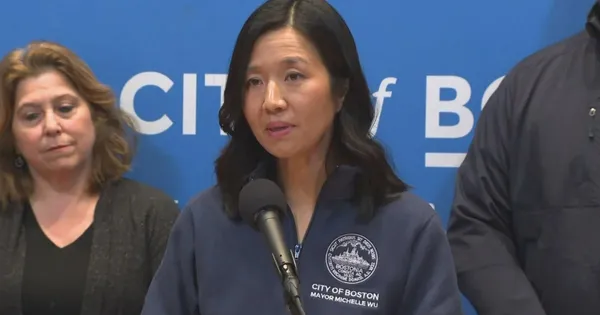
On Sunday, February 22, 2026, in Boston, Mayor Michelle Wu declared a snow emergency ahead of a forecasted winter storm. The declaration specifies that a snow emergency and associated parking ban take effect at 2:00 p.m. that afternoon. Once this snow emergency is in effect, vehicles parked on major roads and main arteries will be towed.
The City of Boston announced that all Boston Public Schools and central offices will be closed on Monday, February 23, 2026. All Boston Public Schools extracurricular activities, sports, and programs scheduled for Sunday night and Monday are canceled. Boston City Hall and other municipal buildings, including Boston Public Library branches and Boston Centers for Youth & Families, will also be closed on Monday, February 23, 2026. During this time, online City services will remain available.
Parking Restrictions and Towing During the Emergency
Beginning at 2:00 p.m. on Sunday, February 22, 2026, parking is prohibited on posted snow emergency arteries in Boston. Vehicles parked on these streets will be towed to enable snow clearing operations. During the snow emergency, parking is also prohibited in Boston Public Library and Boston Public Schools parking lots, and vehicles in those lots may be towed.
Boston residents with a resident sticker can access free and discounted parking at participating garages. Parking at these garages begins at 12:00 p.m. on the day of the emergency. Discounted parking starts two hours before the declared snow emergency and ends two hours after the emergency is lifted.
Changes to City Services and Street Operations
Curbside trash and recycling collection is canceled citywide on Monday, and will operate on a one-day delayed schedule for all neighborhoods. Food waste collection will also be delayed by one day in all neighborhoods during the week. Bulk item, mattress, and textile collections are canceled. Residents who were scheduled for Monday collection will receive instructions by email or phone on how to reschedule.
Nighttime street sweeping on main roads, arteries, and commercial roads in Boston is canceled until further notice. The City will provide updates when nighttime street sweeping is scheduled to resume.
Public Works and Emergency Management Preparations
The Boston Public Works Department will have equipment in place to treat City roads prior to the start of snowfall. At the height of the storm, the department will have over 900 pieces of equipment on City streets. After the storm, Public Works will conduct snow removal operations, including the use of snow removal units, bobcats, and skid steers to open crosswalks on main thoroughfares.
Public Works has been melting snow in snow farms to increase capacity ahead of the upcoming snowfall. The department is receiving salt deliveries on Sunday and will have over 35,000 tons of salt on hand before the storm. The Office of Emergency Management is in ongoing contact with the National Weather Service to receive forecast updates for Boston and to ensure City departments have plans in place to manage the weather conditions.
Resident Requirements for Snow and Ice Removal
Property owners in Boston must fully clear snow, sleet, and ice from sidewalks and curb ramps abutting their property within three hours after the snowfall ends, or within three hours after sunrise if the snow ends overnight. Curb and pedestrian ramps must be cleared fully and continually over the duration of the storm to maintain accessibility. Property owners are required to clear sidewalks and curb ramps down to the concrete, ensuring a 42-inch-wide path of travel.
Removing snow and ice from private property to the street or sidewalk is prohibited. Individuals have 48 hours to use a space saver after the end of a snow emergency, after which it must be removed from the street. Space savers are not allowed in the South End and Bay Village. Failure to comply with snow removal rules can result in fines issued by the Public Works Department's Code Enforcement Division.
Health, Safety, and Heating Regulations During Extreme Cold
The Boston Public Health Commission operates emergency shelters that are open 24 hours a day, seven days a week. When temperatures are below 32 degrees Fahrenheit, amnesty is in place for individuals with nonviolent restrictions. Men can access shelter at the 112 Southampton Street Shelter, and women can go to the Woods Mullen Shelter at 794 Massachusetts Avenue. Street outreach teams operate with extended hours during extreme cold and provide mobile outreach vans on the streets in the evening and throughout the day.
Under the Massachusetts State Sanitary Code, the heating season runs from September 15 through June 15. Property owners must maintain a minimum indoor temperature of 68 degrees Fahrenheit between 7:00 a.m. and 11:00 p.m., and 64 degrees between 11:01 p.m. and 6:59 a.m. Tenants who experience insufficient heat are instructed to report the issue to their property owner or manager, and if there is no response, to call 311 to file a complaint.
Residents are advised not to use charcoal or gas grills, kitchen stoves, or any product not specifically designed as a heater to heat their homes, due to fire and carbon monoxide risks. Smoke alarms and carbon monoxide detectors must be installed and maintained on every level of the home. Space heaters must be kept at least three feet from anything that can burn and should be turned off and unplugged when residents leave the room or go to bed.
Water and Infrastructure Protection Measures
The Boston Water and Sewer Commission recommends that homeowners locate their main water shut-off valve and learn how to use it so that, if a frozen pipe bursts, they can quickly shut off the water to reduce flooding and damage. Homeowners are advised to insulate pipes in unheated spaces such as basements, garages, and crawl spaces, keep cabinet doors open to circulate warm air around pipes, and allow a trickle of water through taps during extreme cold to help prevent freezing.
Residents should locate and protect water meters from drafts and ensure basement doors and windows are tightly closed. If pipes freeze, they should be thawed slowly with a hair dryer, and open flames should not be used. If water is lost in all taps, residents are instructed to call the Boston Water and Sewer Commission 24-hour Emergency Assistance Line at 617-989-7000.
Income-eligible homeowners and Boston residents over age 60 can receive assistance with winter emergencies and repairs, including issues such as storm damage, leaking roofs, furnaces, and frozen or leaking pipes, by calling 311 or the Boston Home Center at 617-635-4663. The Mayor's Seniors Save program provides eligible Boston residents over age 60 with the opportunity to replace old heating systems with new systems before failures occur.
The Inspectional Services Department will have additional staff available to support residents during the extreme weather period. Residents are encouraged to use 911 for emergencies and 311 for non-emergency issues throughout the snow emergency in Boston.
📰 Related Stories
- Boston Cruise Ship Arrests: 11 Detained in Child Exploitation Material Investigation Boston • Aug 22, 2026
- Sail Boston 2026 Set to Welcome 50 Ships from 21 Countries Boston • Jul 10, 2026
- FBI: Shooter in Brown University and MIT Attacks Targeted Victims Linked to Personal Grievances Boston • Apr 30, 2026
- Chicago Communities Push Back Against Proposed White Sox Stadium Move to South Loop Chicago • Sep 09, 2026