Greater Manchester Accelerates Landmark £150 Million Metrolink Renewal and Multi-Modal Bee Network Integration
Completing Britain's First Regulated Public Bus Network in Four Decades
MANCHESTER, Greater Manchester — In the most ambitious restructuring of municipal public transportation witnessed in the United Kingdom outside London in over 40 years, Transport for Greater Manchester (TfGM) and the Greater Manchester Combined Authority (GMCA) have reached decisive milestones in the full deployment of the pioneering Bee Network. Spearheaded by Mayor of Greater Manchester Andy Burnham, the integrated public mobility network has officially brought all localized bus routes back under direct public control through competitive commercial franchising.
Reversing four decades of private bus deregulation dating back to the Transport Act 1985, Greater Manchester’s municipal franchising model unites buses, light rail trams, and active travel corridors into a single, synchronized public transport ecosystem. Passengers now benefit from unified, capped fares—including £2 single journeys and the unlimited 60-minute 'Hopper' transfer—alongside standardized yellow-and-black fleet branding and real-time transit tracking delivered via the official Bee Network mobile app.
£150 Million Capital Investment Programme Revitalizes Metrolink Light Rail
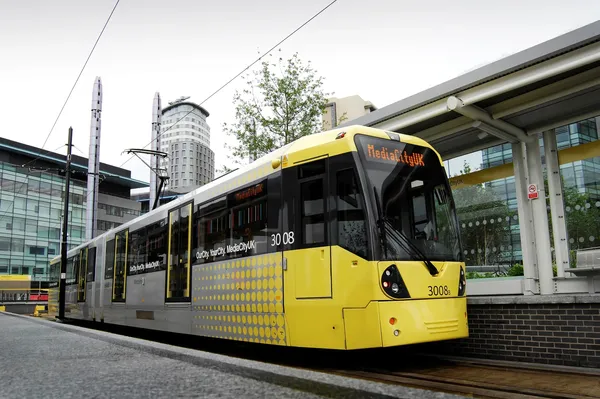
Operating as the high-capacity spine of Greater Manchester’s urban mobility, the Metrolink light rail system—the United Kingdom’s largest tram network spanning 99 stops and over 100 route-kilometres—is concurrently undergoing a comprehensive £150 million asset renewal and maintenance programme funded through the City Region Sustainable Transport Settlement (CRSTS). Running through 2027, the capital improvement initiative targets systemic track renewals, overhead line power upgrades, and digital substation modernization across the busiest bottlenecks of the network.
Specialized rail engineering crews have completed intensive track-laying blitzes across critical junctions, including the central corridor between Trafford Bar and Deansgate-Castlefield, as well as the heavy-turnout complexes around Manchester Piccadilly and Shudehill. By replacing thousands of metres of worn rails, ballast, and concrete sleepers with modern fatigue-resistant steel alloys, engineers have successfully eliminated restrictive temporary speed restrictions, elevating operating speeds from 5 mph back up to normal 20 mph limits and shaving vital minutes off daily journeys for over 100,000 regular commuters.
Contactless Tap-and-Go Integration and 2030 Suburban Rail Roadmap
Technological synchronization stands at the forefront of the network’s evolution. TfGM has expanded London-style contactless 'tap and go' smart ticketing across both trams and franchised buses, automatically calculating the most cost-effective daily and weekly fare caps for riders regardless of how many transfers are completed. This digital ticketing architecture is designed to integrate seamless mobile wallets, bank cards, and concessionary passes without requiring paper tickets.
Looking ahead toward 2030, transport authorities have formalized engineering pathways to integrate eight key suburban rail corridors into the Bee Network framework. This long-term rail roadmap will bring local commuter train lines serving Wigan, Bolton, Rochdale, and Stockport into the unified ticketing and scheduling fold, establishing a truly London-grade multi-modal transit network across the north of England.
Powering Decarbonization and Brownfield Urban Regeneration Across the North
Civic and business leaders underscored that the Bee Network and Metrolink modernization serve as powerful engines for economic growth and regional environmental decarbonization. By deploying hundreds of zero-emission British-built electric double-decker buses and powering Metrolink's fleet entirely with 100 percent renewable green electricity, the initiative directly advances Greater Manchester’s legally binding mandate to achieve carbon neutrality by 2038.
Furthermore, dependable high-frequency mass transit is unlocking transformative brownfield regeneration districts across the conurbation, including the multi-billion-pound regeneration zones in Salford Quays, Victoria North, and Stockport Interchange. By bridging historically disconnected neighborhoods with rapid, affordable, and clean transit options, Greater Manchester is cementing its position as a world-leading model of integrated civic mobility.
📰 Related Stories
- Greater Manchester Completes Historic Bee Network Public Bus Rollout with All-Electric Fleet and Expanded 24-Hour Night Services Manchester • Oct 06, 2026
- Greater Manchester Completes Landmark Bee Network Bus Franchising and Advances Integrated Contactless Rail Network Manchester • Oct 05, 2026
- Greater Manchester Readies Bee Network for Historic Rail Integration with Tap-In Tap-Out Ticketing Across 17 Stations Ahead of December Launch Manchester • Oct 04, 2026
- Liverpool City Region Secures £96 Million Investment to Construct Landmark Liverpool Baltic Merseyrail Station Liverpool • Oct 13, 2026