Greater Manchester Readies Bee Network for Historic Rail Integration with Tap-In Tap-Out Ticketing Across 17 Stations Ahead of December Launch
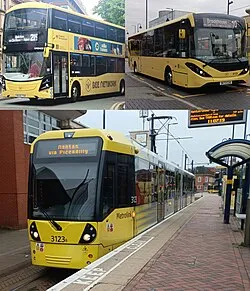
Unifying Rail, Bus, and Tram Under London-Style Integrated Transport
MANCHESTER, Greater Manchester — In a landmark milestone for public transportation in the North of England, the Greater Manchester Combined Authority (GMCA) and Transport for Greater Manchester (TfGM) are entering final operational preparations for the historic integration of local railway lines into the iconic Bee Network. Commencing commercial passenger service on December 13, 2026, the initiative marks the first time that heavy rail services outside London are fully integrated into a locally governed, multi-modal public transport system.
The trailblazing phase incorporates 17 railway stations across two crucial commuter lines connecting Manchester Piccadilly to Glossop and Stalybridge. By integrating these corridors, commuters will experience frictionless, contactless 'tap-in, tap-out' smart ticketing, allowing passengers to travel effortlessly between local trains, Metrolink trams, and Bee Network buses under a single, guaranteed fare cap with complete journey fare transparency.
Expanding the Zero-Emission Bus Fleet with 220 New Electric Vehicles
The imminent rail integration coincides with aggressive advancements in Greater Manchester's bus decarbonization strategy. With roughly 40 percent of the regional bus fleet already converted to zero-emission battery-electric power, transport leadership confirmed the authorized procurement of an additional 220 high-specification electric double-decker buses, manufactured in the UK, accelerating the city region toward its binding 2030 all-electric fleet target.
To power this surging electric fleet, major depot electrification schemes have been delivered across strategic transit hubs, including Ashton, Bolton, Middleton, Oldham, and Hyde Road. Concurrently, TfGM has secured a multi-year clean energy agreement with renewable producer AGR Power, ensuring that municipal charging infrastructure is energized exclusively by solar and wind generation while shielding local taxpayers from volatile wholesale electricity markets.
Cross-Modal Ticket Acceptance and Enhanced Passenger Protection
A revolutionary feature of the integrated Bee Network framework is automated cross-modal service protections. Under new operational protocols, whenever localized rail services experience unexpected infrastructure disruptions or track delays, Bee Network tickets and tap-in taps will be automatically accepted across parallel bus and tram corridors without surcharge or penalty, eliminating commuter stranding and boosting daily travel confidence.
Furthermore, stations along the Glossop and Stalybridge lines have received digital gate-line upgrades, modern high-definition real-time departure boards, improved LED station lighting, and accessibility ramps, creating a welcoming, dignified passenger environment across outer suburban town centres.
A National Blueprint for Devolved Urban Transit Governance
Civic and transport authorities highlighted that the Bee Network demonstrates the transformative potential of devolved civic governance. By taking direct local control of bus contracts and harmonizing them with heavy rail and light rail, Greater Manchester has established a resilient, passenger-focused public transit network that lowers cost of living burdens, curbs road gridlock, and drives economic productivity across the entire region.
📰 Related Stories
- Greater Manchester Combined Authority Approves Four New Mayoral Development Corporations to Accelerate Regional Housing and Overhauls Piccadilly Station Masterplan Manchester • Oct 04, 2026
- Greater Manchester Prepares Milestone Rail Integration into Bee Network as 17 Stations Adopt Tap-in Tap-out Ticketing Alongside £150 Million Metrolink Renewal Manchester • Oct 03, 2026
- Greater Manchester Sets December 2026 Bee Network Rail Launch on Glossop and Stalybridge Lines Backed by £150 Million Metrolink Renewal Manchester • Sep 30, 2026
- Manchester City Council Refreshes 150-Hectare Piccadilly Masterplan to Anchor Northern Powerhouse Rail and Bee Network Expansion Manchester • Sep 28, 2026