Brisbane Accelerates $1.7 Billion All-Electric Metro Network with High-Capacity Bi-Articulated Fleet and Flash Charging
Transforming Mass Transit Across Southeast Queensland's Busiest Corridors
BRISBANE, Queensland — Paving the way for Southeast Queensland’s Olympic-era transit infrastructure, Brisbane City Council and the Queensland Government have achieved major operational commissioning milestones across the landmark $1.7 billion Brisbane Metro rapid transit project. Engineered to revolutionize public mobility across Australia’s third-largest metropolis, the turnkey transit initiative introduces a high-capacity, turn-up-and-go public transport backbone operating along dedicated, grade-separated busway corridors completely isolated from general road traffic.
Connecting key metropolitan activity centers from Eight Mile Plains in the south to the Royal Brisbane and Women's Hospital (RBWH) in the north, and extending to the University of Queensland (UQ) at St Lucia, Brisbane Metro delivers high-frequency trunk transit designed to eliminate bottleneck delays at congested inner-city busway stations such as Cultural Centre and King George Square.
High-Capacity Swiss-Engineered Hess lighTram 25 Electric Fleet
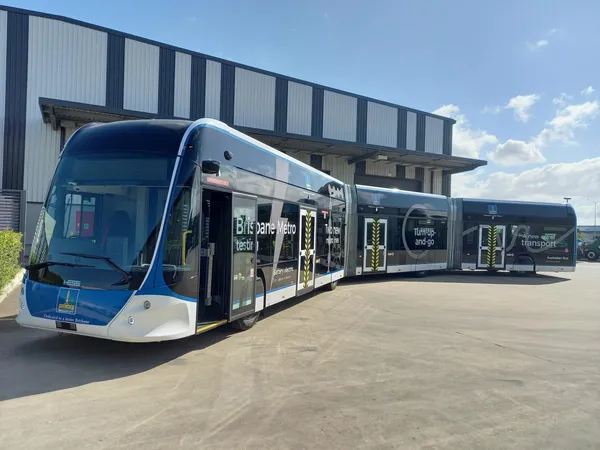
At the center of Brisbane Metro is an extraordinary fleet of 60 fully electric, bi-articulated vehicles manufactured by Swiss transit pioneer Carrosserie HESS in collaboration with electric driveline specialist Hitachi Energy. Measuring 24.4 metres in length across three articulated sections, each Brisbane Metro vehicle provides unprecedented capacity, comfortably carrying up to 150 to 170 passengers—effectively doubling the carrying capacity of standard municipal buses.
Designed with universal accessibility as a core priority, the vehicles feature level boarding across three wide double passenger doors, low-floor walkthrough corridors, dedicated spaces for mobility devices, prams, and bicycles, integrated USB charging ports, and panoramic glazed windows. Advanced electric traction motors deliver whisper-quiet, smooth acceleration with zero tailpipe emissions, significantly curbing localized exhaust pollution across Brisbane's urban core.
High-Power Flash-Charging Infrastructure and State-of-the-Art Rochedale Depot
Powering the all-electric fleet is Australia’s most advanced high-capacity charging infrastructure, anchored by a newly constructed 10-hectare operational depot facility at Rochedale. Capable of housing, maintaining, and charging the entire 60-vehicle fleet, the facility incorporates a massive 1-megawatt rooftop solar photovoltaic array paired with smart grid energy management software that optimizes off-peak power consumption.
Along the transit alignment, the system utilizes Hitachi Energy’s cutting-edge Grid-eMotion Flash charging technology. Installed at route termini and high-demand transit interchanges, roof-mounted pantographs lower onto overhead contact rails to deliver ultrafast 600-kilowatt electrical power bursts, replenishing vehicle battery packs in just under six minutes between scheduled runs. Combined with overnight slow-charging at Rochedale, this flash-charging capability guarantees continuous, reliable 24/7 commercial operations without requiring vehicles to return to the depot during peak hours.
Foundational Transit Pillar for the 2032 Brisbane Olympic and Paralympic Games
Civic leaders, urban planners, and transport ministers emphasized that Brisbane Metro represents an indispensable foundational asset for the upcoming Brisbane 2032 Olympic and Paralympic Games. By seamlessly interfacing with Queensland Rail heavy passenger trains and the multi-billion-dollar Cross River Rail underground network at integrated hubs such as Roma Street and Woolloongabba, the system creates a cohesive, high-capacity transit web capable of moving hundreds of thousands of spectators and residents efficiently.
Operating with turn-up-and-go frequencies—running every three minutes during peak periods and 24 hours on weekends—Brisbane Metro eliminates the need for strict timetables, delivering a world-class passenger journey that sets a new national benchmark for zero-emission, rapid mass transit in Australia.
📰 Related Stories
- Brisbane City Council Deploys 100% Electric Bi-Articulated Metro Fleet and Completes Cultural Centre Station Upgrade Brisbane • Oct 06, 2026
- Queensland Advances Integrated Systems Testing and Station Fit-Outs on $6.3 Billion Brisbane Cross River Rail Megaproject Brisbane • Oct 05, 2026
- Brisbane Advances Cross River Rail as Intensive Station Testing and Systems Commissioning Ramp Up at Albert Street and Woolloongabba Brisbane • Oct 04, 2026
- Sydney Accelerates Multi-Billion-Dollar Transport Revolution as Sydney Metro West and Western Sydney Airport Reach Decisive Milestones Sydney • Oct 13, 2026