Queensland Advances Integrated Systems Testing and Station Fit-Outs on $6.3 Billion Brisbane Cross River Rail Megaproject
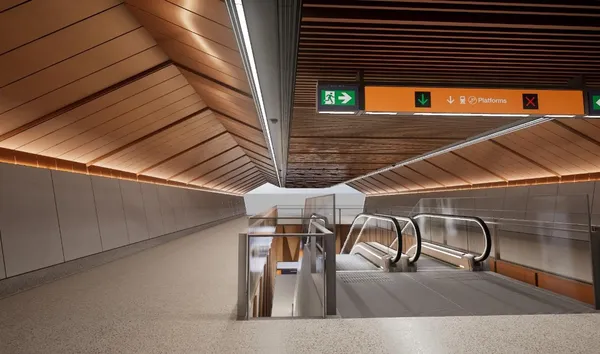
Unlocking South East Queensland’s Passenger Rail Spine Ahead of 2032
BRISBANE, Queensland — In a transformational leap for Queensland’s public transportation network, the Queensland Government and the Cross River Rail Delivery Authority have officially entered the intensive integrated systems testing and commissioning phase on the monumental $6.3 billion Cross River Rail megaproject. With major heavy tunneling and civil cavern excavation fully concluded across the 5.9-kilometre twin subterranean tunnels beneath the Brisbane River and CBD, engineering efforts are centered on preparing the state's flagship rail network for commercial revenue service.
Cross River Rail dissolves the critical rail bottleneck that has constrained South East Queensland for generations: the single passenger rail crossing over the Brisbane River at the Merivale Bridge. By adding a second high-capacity underground rail crossing, the project doubles network train capacity through the city centre, enabling higher-frequency commuter services across the Gold Coast, Sunshine Coast, Ipswich, and Beenleigh rail corridors while establishing an essential transit spine for the Brisbane 2032 Olympic and Paralympic Games.
Comprehensive Systems Commissioning and Live Subterranean Train Trials
The testing and commissioning program represents the most technically rigorous phase of the development. Systems engineers from the PULSE Consortium (comprising CIMIC Group companies CPB Contractors, UGL, and Pacific Partnerships, alongside DIF and Ghella) are executing end-to-end trials of high-voltage traction substations, emergency ventilation jet fans, automated fire-deluge networks, and telecommunications telemetry.
Electric passenger trainsets are running operational test runs through the twin tubes, progressing from low-speed clearance and track-geometry verification runs to high-speed timetable simulations. A crucial technical milestone includes the live integration of Queensland’s brand-new European Train Control System (ETCS) Level 2 digital signalling, which replaces traditional trackside colored-light signals with cab-based computerized signaling, significantly enhancing train headways, operational throughput, and passenger safety.
Architectural Fit-Outs at Albert Street, Roma Street, Woolloongabba, and Boggo Road
Simultaneously, architectural crews are applying final finishes across the project’s four landmark underground passenger stations: Boggo Road, Woolloongabba, Albert Street, and Roma Street. At Albert Street, the first brand-new railway station built in the Brisbane CBD in over 120 years, civil teams are finalizing the main concourses and the expansive 'Green Spine' civic boulevard, connecting commuters directly into the heart of the retail and financial precinct.
At Roma Street, destined to become Queensland’s premier transit gateway, crews have removed heavy temporary civil framing and installed full-height glass Platform Screen Doors (PSDs) along the 220-metre underground boarding platforms. Synchronizing seamlessly with train doors, the automated platform screen doors enhance climate control inside underground caverns, dampen train noise, and eliminate the risk of passenger falls or track debris.
Catalyzing Urban Renewal and Regional Economic Resilience
Queensland Premier and Transport Ministry leadership highlighted that Cross River Rail is an enduring economic stimulus for South East Queensland, supporting over 7,700 local jobs throughout construction. By linking the southern biomedical research hub at Boggo Road with the sporting precinct at Woolloongabba and the commercial CBD, Cross River Rail will remove thousands of daily automobile trips from congested arterial motorways, slash greenhouse emissions, and elevate Brisbane's status as a world-class livable metropolis.
📰 Related Stories
- Brisbane Advances Cross River Rail as Intensive Station Testing and Systems Commissioning Ramp Up at Albert Street and Woolloongabba Brisbane • Oct 04, 2026
- Brisbane Submits Ambitious Active Transport Bids for Pallara and Shafston Corridors as Brisbane Metro Eyes Capalaba Expansion Ahead of 2032 Games Brisbane • Oct 04, 2026
- Brisbane Submits Ambitious Active Transport Bids for Pallara and Shafston Corridors as Brisbane Metro Eyes Capalaba Expansion Ahead of 2032 Games Brisbane • Oct 04, 2026
- Brisbane Accelerates Rail Transformation Ahead of 2032 Games as Cross River Rail Enters Tunnel Testing and Electric Brisbane Metro Expands Brisbane • Sep 30, 2026