Brisbane City Council Deploys 100% Electric Bi-Articulated Metro Fleet and Completes Cultural Centre Station Upgrade
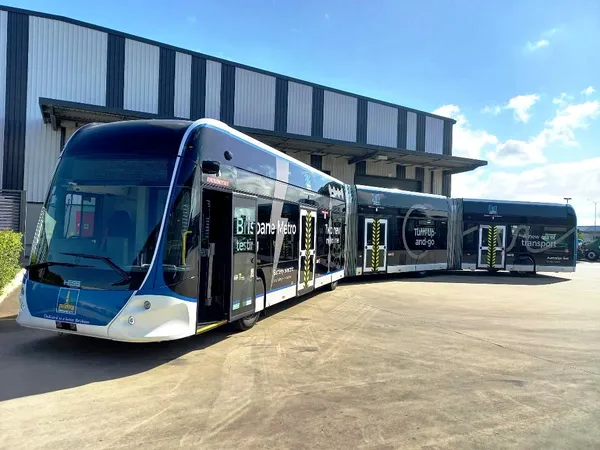
A Revolutionary Leap for Public Mass Transit in South East Queensland
BRISANE, Queensland — Ushering in a new era of clean, rapid, and high-capacity public transportation, Brisbane City Council and the Queensland Government have achieved major operational milestones on the landmark Brisbane Metro transit megaproject. With the deployment of the bespoke, fully electric HESS lighTram 25 bi-articulated vehicle fleet and the full completion of the extensive Cultural Centre station upgrade in South Brisbane, the city has transformed its high-frequency busway network into an integrated, turn-up-and-go mass transit system.
Connecting major residential, educational, and commercial centers across Brisbane, the system operates across two core routes: the M1 line (linking Eight Mile Plains to Roma Street) and the M2 line (connecting the Royal Brisbane and Women’s Hospital to the University of Queensland Lakes campus). Operating at five-minute frequencies during peak commute windows, the zero-emission network removes thousands of diesel bus movements from downtown streets, vastly curtailing vehicular congestion across the Brisbane Central Business District.
Swiss-Engineered HESS lighTram 25 Fleet with Flash-Charging Technology
The technological centerpiece of Brisbane Metro is its cutting-edge fleet of 60 bespoke 24.4-metre bi-articulated electric vehicles, designed by Swiss rail manufacturer Carrosserie HESS and assembled in partnership with Australian commercial vehicle builder Volgren. Combining the immense passenger throughput of a modern light rail tram with the operational flexibility of rubber-tyred transit, each vehicle provides capacity for up to 170 passengers (with maximum surge capacities accommodating 180 commuters during major sporting and civic events).
Engineered for maximum operational efficiency, the fleet utilizes advanced flash-charging (TOSA) infrastructure. Through automated overhead pantographs installed at route termini and dedicated maintenance depots, vehicles recharge their onboard batteries in under six minutes between scheduled runs. The vehicles boast 100 percent low-floor walk-through cabins, three wide double doors for rapid boarding, automated accessibility ramps, and dedicated mobility device bays developed through close consultation with disability advocacy organizations.
Upgraded Cultural Centre Precinct and the New Adelaide Street Tunnel
Complementing the fleet rollout is the comprehensive completion of modernization works at the busy Cultural Centre station on the South East Busway. As the premier transit gateway to Brisbane’s Cultural Precinct, Queensland Art Gallery (QAGOMA), and South Bank, the station has been systematically reconfigured with the addition of a brand-new, purpose-built Platform 3, expanding passenger waiting capacity, widening pedestrian walkways, and streamlining transfer routes to West End and Highgate Hill.
Beneath the city center, the newly completed Adelaide Street tunnel establishes a dedicated subterranean transit link connecting the Inner Northern Busway directly to the South East Busway. By bypassing congested surface intersections along North Quay and Queen Street, the tunnel eliminates transit bottlenecks, slashing travel times across the river by up to 30 percent during morning and afternoon commute peaks.
Accelerating Green Olympic Transit Readiness and Clean Suburban Mobility
Civic leaders and transport planners emphasized that the Brisbane Metro stands as a foundational pillar in the city's comprehensive transport preparations for the Brisbane 2032 Olympic and Paralympic Games. Designed from inception to run exclusively on zero-emission green electricity, the system sets an international benchmark for climate-positive Games transit infrastructure.
By replacing crowded diesel bus services with high-capacity, silent electric vehicles, integrating seamlessly with Queensland’s Translink network, and connecting to the forthcoming Cross River Rail underground stations, the Brisbane Metro delivers a generational public transport asset that ensures sustainable, equitable urban mobility for the rapidly expanding South East Queensland region.
📰 Related Stories
- Queensland Advances Integrated Systems Testing and Station Fit-Outs on $6.3 Billion Brisbane Cross River Rail Megaproject Brisbane • Oct 05, 2026
- Brisbane Advances Cross River Rail as Intensive Station Testing and Systems Commissioning Ramp Up at Albert Street and Woolloongabba Brisbane • Oct 04, 2026
- Brisbane Submits Ambitious Active Transport Bids for Pallara and Shafston Corridors as Brisbane Metro Eyes Capalaba Expansion Ahead of 2032 Games Brisbane • Oct 04, 2026
- Brisbane Submits Ambitious Active Transport Bids for Pallara and Shafston Corridors as Brisbane Metro Eyes Capalaba Expansion Ahead of 2032 Games Brisbane • Oct 04, 2026