Brisbane Advances Cross River Rail as Intensive Station Testing and Systems Commissioning Ramp Up at Albert Street and Woolloongabba
Entering the Critical Integrated Systems Commissioning Phase
BRISBANE, Queensland — In a pivotal operational transition for Queensland's largest infrastructure undertaking, the Cross River Rail Delivery Authority has accelerated into the comprehensive testing and commissioning phase across the 5.9-kilometre twin rail tunnels running beneath the Brisbane River and central business district. With deep subterranean tunneling and heavy structural cavern works finalized, technical engineering teams are executing thousands of integrated safety, signaling, and electrical verification checks across the four new underground stations, headlined by major milestones at Albert Street and Woolloongabba.
The generational $6.3+ billion project is engineered to break a half-century-old rail bottleneck across the Merivale Bridge, creating the capacity needed to operate high-frequency passenger train services across South East Queensland's rapidly expanding commuter corridors.
Albert Street Station Installs Iconic Canopy and Longest Escalators
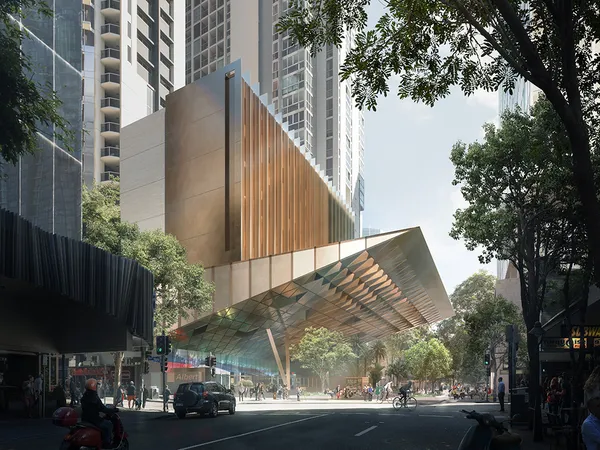
At Albert Street station—the first new inner-city railway station built in Brisbane in more than a century—construction crews have achieved prominent architectural milestones. Engineers have completed the installation of the station’s sweeping street-level architectural canopy and finished subterranean perimeter flood mitigation barriers. Within the deep station cavern, technicians have begun mechanical commissioning on Queensland’s longest single escalators, measuring over 37 metres in length to transport commuters from street concourses down to platform screen doors in under 90 seconds.
Simultaneously, surface-level civil works have unlocked newly pedestrianized sections of the 'Green Spine' between Elizabeth and Mary streets. The tree-lined civic promenade restores surface connectivity to city workers, integrating outdoor dining terraces and native shade trees right outside the station portals.
Woolloongabba Underground Hub and High-Capacity Digital Signalling
Across the river at the Woolloongabba station cavern, systems integration teams are actively calibrating high-definition CCTV security arrays, real-time digital passenger display boards, tunnel jet-fan ventilation systems, and specialized fire suppression mechanisms. The station platforms have been fitted with automated full-height glass platform screen doors, enhancing passenger comfort and station climate control.
The underground rail corridor is powered by the European Train Control System (ETCS) Level 2. This cutting-edge computerized cab-signaling technology continuously monitors train spacing and speed profiles, enabling precision headway management that allows trains to safely run every few minutes during peak morning and afternoon commuter rushes.
Pioneering Transit Readiness Ahead of the 2032 Olympic Games
Queensland Government transport officials emphasized that the successful progression of Cross River Rail commissioning lays the foundation for South East Queensland’s integrated transport network ahead of the Brisbane 2032 Olympic and Paralympic Games. By integrating seamlessly with the Queensland Rail passenger network and the city's new all-electric Brisbane Metro rapid bus network, Cross River Rail will deliver a world-class, low-carbon public transit backbone capable of supporting millions of residents and global spectators.
📰 Related Stories
- Brisbane Submits Ambitious Active Transport Bids for Pallara and Shafston Corridors as Brisbane Metro Eyes Capalaba Expansion Ahead of 2032 Games Brisbane • Oct 04, 2026
- Brisbane Submits Ambitious Active Transport Bids for Pallara and Shafston Corridors as Brisbane Metro Eyes Capalaba Expansion Ahead of 2032 Games Brisbane • Oct 04, 2026
- Brisbane City Council Expands Turn-Up-and-Go Brisbane Metro as Electric Bi-Articulated Fleet Operates Across M1 and M2 Lines and Regional Extensions Advance Brisbane • Oct 03, 2026
- Sydney Metro Enters Final Commissioning Phase for Sydenham to Bankstown Conversion as Western Sydney Airport Countdown Begins Sydney • Oct 04, 2026