Sydney Accelerates Multi-Billion-Dollar Transport Revolution as Sydney Metro West and Western Sydney Airport Reach Decisive Milestones
Western Sydney International Airport Enters Final Operational Readiness for 2026 Launch
SYDNEY, New South Wales — In what represents the most significant aviation infrastructure triumph in Australia in more than half a century, Western Sydney International (Nancy-Bird Walton) Airport (WSI) has officially concluded major civil construction and entered its comprehensive operational readiness and regulatory testing phase. Located across a sprawling 1,780-hectare site at Badgerys Creek, the greenfield airport boasts a completed 3.7-kilometre CAT III-B instrument-rated runway, an architecturally striking passenger terminal, and a dedicated airside cargo precinct.
Operating 24/7 with zero curfew restrictions, WSI will open with an initial capacity to service 10 million passengers and hundreds of thousands of tonnes of air freight annually. Airport authorities have confirmed strict commercial operational milestones: dedicated cargo flights will commence on July 27, 2026, followed by commercial passenger airline operations taking flight on October 25, 2026, permanently transforming Western Sydney into Australia’s premier global trade and logistics gateway.
Sydney Metro West Awards Decisive Station and Rail Delivery Contracts
Synchronized with Western Sydney's economic expansion, the NSW Government's multi-billion-dollar Sydney Metro West megaproject has transitioned into its high-intensity systems installation and station construction phase. Transport for NSW and Sydney Metro have executed major procurement awards, finalizing pivotal packages that will bring the 24-kilometre driverless underground metro line from Westmead to the Sydney Central Business District to life.
Engineering giant John Holland was formally awarded the critical Linewide Package, encompassing the installation of 60 kilometres of precision rail tracks, high-voltage traction power systems, tunnel ventilation, and the construction of the cutting-edge maintenance and train stabling facility at Clyde. Concurrently, international contractor Gamuda secured Stations Package West, taking responsibility for the subterranean architectural fit-out and civil engineering of five major underground stations at Westmead, North Strathfield, Burwood North, Five Dock, and The Bays.
Subterranean Track-Laying Blitz and Next-Generation Driverless Trains
With deep twin tunnels successfully bored up to 37 metres beneath suburban Sydney by mega Tunnel Boring Machines (TBMs), rail construction crews are executing high-speed track-laying operations, focusing initial rail placement around the Sydney Olympic Park station cavern. Subterranean teams are installing communication conduits, safety cross-passages, automated platform screen door systems, and acoustic vibration dampening pads designed to ensure whisper-quiet underground operations.
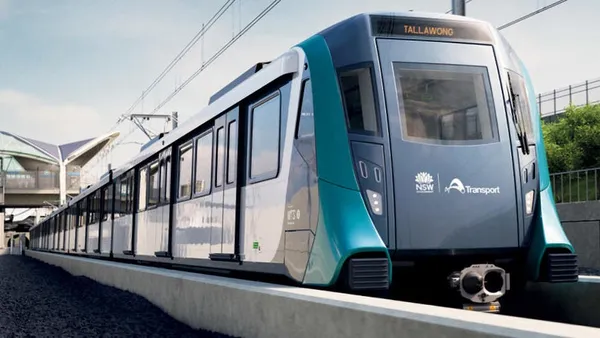
The project's Trains, Systems, Maintenance and Operations (TSMO) contract, executed with the Metro Trains West Consortium, oversees the manufacturing and commissioning of next-generation automated driverless train sets. Reaching cruising speeds of 100 km/h, the high-frequency trains will slash travel times between Parramatta and downtown Sydney to approximately 20 minutes, doubling rail capacity across the busy central-west commuter corridor upon scheduled commercial commissioning in 2032.
Anchor for Western Sydney's Polycentric Aerotropolis and Housing Expansion
Government ministers and urban planners emphasized that the coordinated delivery of Western Sydney International Airport and Sydney Metro West forms the structural backbone of Greater Sydney’s polycentric economic blueprint. The mega-investments are driving comprehensive transit-oriented development, unlocking thousands of new homes and commercial business parks around key interchanges including Westmead Health Precinct, Olympic Park, and The Bays port precinct.
Furthermore, the projects enforce stringent local employment and apprenticeship mandates, supporting more than 14,000 direct construction jobs across Western Sydney. Together, these transformative civil infrastructure initiatives cement New South Wales as a benchmark for world-class, integrated public mobility and sustainable economic growth in the Southern Hemisphere.
📰 Related Stories
- New South Wales Accelerates $25 Billion Sydney Metro West Megaproject with Heavy Tunneling Breakthroughs and Station Cavern Excavations Sydney • Oct 13, 2026
- Sydney Metro Western Sydney Airport Completes 23-Kilometre Track Installation and Advances Station Fit-Outs on $11 Billion Rail Link Sydney • Oct 05, 2026
- Sydney Celebrates Historic Transit Boom as Driverless Sydney Metro M1 Line Surpasses Millions of Passengers Beneath Sydney Harbour Sydney • Oct 05, 2026
- Sydney Marks Historic End of an Era as 45-Year-Old K-Set Passenger Trains Complete Final Journey Ahead of Next-Generation Fleet Integration Sydney • Oct 04, 2026