Berlin Senate Approves €1.84 Billion Infrastructure Master Plan to Rebuild 300 Bridges and Fast-Tracks Modular Housing Approvals
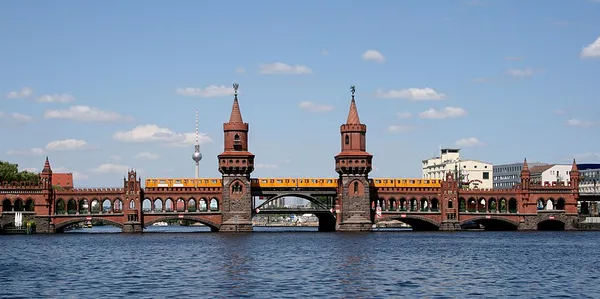
Comprehensive 15-Year Infrastructure Blueprint Secures €1.84 Billion to Modernize Aging Spans
BERLIN, Germany — In a decisive move to protect the structural integrity and economic vitality of Germany's capital city, the Berlin Senate has formally approved the landmark Bridges Master Plan 2025–2040 (*Brückensanierungsplan*). Committing €1.84 billion in targeted capital investment over the next fifteen years, the comprehensive infrastructure framework outlines the systematic reconstruction, modernization, and long-term maintenance of more than 300 vital bridge structures across Berlin's vast waterway and roadway network.
Presented jointly by Governing Mayor Kai Wegner and the Senate Department for Urban Mobility, Transport, Climate Action and the Environment, the master plan addresses decades of deferred maintenance. Engineering inspections had revealed that only 19 percent of the federal state's bridges were in satisfactory condition, prompting senate leadership to establish legally binding replacement schedules to avert disruptive emergency closures along critical commercial transit arteries.
Prioritized Rebuilding of 175 Severely Deteriorated Bridges and 125 Major Overhauls
The €1.84 billion infrastructure blueprint establishes rigorous engineering schedules across three prioritized operational categories:
- Complete Structural Replacement: Complete demolition and modernized reconstruction of 175 severely deteriorated bridges, incorporating corrosion-resistant steel-reinforced concrete, expanded pedestrian walkways, and segregated cycling lanes.
- Deep Structural Rehabilitation: Comprehensive substructure, abutment, and deck overhauls on 125 major bridge spans to extend operational lifespans by up to five decades.
- Digital Sensor Telemetry: Equipping high-load commercial spans with continuous IoT strain gauges, vibration sensors, and automated structural health monitoring systems to detect microscopic fatigue in real time.
- Climate-Resilient Spree Crossings: Engineering bridge clearances and drainage systems to accommodate severe precipitation events and fluctuating Spree River water levels driven by changing European weather patterns.
Accelerating Housing Delivery via the Simpler Construction Act (*Schneller-Bauen-Gesetz*)
Alongside heavy infrastructure investments, Senator for Urban Development, Building and Housing Christian Gaebler announced substantial administrative streamlining under the Simpler Construction Act (*Schneller-Bauen-Gesetz*). As Berlin assumes the national two-year chairmanship of Germany's Bauministerkonferenz (Building Ministers' Conference), the Senate is spearheading bureaucratic fast-tracking to accelerate new housing completions toward the city's 80,000-unit target.
By standardizing modular wooden and prefabricated concrete construction codes (*EinfachBauenBerlin*) and cutting municipal planning review cycles in half, Berlin enables municipal housing associations like Gewobag, degewo, and HOWOGE to deliver energy-efficient, climate-neutral affordable rental apartments at substantially lower per-square-metre construction costs.
Modernizing Public Transit and Advancing Towards EXPO 2035 Vision
Berlin's bridge renewal initiative integrates seamlessly with the Berliner Verkehrsbetriebe (BVG) modernization plan, which continues its transition toward a fully cashless, contactless multi-modal transit network across underground U-Bahn, tramway, and bus networks by 2029.
Senator Gaebler and civic planners emphasized that revitalizing Berlin's bridges and housing density forms the backbone of the city's exploratory candidacy for EXPO 2035, centered on urban climate resilience and sustainable mobility. By coupling decisive bridge renewals with aggressive housing delivery, Berlin solidifies its position as a modern, safe, and dynamic European metropolis.
📰 Related Stories
- Berliner Verkehrsbetriebe Debuts Next-Generation Stadler JK Electric Fleet into Passenger Service Across Berlin U-Bahn Berlin • Oct 18, 2026
- Berlin Marks Topping-Out Milestone on €4.5 Billion Siemensstadt Square Innovation Megaproject and Advances Siemensbahn Rail Reactivation Berlin • Oct 05, 2026
- Berlin Expands BVG Rapid Transit Network as Stadler Class J Trains Enter Daily Service on U5 Line with Siemens CBTC Semi-Automated Signaling Berlin • Sep 30, 2026
- Berlin Advances €4.5 Billion Siemensstadt Square Megaproject as Topping-Out Reached and Framework Expands Residential Vision to 3,750 Sustainable Apartments Berlin • Oct 03, 2026