Fraport Completes €4 Billion Terminal 3 at Frankfurt Airport Ahead of Landmark 2026 Commercial Operations
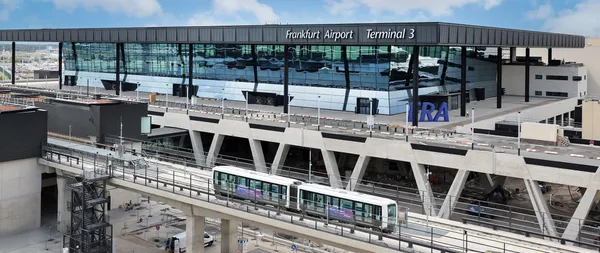
A Generational Infrastructure Landmark for Europe's Busiest Aviation Crossroads
FRANKFURT, Hesse — In a momentous milestone for European aviation infrastructure and German engineering, airport operator Fraport AG has officially completed structural and technical construction across the monumental €4 billion Terminal 3 megaproject at Frankfurt Airport (FRA). Situated on the southern perimeter of the airport grounds on the former site of the historic US Rhein-Main Air Base, the expansive terminal represents the single largest privately financed transportation infrastructure project in modern German history, securing the long-term international competitiveness of one of the world's primary global transit gateways.
Spanning over 170,000 square meters of luminous terminal space across Piers G, H, and J, the state-of-the-art facility expands Frankfurt Airport's passenger capacity by up to 19 million travelers annually in its initial configuration, with engineered structural provisions to scale to 25 million passengers. The project successfully passed all rigorous building code, fire protection, and technical safety certifications from the Hesse State Construction Authority, paving the way for comprehensive operational readiness trials.
Automated Sky Line People Mover and High-Speed Baggage Logistics
A core engineering centerpiece of Terminal 3 is the new Sky Line automated people mover (APM) extension, constructed by a specialized consortium including Siemens Mobility. Operating along a 5.6-kilometer dual-track elevated guideway, the driverless transit system links Terminal 3 directly with Terminals 1 and 2, the regional bus station, and the airport's high-speed ICE long-distance railway station in an effortless journey of just 8 minutes, running at headways of under three minutes.
Beneath the passenger concourses, Fraport has installed one of the most advanced automated high-speed baggage handling systems (BHS) in the world. Capable of sorting and screening up to 19,000 pieces of luggage per hour with continuous 3D computed tomography (CT) security scanning, the baggage system features an 8.5-kilometer subterranean high-speed container transit loop that shuttles transfer baggage between Terminal 3 and the existing north terminal complex without delay.
Digital Passenger Terminals, Biometric Gates, and Bavarian-Inspired Architecture
Designed by renowned German architectural firm Christoph Mäckler Architekten, Terminal 3 offers a calm, light-filled passenger experience defined by monumental 16-meter-high glazed curtain walls, natural oak timber paneling, and expansive indoor garden atriums. The departure hall accommodates over 100 modern check-in counters and automated self-bag-drop kiosks, flanked by an extensive marketplace featuring premier international retail brands, regional dining concepts, and scenic observation decks overlooking the southern runways.
Passenger journeys through Terminal 3 are optimized through comprehensive end-to-end biometric facial recognition technology. Travelers can navigate check-in, automated bag-drop, security checkpoints, duty-free shopping, and boarding gates through seamless contactless facial identification, drastically cutting waiting times and eliminating physical boarding pass inspections.
Setting New Benchmarks in Airport Decarbonization and Energy Efficiency
Aligned with Fraport’s statutory mandate to achieve complete net-zero operational carbon emissions across Frankfurt Airport by 2045, Terminal 3 is engineered as an eco-efficient aviation showcase. The facility completely eschews fossil-fuel heating, operating entirely on a closed-loop geothermal energy foundation paired with high-efficiency heat recovery chillers and district heating supplied from regional biomass plants.
The vast rooftops of Piers G, H, and J are clad with over 20,000 square meters of high-output solar photovoltaic panels, generating megawatts of clean electricity that power terminal illumination and electric aircraft ground service equipment (GSE). Combined with smart LED daylight harvesting and rainwater retention cisterns that flush sanitation facilities, Terminal 3 provides a resilient, sustainable aviation hub that will drive European economic mobility for the next half-century.
📰 Related Stories
- Fraport Nears Commissioning of Landmark €4 Billion Frankfurt Airport Terminal 3 and Automated Sky Line People Mover Frankfurt • Oct 13, 2026
- Hamburg Accelerates Landmark €2.8 Billion Driverless U5 Metro Line with Alstom CBTC Signaling and GoA4 Train Fleet Hamburg • Oct 17, 2026
- Hamburger Hochbahn Accelerates €2.8 Billion Driverless U-Bahn Line U5 with Next-Generation Alstom DT6 Train Fleet Hamburg • Oct 06, 2026
- Berlin Marks Topping-Out Milestone on €4.5 Billion Siemensstadt Square Innovation Megaproject and Advances Siemensbahn Rail Reactivation Berlin • Oct 05, 2026