Amsterdam Advances Multi-Billion-Euro Zuidasdok Transport Superhub and North-South Metro Line Extension to Schiphol
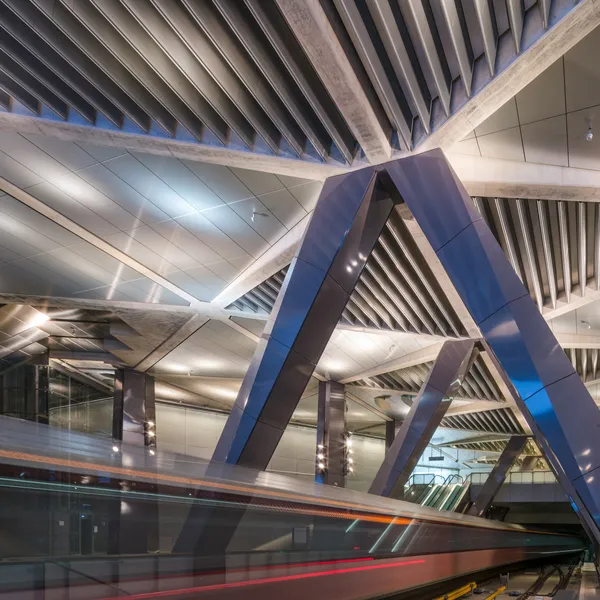
Transforming Amsterdam Zuid into the Netherlands' Premier Multimodal Superhub
AMSTERDAM, North Holland — In what constitutes the most technically complex civil infrastructure initiative in the Netherlands, the Municipality of Amsterdam (Gemeente Amsterdam), the Dutch Ministry of Infrastructure and Water Management, national rail administrator ProRail, and regional transport body Vervoerregio Amsterdam are accelerating decisive engineering milestones across the multi-billion-euro Zuidasdok megaproject.
Centered in Amsterdam's premier Zuidas business district, the massive engineering undertaking is radically expanding and modernizing Amsterdam Zuid station into a world-class multimodal passenger hub capable of handling more than 300,000 daily commuters. Concurrently, specialized heavy engineering crews are tunneling an 800-metre section of the busy A10 South motorway underground into twin subterranean tunnels, eliminating above-ground barrier effects, mitigating traffic noise, and liberating expansive surface acreage for lush public parks and walkable civic boulevards.
Strategic Blueprint to Extend North-South Metro Line 52 Toward Schiphol Airport
A defining cornerstone of the Dutch capital's long-term mobility roadmap is the planned southward extension of the high-frequency North-South Metro Line (Noord/Zuidlijn / Metro Line 52) from Amsterdam Zuid directly to Schiphol Airport and Hoofddorp. At Amsterdam Zuid station, civil engineers have executed essential platform and track modifications, converting single-track bottleneck layouts into high-capacity dual-track configurations to accommodate increased metro dispatching frequencies of up to 24 trains per hour.
Extending Metro Line 52 to Schiphol will directly connect central Amsterdam to Europe's busiest aviation hub in less than 15 minutes. Crucially, the metro link will absorb high-volume regional commuter journeys, freeing up critical mainline railway tunnel capacity at Schiphol Airport railway station to expand domestic intercity services and high-speed international trains connecting Amsterdam to Brussels, Paris, and London via Eurostar and ICE networks.
Haven-Stad Urban Transformation and Sustainable Timber Construction Mandates
Complementing public transit expansion in the south, Amsterdam's municipal leadership is orchestrating Europe's most ambitious circular brownfield redevelopment across Haven-Stad in the capital's northwestern harbor docks. Master-planned to deliver up to 70,000 modern, energy-neutral homes and create tens of thousands of skilled jobs over the coming decades, Haven-Stad is strictly designed around transit-first urbanism, prioritizing electrified public transport, zero-emission water ferries, and high-speed cycling superhighways.
Under the Metropolitan Region of Amsterdam’s (MRA) groundbreaking 'Build-in-Wood' (Houtbouw) covenant, at least 20 percent of all newly constructed residential buildings across municipal development sectors will be built utilizing certified mass timber and circular bio-based materials. By substituting carbon-intensive steel and concrete with sustainably harvested engineered wood, Amsterdam is drastically reducing embodied carbon emissions, setting a progressive benchmark for sustainable European architecture.
Pioneering Climate-Resilient Urban Water Infrastructure and 2030 Climate Goals
Simultaneously, the municipality is executing expansive civil engineering initiatives to renovate and structurally reinforce hundreds of kilometres of historic canal quay walls and century-old bridges across Amsterdam's historic Grachtengordel canal ring. Utilizing advanced acoustic sensors and automated underwater surveying drones, engineers are stabilizing submerged wooden foundation piles compromised by centuries of urban load and fluctuating groundwater tables.
In suburban districts like Amsterdam North (Tuindorp Oostzaan), the city is rolling out pioneering Soil and Water Sensitive Urban Design (SWSUD) projects, integrating subterranean water retention sponges and permeable pavements that naturally absorb extreme cloudburst rainfalls while preventing polder soil subsidence. These synchronized investments reinforce Amsterdam's legally binding mandate to cut emissions by 55 percent by 2030 and achieve comprehensive circular climate neutrality by 2050, demonstrating how a historic maritime metropolis can master 21st-century urban resilience.
📰 Related Stories
- Amsterdam Reaches Landmark Zuidasdok Milestone with Opening of New Brittenpassage and High-Capacity Metro Platforms at Amsterdam Zuid Station Amsterdam • Oct 04, 2026
- Amsterdam Advances Zuidasdok Megaproject as Station Amsterdam Zuid Prepares Landmark Brittenpassage Opening and North-South Metro Line 52 Platform Integration Amsterdam • Oct 03, 2026
- Amsterdam Inaugurates Tram 26 Extension to Strandeiland and Accelerates Multi-Billion Zuidasdok Rail Expansion Amsterdam • Sep 29, 2026
- Amsterdam Zuid Prepares November 1 Launch of 15-Metre Brittenpassage in Landmark Zuidasdok Rail Milestone Amsterdam • Sep 25, 2026