Amsterdam Inaugurates Tram 26 Extension to Strandeiland and Accelerates Multi-Billion Zuidasdok Rail Expansion
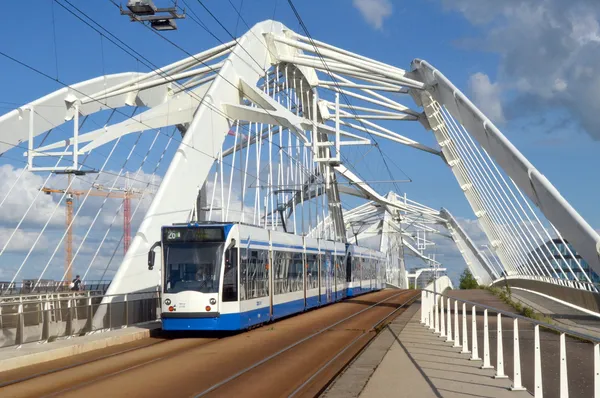
Connecting a Brand-New Eco-Island to the Dutch Capital's Transit Core
AMSTERDAM, North Holland — In a celebrated milestone for sustainable urban mobility in the Netherlands, municipal transit operator GVB and the City of Amsterdam have officially inaugurated the long-awaited extension of Tram Line 26 into Strandeiland, the newest reclaimed island within the IJburg archipelago. Operating along dedicated, whisper-quiet grass-tracked transit reservations, the modern electric streetcar line provides a rapid 15-minute connection linking Central Station directly to the future residential communities currently rising along the waters of the IJmeer.
Strandeiland is being developed as an entirely circular, zero-tailpipe-emission neighborhood planned for 20,000 future residents. The urban blueprint eliminates private automobile dominance by providing comprehensive protected cycle networks, shared electric mobility hubs, and immediate access to high-frequency electric light rail.
Subterranean Civil Engineering Accelerates on the Mega Zuidasdok Project
Across the southern metropolitan edge, heavy civil engineering has reached peak intensity on the multi-billion-euro Zuidasdok project, the largest integrated infrastructure transformation in modern Dutch history. The massive undertaking centers on the complete transformation of Amsterdam Zuid station into a world-class international passenger gateway, highlighted by construction milestones on the new Brittenpassage pedestrian hall and modernized rail platforms.
Simultaneously, engineering consortiums are executing complex foundation tunneling to divert a one-kilometre section of the A10 South motorway into twin underground tunnel conduits. Burying the bustling highway frees up prime above-ground urban acreage for expansive green public plazas, walking esplanades, and research facilities connecting the Vrije Universiteit Amsterdam with the high-tech business district.
National 50-Point Housing Action Plan Fuels Urban Transformations
The transit milestones arrive alongside the implementation of the Dutch national government's comprehensive 50-point housing action plan, enacted to slash administrative permitting delays and halve housing development cycle times from eight years to four by 2030. In Amsterdam, the accelerated framework is driving large-scale urban transformations across key brownfield regeneration zones.
Noteworthy progress is occurring at Bajes Kwartier, where the former Bijlmerbajes prison complex is being transformed into a vibrant, car-free eco-district with 1,350 circular residences, and at Sluisbuurt on Zeeburgereiland, where mixed-income social and mid-market rental towers are rapidly taking shape under strict green building standards.
A Pioneering Blueprint for 21st-Century Sustainable Living
Amsterdam municipal leaders and regional planners emphasized that pairing mega-rail capacity enhancements at Amsterdam Zuid with nimble electric streetcar extensions like Line 26 ensures that the capital’s population expansion remains harmonious with its ambitious climate goals. By integrating circular building materials, district thermal heat pump grids, and seamless public transit, Amsterdam continues to set an undisputed global benchmark for climate-resilient, human-scale urban design.
📰 Related Stories
- Amsterdam Zuid Prepares November 1 Launch of 15-Metre Brittenpassage in Landmark Zuidasdok Rail Milestone Amsterdam • Sep 25, 2026
- Stabbing Attack Near Dam Square Leaves Amsterdam in Shock Amsterdam • Mar 27, 2025