Transport for Wales Advances £1 Billion South Wales Metro with Next-Generation Stadler Class 398 Tram-Train Fleet
A Technological Revolution for Welsh Urban and Valley Transit
CARDIFF, Wales — Ushering in an unprecedented era of rapid, low-carbon public transport for the Cardiff Capital Region, Transport for Wales (TfW) is advancing core operational and technological milestones in the landmark £1 billion South Wales Metro programme. Representing the largest public transport transformation in Wales in generations, the project is revolutionizing the Core Valley Lines (CVL) network through comprehensive track electrification, modernized signaling, and the deployment of cutting-edge rolling stock.
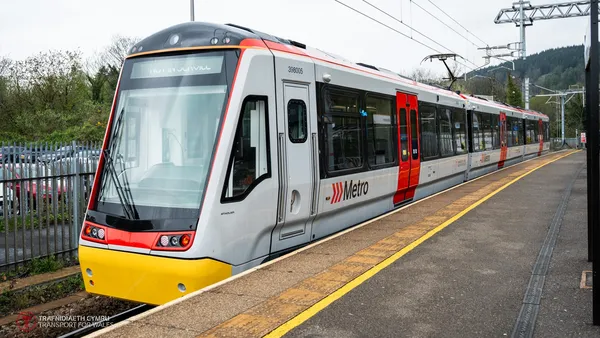
The centerpiece of this regional transformation is the introduction of a bespoke fleet of 36 Stadler Class 398 Citylink tram-trains. Operating out of the purpose-built £100 million Taff’s Well maintenance depot, these state-of-the-art vehicles seamlessly bridge traditional heavy rail infrastructure with urban street running, establishing a turn-up-and-go mass transit spine linking the capital city of Cardiff with the valleys of Merthyr Tydfil, Aberdare, Treherbert, and Rhymney.
Hybrid Battery-Electric Innovations and Seamless Level Boarding
Engineered by Swiss rail specialist Stadler Rail, the Class 398 Citylink tram-trains are advanced three-car articulated units designed to tackle the unique topographies and operational demands of the Welsh rail network. Featuring innovative tri-mode propulsion, the tram-trains draw power from overhead 25kV AC electric catenary lines while utilizing onboard high-capacity lithium-ion battery packs to navigate non-electrified track segments, bridges, and tunnels without localized tailpipe emissions.
Inside, the vehicles are tailored to optimize passenger comfort and accessibility. The low-floor design delivers step-free level boarding across upgraded station platforms, facilitating effortless access for passengers with reduced mobility, wheelchairs, and prams. The climate-controlled cabins offer ergonomic seating, high-speed onboard Wi-Fi, USB and inductive device chargers, digital passenger information displays with live connecting bus data, and generous multi-use bays for bicycles.
Transforming the Core Valley Lines into a High-Frequency Metro
The rollout of the Class 398 fleet is tightly synchronized with deep civil engineering overhauls across the railway network. Over 170 kilometres of track are undergoing overhead wire energization, track dualling at strategic bottlenecks, and the installation of European Train Control System (ETCS) Level 2 digital signaling to enhance line safety and capacity.
Once fully commissioned across the network, the South Wales Metro will deliver up to four trains per hour on core Valley corridors, radically transforming journey times and reliability for daily commuters traveling into central Cardiff Queen Street, Cardiff Central, and Cardiff Bay. The system will also integrate brand-new civic stations at Butetown and Crwys Road, bringing rail access directly to burgeoning commercial and residential districts.
Driving Welsh Decarbonization and Regional Economic Prosperity
Welsh Government ministers and TfW leadership emphasized that the South Wales Metro is central to meeting Wales’ statutory Net Zero carbon emissions targets by 2050. By replacing diesel-powered legacy railcars with clean, quiet, and rapid electric tram-trains, the network provides an attractive alternative to private automobile travel along the congested A470 and M4 corridors.
The modernized transit system acts as a powerful economic catalyst, unlocking access to employment, education, and healthcare across historically isolated South Wales communities. With smart integrated ticketing via the Pay As You Go contactless network, the South Wales Metro establishes a benchmark for equitable, sustainable regional mobility across the United Kingdom.
📰 Related Stories
- Glasgow Subway Delivers £288 Million Modernisation with Full Stadler Train Fleet and Automated Platform Screen Doors Glasgow • Oct 05, 2026
- Translink Delivers £340 Million Belfast Grand Central Station Creating Ireland’s Largest Integrated Rail and Bus Interchange Belfast • Oct 05, 2026
- Merseyrail Expands Pioneering £500 Million Class 777 Battery-Electric Train Fleet and Network Reach Across Liverpool City Region Liverpool • Oct 05, 2026
- Greater Manchester Completes Landmark Bee Network Bus Franchising and Advances Integrated Contactless Rail Network Manchester • Oct 05, 2026