Brisbane City Council Launches Full Passenger Service on $1.4 Billion All-Electric Brisbane Metro Network
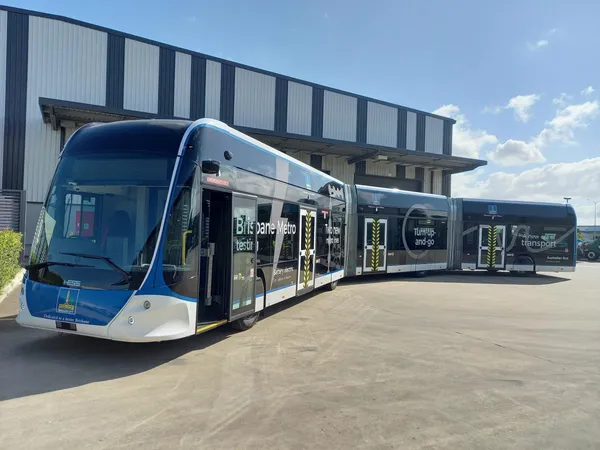
High-Capacity Turn-Up-and-Go Transit Transforms South East Queensland
BRISBANE, Queensland — In a transformative leap forward for public transit ahead of the 2032 Olympic and Paralympic Games, Brisbane City Council and the Queensland Government have officially launched full commercial passenger operations on the landmark $1.4 billion Brisbane Metro rapid transit network. Operating along dedicated grade-separated busways, the high-frequency turn-up-and-go system delivers high-capacity, emission-free mass transit linking major universities, commercial retail precincts, and employment corridors across metropolitan Brisbane.
Representing a collaborative funding partnership between Brisbane City Council and the Australian and Queensland Governments, the network is anchored by 60 custom-designed, 24-metre bi-articulated zero-emission electric vehicles. Designed to operate completely isolated from mixed road traffic jams along the South East Busway and Northern Busway, the service permanently eliminates bottlenecks at the city's Cultural Centre and Victoria Bridge choke points.
Swiss-Engineered Bi-Articulated 24-Metre Electric Fleet
Manufactured through an international partnership between Swiss electric bus leader HESS, Volgren, and ABB, the Brisbane Metro vehicles combine the capacity and spacious comfort of a light rail tram with the flexibility of rubber-tyred vehicles:
- 150+ Passenger Carrying Capacity: Features three spacious articulated passenger compartments with panoramic windows, ergonomic cantilever seating, and wide aisles.
- Rapid Passenger Boarding: Three wide passenger doors with low-floor step-free thresholds ensure frictionless boarding for parents with prams, cyclists, and wheelchair users.
- Flash Charging Infrastructure: Utilizes ABB rooftop pantograph charging points at terminus stations, replenishing battery reserves in under six minutes while passengers alight.
- Digital Onboard Amenities: Equipped with dynamic LED route totems, real-time audio-visual stop announcements, and USB fast-charging ports throughout all compartments.
- Dedicated Wheelchair Bays: Features two fully compliant, automated restraint bays equipped with emergency intercoms linked directly to the driver cabin.
Major Launch Corridors Connecting Eight Mile Plains to UQ Lakes and RBWH
The commercial rollout establishes high-frequency operations across key metropolitan lines:
Metro Line 1 (M1): Links Eight Mile Plains busway station directly to Roma Street, integrating high-density residential suburbs in Upper Mount Gravatt and Holland Park into central business hubs.
Metro Line 2 (M2): Connects the Royal Brisbane and Women's Hospital (RBWH) through the city center to the University of Queensland (UQ Lakes) terminus at St Lucia, catering to over 50,000 daily tertiary students and healthcare workers.
Vehicles run every five minutes during peak hours and every ten minutes off-peak, operating without fixed timetables to provide reliable 'turn-up-and-go' service seven days a week.
Decarbonization Keystone for the Brisbane 2032 Olympic Legacy
Brisbane Lord Mayor Adrian Schrinner and transport ministers affirmed that the Brisbane Metro stands as a foundational pillar of the city's sustainable infrastructure master plan. Powered by 100 percent green renewable electricity supplied by local solar and wind contracts, the all-electric fleet eliminates thousands of daily diesel bus kilometers across the CBD.
With subterranean upgrades underway at Adelaide Street and seamless passenger connections engineered for the upcoming underground Cross River Rail stations, the Brisbane Metro establishes a world-class public transport legacy ready to serve millions of global visitors during the Brisbane 2032 Olympic Games.
📰 Related Stories
- Queensland Advances Landmark $5.4 Billion Cross River Rail as First Test Trains Enter Underground Roma Street Station Brisbane • Oct 17, 2026
- Brisbane Accelerates $1.7 Billion All-Electric Metro Network with High-Capacity Bi-Articulated Fleet and Flash Charging Brisbane • Oct 13, 2026
- Brisbane City Council Deploys 100% Electric Bi-Articulated Metro Fleet and Completes Cultural Centre Station Upgrade Brisbane • Oct 06, 2026
- Transport for NSW Opens Landmark $2.875 Billion Parramatta Light Rail Stage 1 Connecting Westmead to Carlingford Parramatta • Oct 18, 2026