Brisbane City Council Opens 213-Metre Adelaide Street Dedicated Tunnel, Slashing Surface Congestion for Brisbane Metro Electric Fleet
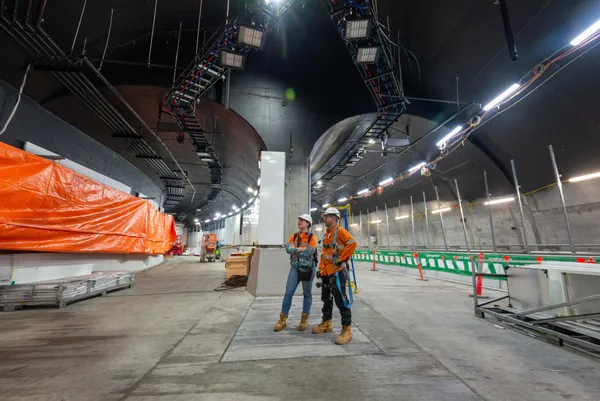
Landmark Subterranean Link Unlocks Turn-Up-and-Go Clean Transit Across Brisbane CBD
BRISBANE, Queensland — In a transformational leap forward for public transportation across Southeast Queensland, Brisbane City Council, led by Lord Mayor Adrian Schrinner, and the Australian Government have officially opened the dedicated 213-metre Adelaide Street subterranean tunnel into full commercial revenue operations. Running deep beneath the heart of Brisbane’s central business district between North Quay and the King George Square underground busway station, the critical multi-million-dollar engineering link provides a dedicated grade-separated corridor for the transformative Brisbane Metro rapid transit network.
Representing a cornerstone of the broader $1.7 billion Brisbane Metro capital project, the dedicated subterranean alignment bridges the gap between the existing South East Busway and the Inner Northern Busway. By bypassing crowded surface street traffic lights and congested pedestrian intersections, the tunnel creates an uninterrupted transit spine linking the cultural precincts of South Bank directly to the northern knowledge and residential corridors of Herston and Kelvin Grove.
Australian-First Canopy Tunneling Engineering Beneath Historic City Hall
Excavating the 213-metre transit cavern required an extraordinary feat of geotechnical precision, executed by tier-one joint venture delivery partners including ACCIONA and Arup:
- Micro-Depth Excavation: The tunnel was excavated just 3 to 6 metres beneath the active surface of Adelaide Street, passing within centimeters of the foundational caissons of the century-old, heritage-listed Brisbane City Hall and the King George Square car park.
- Australian-First Pipe-Canopy Support: Civil engineers deployed a groundbreaking steel umbrella pipe-canopy method, inserting interlocking structural steel grout tubes ahead of the excavation face to secure unconsolidated alluvial soils and eliminate ground settlement risks.
- Zero Surface Disruptions: Heavy underground tunneling was achieved with zero prolonged road closures, allowing hundreds of retail storefronts, commercial offices, and civic plazas along Adelaide Street to remain fully operational throughout construction.
- Subterranean Portal Integration: The southern portal at North Quay features integrated noise-absorbing architectural acoustic baffles and automated flood-isolation gates designed to protect the tunnel network against major Brisbane River flood surges.
Removing Over 1,400 Daily Buses from Surface Streets for 60 Electric Metro Vehicles
The operational commissioning of the Adelaide Street tunnel immediately removes up to one-third of all peak-hour bus movements from surface streets across the Brisbane CBD. Over 1,400 daily bus trips are permanently diverted into the subterranean alignment, freeing up surface asphalt along Adelaide, Queen, and Elizabeth Streets for widened sidewalks, dedicated protected bicycle tracks, and expanded outdoor dining parklets.
The tunnel serves as the exclusive operational artery for Brisbane’s custom fleet of 60 fully electric, 24-metre bi-articulated Brisbane Metro vehicles. Built by European transit manufacturer HESS in partnership with Volgren and ABB, each zero-emission vehicle accommodates up to 150 passengers with full low-floor universal accessibility, three double-door passenger boarding portals, onboard USB charging ports, and dynamic journey mapping screens.
Accelerating Regional Transit Readiness Ahead of the Brisbane 2032 Olympic Games
Lord Mayor Adrian Schrinner emphasized that the Adelaide Street tunnel delivery delivers immediate congestion-busting relief while anchoring Queensland's transit infrastructure blueprint ahead of the Brisbane 2032 Olympic and Paralympic Games, where over 90 percent of spectator travel is mandated to occur via zero-emission mass transit.
Powered by advanced fast-charging pantograph chargers at end-of-line depots capable of replenishing battery reserves in under six minutes, the Brisbane Metro network stands as a benchmark of clean, modern, turn-up-and-go public transit for Australasia.
📰 Related Stories
- Brisbane Metro Expands All-Electric Rapid Transit Fleet as Cross River Rail Unveils Albert Street Station Canopy Brisbane • Oct 24, 2026
- Brisbane Advances $17 Billion Cross River Rail Commissioning and Breaks Ground on Olympic Victoria Park Stadium Precinct Brisbane • Oct 23, 2026
- Brisbane City Council Launches Full Passenger Service on $1.4 Billion All-Electric Brisbane Metro Network Brisbane • Oct 18, 2026
- Queensland Advances Landmark $5.4 Billion Cross River Rail as First Test Trains Enter Underground Roma Street Station Brisbane • Oct 17, 2026