Berlin Advances Siemensbahn Rail Reactivation to Anchor €4.5 Billion Siemensstadt Square Smart District
Reactivating Historic Rail Infrastructure for 21st-Century Mobility
BERLIN, Germany — The Senate Department for Urban Mobility, Transport, Climate Action and the Environment of Berlin, in partnership with Deutsche Bahn, has progressed major structural civil engineering packages for the comprehensive reactivation of the historic Siemensbahn S-Bahn rail corridor. The 4.5-kilometer railway line, which has stood dormant since 1980, is being completely modernized as a high-capacity electric transit link connecting Jungfernheide station and the Berlin Ringbahn directly to the newly emerging Siemensstadt Square innovation district in Spandau.
Under the major 'KIB Neubau' engineering framework running through 2029, contractors are comprehensively restoring historic viaducts, replacing reinforced concrete rail bridges over the Spree River, and building three completely barrier-free S-Bahn stations: Wernerwerk, Siemensstadt, and Gartenfeld. Once operational at the end of 2029, modernized Class 483/484 electric S-Bahn trains will deliver direct, five-minute rail links to Berlin Central Station (Hauptbahnhof), providing sustainable transit for tens of thousands of daily commuters.
A €4.5 Billion Benchmark in Carbon-Neutral Smart City Transformation
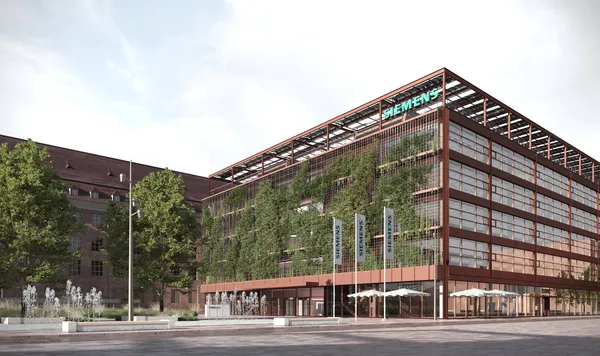
The rail revival serves as the vital transit backbone for Siemensstadt Square, a €4.5 billion, 73-hectare urban redevelopment transforming one of Europe's most storied industrial sites into a carbon-neutral smart city campus. The project reached a major milestone with the official topping-out ceremony for the central 60-metre Siemens Tower and modern atrium building, creating modern collaborative hubs for international research institutions, technology startups, and digital manufacturing centers.
Master-planned as a 100 percent pedestrianized, fossil-free neighborhood, Siemensstadt Square integrates 2,700 sustainable residential apartments, public primary schools, daycare centers, and 35,000 future high-tech workplace slots. The entire district is powered by an innovative multi-energy microgrid combining deep geothermal heat pumps, wastewater heat recovery, and expansive rooftop solar photovoltaic arrays, ensuring complete operational climate neutrality.
Revitalizing Industrial Heritage Through Digital Innovation
Governing Mayor of Berlin Kai Wegner and corporate leaders emphasized that Siemensstadt Square and the Siemensbahn reactivation demonstrate how historic industrial heritage can be seamlessly reinvented into a globally competitive innovation ecosystem. The district utilizes comprehensive digital twin simulation models to optimize real-time energy distribution, automated waste management, and rainwater drainage across all public plazas.
By restoring legacy rail infrastructure and pioneering zero-emission urban living, Berlin is establishing an internationally recognized blueprint for sustainable European city development that marries high-tech industrial manufacturing with vibrant civic communities.
📰 Related Stories
- Berlin Expands Public Transit Grid with 50-Metre 'Urbanliner' Trams and New Stadler J-Series U-Bahn Fleet Deployment Berlin • Sep 28, 2026
- Berlin Expands Public Transit Grid with 50-Metre 'Urbanliner' Trams and New Stadler J-Series U-Bahn Fleet Deployment Berlin • Sep 28, 2026
- InnoTrans 2026 Concludes in Berlin as 3,170 Exhibitors Unveil Zero-Emission Trains and Next-Gen High-Speed Rail Tech Berlin • Sep 26, 2026
- Deutsche Bahn Launches 1,200-Tonne TBM Donna Maria to Excavate Subterranean Exploration Tubes for Munich's €8.5 Billion Second S-Bahn Trunk Line Munich • Sep 26, 2026