Wisconsin Governor Primary Too Close to Call as Candidates Francesca Hong and David Crowley Face Off
Tight Race Unfolds in Wisconsin’s Democratic Primary
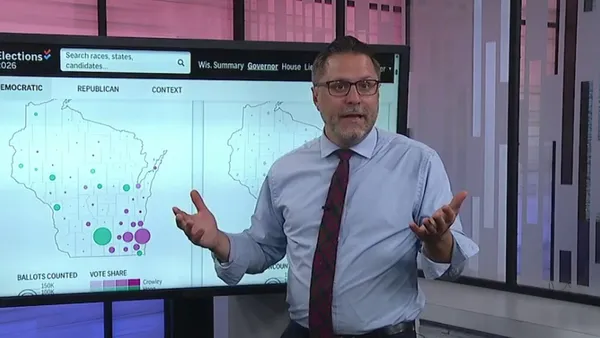
The Democratic primary for governor in Wisconsin was left hanging in the balance early Wednesday morning, as NBC News’ Decision Desk reported that state Representative Francesca Hong and Milwaukee County Executive David Crowley were separated by a mere few hundred votes.
This closely contested race unfolded amid unexpected twists and turns, with significant implications for the state’s political landscape as it highlighted the deep divides within the Democratic party.
Candidates’ Trajectories and Campaign Strategies
Hong, a democratic socialist hailing from Madison, began her campaign largely unknown but ascended to prominence with substantial support in public polls. Her platform, appealing to progressive voters, captivated attention on a national scale in one of the nation’s notable battleground states.
Conversely, Crowley briefly withdrew from the race a month ago amid struggling momentum, but re-entered with the crucial endorsement from outgoing Democratic Governor Tony Evers just ten days later. Evers, who opted not to seek a third term, stumped for Crowley and emphasized his electability in the primary.
As the race drew to a close, Hong faced increasing scrutiny over her left-leaning positions, which raised concerns among some Democratic voters who worried she might be unable to secure a victory in the general election against her Republican counterpart, Rep. Tom Tiffany.
The Voter Dynamics and Party Endorsements
The campaign’s final stretch saw both candidates mobilizing their bases with considerable aid from political endorsements and advertising. Groups supporting Crowley flooded the airwaves with targeted messages, aiming to sway undecided voters in the weeks leading up to the primary.
One Madison resident, Ali Plummer, remarked on her support for Crowley, attributing it to a cautious approach to the election. “I am a risk-averse person, and I really was reading a lot about who has the chances to beat Tom Tiffany in the larger election,” she told NBC News.
In a notable contrast, her partner Shawn Bass chose to back Hong, praising her focus on universal healthcare and childcare. “I really think that she has a great platform for talking about universal healthcare, talking about universal childcare,” Bass stated.
Market Shifts and the Role of Other Candidates
The Wisconsin primary has initially lacked a clear front-runner, with significant shifts as candidates exited the race unexpectedly. Lt. Gov. Sara Rodriguez withdrew in mid-July due to campaign finance issues, while former Lt. Gov. Mandela Barnes stepped down at the end of July. Together, their absence still accounted for a notable 20% of the vote, reflecting a fragmented landscape.
State Senator Kelda Roys captured third place with nearly 8% support, especially performing well in Dane County—a key liberal stronghold intertwined with both her and Hong's legislative districts.
Current Status and Implications
As the final votes are counted, the close results mean that a recount could be demanded, given that Wisconsin allows this if the margin of victory falls below 1%. If the difference is less than 0.25%, the state covers the costs; otherwise, the losing candidate must bear the financial burden.
Following the Democratic primary, Crowley and Hong will prepare to face Tiffany, who has already been critical of Hong’s progressive stance, labeling her approach as “extreme Madison socialism.” Tiffany, who won his primary, called for unity among supporters to protect the “Wisconsin way of life.”
The coming days will be crucial in determining both the outcomes of the primary and the strategies moving forward as the candidates gear up for the general election battle.
📰 Related Stories
- Funeral for Corey Ruiz, Shot by Police in Madison, Wisconsin, Set for Friday Madison • Aug 14, 2026
- Madison Officer Identified in Fatal Shooting of Black Man Sparks Protests Madison • Aug 10, 2026
- Madison Police Officer Shoots and Kills Man During Arrest Attempt Madison • Jul 25, 2026
- San Diego MTS and Affirmed Housing Break Ground on $116M Spring View TOD as Airport Express Bus Expands San Diego • Sep 29, 2026