Engineered Stone's Hidden Toll: Young Workers Are Dying From Silicosis as Industry Fights Accountability
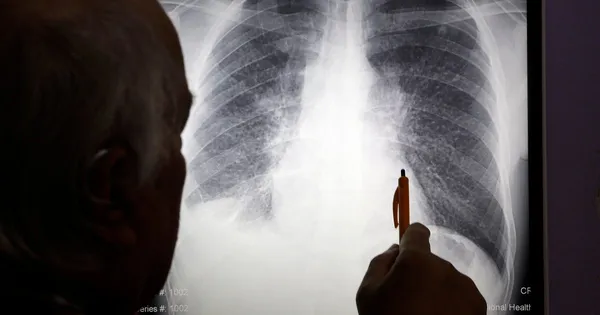
César Manuel González, 37, spent years cutting engineered stone countertops before the invisible consequences of that work became undeniable. The crystalline silica dust released during fabrication had silently scarred his lungs beyond repair, leaving him with silicosis — an irreversible disease that progressively stiffens lung tissue until even basic movement demands extraordinary effort. Diagnosed in 2023, González now faces life dependent on a lung transplant, daily anti-rejection medication, and perpetual vulnerability to infection.
González is among a growing number of predominantly Hispanic men in their 30s and 40s who have developed silicosis after working in countertop fabrication shops. California, which designated silicosis a reportable disease in 2025, has identified 519 confirmed cases linked to engineered stone and 29 deaths since 2019. The median age at diagnosis is 46; at death, 49. Clinicians treating occupational lung disease say the numbers have risen sharply over the past decade, yet no national surveillance system exists, meaning the true scale of the crisis remains unmeasured.
Engineered stone, commonly marketed as quartz, can contain up to 95% crystalline silica — far exceeding concentrations found in natural marble or granite. When power tools cut or polish the material, the surface fractures into microscopic respirable particles that lodge deep in lung tissue, triggering irreversible inflammation and fibrosis. Physicians describe seeing advanced lung disease in otherwise healthy workers who had been employed in the industry for only a few years.
Early warnings emerged decades ago. Israeli physicians documented aggressive silicosis in young countertop workers as early as 1997. Australia conducted systematic CT-based screening and found disease prevalence far higher than anticipated, ultimately banning high-silica engineered stone fabrication in 2024. The United States has taken no equivalent action.
More than 370 lawsuits have been filed against manufacturers, alleging products cannot be safely fabricated at scale. Legislation introduced in Congress would largely shield manufacturers from such civil liability, drawing fierce opposition from occupational health physicians, plaintiffs' attorneys, and former regulators who argue litigation remains one of the few mechanisms capable of forcing product reform.
📰 Related Stories
- LA Metro Board Greenlights $413 Million Vermont Transit Corridor as D Line Subway Prepares for 2027 Station Debuts Los Angeles • Sep 30, 2026
- LAX Automated People Mover Achieves 99.6% Construction Completion as Elevated Electric Train System Enters Final 30-Day Testing Ahead of Early 2027 Launch Los Angeles • Sep 30, 2026
- Los Angeles City Council Approves $466.6 Million Measure ULA Housing Package as Metro Orders 220 Electric Buses Los Angeles • Sep 30, 2026
- Los Angeles City Council Approves Historic $467 Million Measure ULA Housing Package and Streamlines For-Sale Condominiums Los Angeles • Sep 28, 2026