Munich Advances U9 Underground Subway Bypass and Accelerates U5 West Extension Toward Pasing Multi-Modal Hub
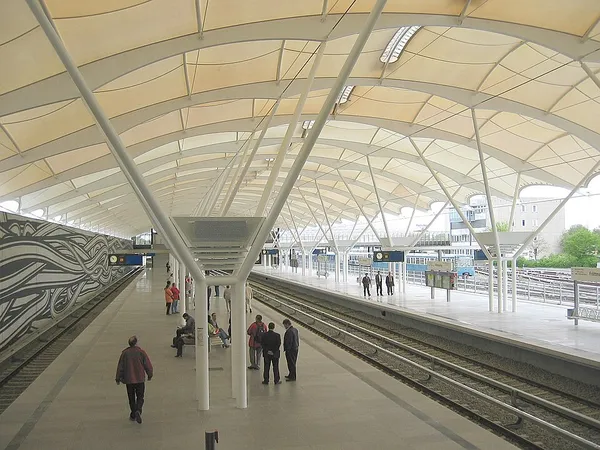
Munich City Council and MVG Formalize Engineering Blueprints for the 10.5-Kilometre U9 Subway Relief Line
MUNICH, Bavaria — In an ambitious move to future-proof its urban mobility and absorb escalating passenger volumes across the Bavarian capital, the City of Munich (*Landeshauptstadt München*) and municipal transit operator Münchner Verkehrsgesellschaft (MVG) have reached critical structural design milestones on the U9 subway relief line (*U9-Entlastungsspange*). Spanning 10.5 kilometres from Schwabing through the central railway station down to Sendling, the underground rail megaproject represents the most consequential expansion of Munich’s U-Bahn network since the 1972 Olympic Games.
Engineering consortia have finalized Phase Two structural designs, synchronizing underground station excavations beneath Munich Central Station (*Hauptbahnhof*) with Deutsche Bahn’s ongoing rail terminal overhaul. By creating a parallel north-south transit bypass, the automated U9 corridor will fundamentally relieve chronic overcrowding on the existing U1/U2 and U3/U6 central trunk lines, permanently dissolving severe platform congestion at Sendlinger Tor and Odeonsplatz.
U5 West Extension to Pasing and U6 Biotechnology Spur to Martinsried
Parallel to the U9 bypass, Munich’s municipal infrastructure departments are actively executing major radial extensions to connect thriving commercial and research clusters:
- U5 West Expansion to Pasing: Heavy subterranean tunneling is extending the U5 from Laimer Platz through Willibaldstraße and Am Knie into Pasing Railway Station, establishing a direct interchange with western S-Bahn and national ICE rail lines.
- Martinsried Science Link on U6: Extending the southern terminus of the U6 past Klinikum Großhadern directly into the Martinsried biotechnology campus, linking university laboratories and pharmaceutical startups into the metro grid.
- Modern Siemens C2 Fleet Deployment: Progressively rolling out energy-efficient, walk-through six-car Siemens C2 trainsets equipped with regenerative braking, LED ambient lighting, and digital infotainment displays.
- New Neuperlach Süd Operations Depot: Developing an advanced secondary rolling stock depot (*Betriebshof*) in the southeast to provide state-of-the-art diagnostic maintenance for expanding subway fleets.
Transit-Oriented Densification and Carbon-Neutral Urban Growth
Munich’s urban planning department (*Referat für Stadtplanung und Bauordnung*) has strategically synchronized subway investments with new sustainable housing districts, notably around Freiham in the west and Neuperlach in the east. By anchoring newly constructed residential neighborhoods directly to high-capacity electric underground rail, the city actively curtails private vehicle dependency and improves regional air quality.
Through uncompromising engineering precision, coordinated multi-modal integration, and aggressive transit expansion, Munich demonstrates how visionary public transportation infrastructure underpins climate neutrality, economic productivity, and superior quality of life in dynamic European metropolises.
📰 Related Stories
- Deutsche Bahn Launches 1,200-Tonne TBM Donna Maria to Excavate Subterranean Exploration Tubes for Munich's €8.5 Billion Second S-Bahn Trunk Line Munich • Sep 26, 2026
- Berlin Senate Approves €1.84 Billion Infrastructure Master Plan to Rebuild 300 Bridges and Fast-Tracks Modular Housing Approvals Berlin • Oct 23, 2026
- Berliner Verkehrsbetriebe Debuts Next-Generation Stadler JK Electric Fleet into Passenger Service Across Berlin U-Bahn Berlin • Oct 18, 2026
- Fraport Nears Commissioning of Landmark €4 Billion Frankfurt Airport Terminal 3 and Automated Sky Line People Mover Frankfurt • Oct 13, 2026