Deutsche Bahn Launches 1,200-Tonne TBM Donna Maria to Excavate Subterranean Exploration Tubes for Munich's €8.5 Billion Second S-Bahn Trunk Line
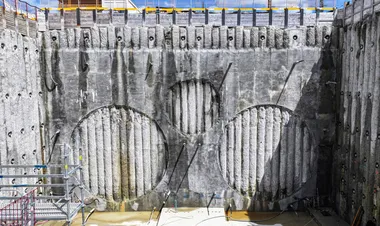
Major Subterranean Breakthrough Beneath Central Munich
MUNICH, Bavaria — In a historic engineering milestone for German urban railway infrastructure, Deutsche Bahn (DB) and the Bavarian State Ministry of Housing, Construction and Transport have officially launched the first mega-scale Tunnel Boring Machine (TBM) for the transformational Second S-Bahn Trunk Line (2. Stammstrecke) megaproject in Munich. Ceremonially christened 'Donna Maria', the 1,200-tonne mechanized tunneling leviathan has commenced precision subterranean excavation, advancing deep underground toward the strategic central station hub at Marienhof, situated directly behind the historic Munich New Town Hall (Neues Rathaus).
The high-precision machine is carving out approximately three kilometres of exploration, drainage, and emergency evacuation galleries, unlocking critical geotechnical data from Munich's complex quaternary gravels and tertiary molasse layers prior to the simultaneous deployment of six main heavy rail TBMs.
Relieving Europe's Most Congested Commuter Rail Artery
Munich's existing S-Bahn trunk line—opened ahead of the 1972 Olympic Games—ranks among the busiest rail corridors in Europe, carrying more than 840 trains and over 350,000 passengers daily across a single two-track tunnel between Donnersbergerbrücke and Ostbahnhof. Any minor switch glitch or mechanical incident currently reverberates across the entire regional transit grid spanning Greater Munich and Upper Bavaria.
The Second Stammstrecke resolves this generational bottleneck by constructing a completely separate, parallel 10-kilometre corridor, including seven kilometres in deep twin-bore subterranean tunnels. By doubling track capacity through the city core, the new line introduces express regional S-Bahn services, slashing journey times from outlying Bavarian communities and Munich Airport directly to downtown employment hubs by up to 20 minutes.
Engineering the 40-Metre-Deep Subterranean Marienhof Interchange
The epicenter of the civil works is the cavernous Marienhof station, engineered at an extraordinary depth of more than 40 metres beneath Munich's bustling historic centre. Requiring sophisticated diaphragm walling, ground freezing, and jet grouting technologies to safeguard neighboring historic Gothic and Renaissance monuments, Marienhof will serve as a premier multimodal transfer hub.
The deep underground station connects directly to existing U-Bahn U3 and U6 lines at Marienplatz, featuring high-speed express elevators, sweeping architectural glass atriums, and pressurized cross-platform pedestrian concourses designed to handle high passenger flows with seamless safety and comfort.
Harnessing Building Information Modeling for Century-Long Reliability
To manage the extraordinary technical complexity of excavating beneath dense urban foundations and subway tunnels, project engineers are utilizing 5D Building Information Modeling (BIM) to simulate soil settlement, groundwater flow, and structural loads in real time. Over 1,000 digital strain and vibration sensors deployed across downtown buildings ensure round-the-clock safety monitoring.
Bavarian transport authorities emphasized that while full commercial operations are targeted for the mid-2030s, the operational deployment of TBM Donna Maria marks an irreversible leap toward modernizing Munich’s transportation network, securing clean, electrified mobility for millions of daily commuters for generations to come.
📰 Related Stories
- Berlin Expands Public Transit Grid with 50-Metre 'Urbanliner' Trams and New Stadler J-Series U-Bahn Fleet Deployment Berlin • Sep 28, 2026
- Berlin Expands Public Transit Grid with 50-Metre 'Urbanliner' Trams and New Stadler J-Series U-Bahn Fleet Deployment Berlin • Sep 28, 2026
- InnoTrans 2026 Concludes in Berlin as 3,170 Exhibitors Unveil Zero-Emission Trains and Next-Gen High-Speed Rail Tech Berlin • Sep 26, 2026
- Berlin Advances Siemensbahn Rail Reactivation to Anchor €4.5 Billion Siemensstadt Square Smart District Berlin • Sep 25, 2026