Mayor Tracy Brabin and WYCA Advance Landmark £2.5 Billion West Yorkshire Mass Transit Tram System Linking Leeds and Bradford
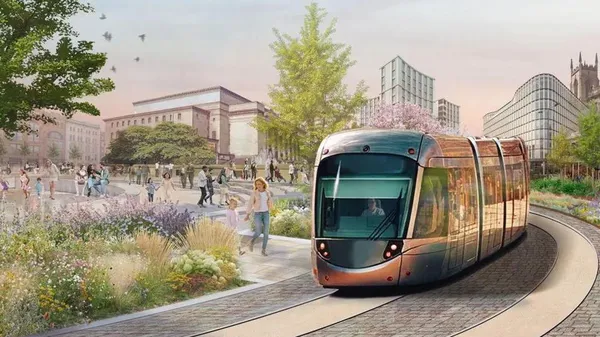
Transforming Western Europe's Largest City Without a Light Rail Transit System
LEEDS, West Yorkshire — In a monumental step toward rectifying decades of regional transport disparity across Northern England, West Yorkshire Mayor Tracy Brabin and the West Yorkshire Combined Authority (WYCA) have reached a decisive turning point in the delivery of the landmark £2.5 billion West Yorkshire Mass Transit programme. The initiative is set to construct a brand-new, modern light rail and tram system, permanently ending Leeds's long-standing status as the largest metropolitan urban center in Western Europe without a rapid rail transit network.
Following an extensive public consultation that garnered nearly 5,000 comprehensive submissions from residents, business groups, and regional stakeholders—with over two-thirds expressing overwhelming support—WYCA has finalized its detailed Route Refinement reports. Working in direct technical partnership with the UK Department for Transport (DfT), transit officials have solidified the Strategic Outline Case (SOC) for Phase 1 construction, aiming for physical groundbreaking by 2028.
Phase 1 Dual-Corridor Light Rail Network: The Leeds and Bradford Lines
The initial phase of the West Yorkshire Mass Transit network prioritizes two transformative, high-capacity light rail lines engineered to integrate major employment clusters, universities, and healthcare institutions:
- The Leeds Line: Connects St James's University Hospital in northeast Leeds through Leeds City Centre, continuing south to major regional retail and commercial employment hubs around the White Rose Shopping Centre and Elland Road.
- The Bradford Line: Establishes a rapid, high-frequency tram link connecting Bradford Forster Square and Bradford Interchange directly with Leeds City Centre via key intermediate communities.
The modern trams will feature 100 percent low-floor step-free boarding, generous spaces for mobility aids and bicycles, onboard USB charging, and seamless integration with West Yorkshire’s unified 'Mayor's Fares' smart tap-and-go ticketing network, allowing commuters to transfer frictionlessly between trams, regional rail, and franchised buses.
Pioneering Green Trackways and Heritage-Sensitive Urban Design
To honor Leeds's rich architectural heritage and protect sensitive Victorian civic quarters, project engineers and landscape architects are incorporating state-of-the-art urban design solutions. Across historic central streets including Boar Lane, The Headrow, and City Square, the network will utilize catenary-free onboard battery traction to eliminate visual clutter from overhead electrical wires near listed buildings.
Furthermore, extensive stretches of the track will deploy 'green track' infrastructure—substituting traditional concrete slab track with living sedum and turf lawns. This living infrastructure absorbs storm runoff, dampens acoustic rail vibrations, and mitigates urban heat island effects across the city center.
Unlocking 50,000 Regional Jobs and Net-Zero Decarbonization
Civic and economic leaders across Leeds City Council, Bradford Council, and the West Yorkshire Chamber of Commerce emphasized that the mass transit network will serve as a multi-generational economic catalyst. Economic modeling indicates the project will unlock over 50,000 regional jobs, accelerate brownfield regeneration along the Aire Valley and Leeds South Bank, and inject upwards of £4 billion into the regional economy.
By diverting tens of thousands of daily passenger vehicle trips away from congested arterial routes such as the M621, A647, and Inner Ring Road, the electrified tram network will dramatically reduce nitrogen dioxide levels, advancing West Yorkshire’s legally binding commitment to achieve carbon net-zero status by 2038.
📰 Related Stories
- Leeds Enters Final Phased Opening of £46.1 Million Station Sustainable Travel Gateway Transforming New Station Street and Bishopgate Leeds • Oct 05, 2026
- West Yorkshire Combined Authority Advances Multi-Billion-Pound Weaver Network Mass Transit Linking Leeds and Bradford Leeds • Sep 27, 2026
- West Yorkshire Combined Authority Advances £2.1 Billion Mass Transit Tram Network Across Leeds and Bradford Leeds • Sep 25, 2026
- Edinburgh Trams Records Historic 12.5 Million Passenger Journeys Following Transformative Newhaven Extension Edinburgh • Oct 18, 2026