South Yorkshire Restores Sheffield Supertram to Public Control and Launches £100 Million Light Rail Modernization Program
Reclaiming South Yorkshire's Iconic Light Rail Network After Three Decades
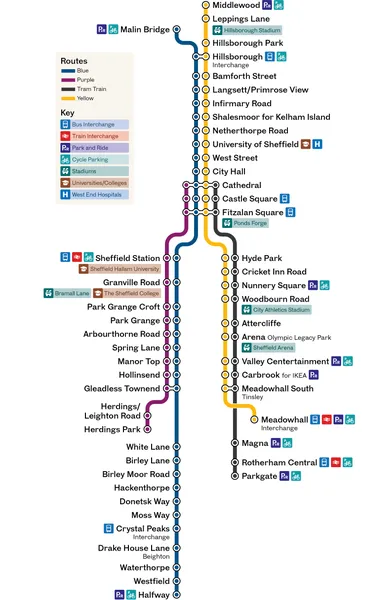
SHEFFIELD, South Yorkshire — In a landmark transformation for regional public transit governance, urban mobility, and passenger-focused investment, the South Yorkshire Mayoral Combined Authority (SYMCA) led by Mayor Oliver Coppard has formally returned the iconic Sheffield Supertram into direct public ownership and operational control. Following the expiration of the 27-year private operating franchise, the 50-kilometre light rail network is now run as a public municipal entity through South Yorkshire Future Trams Limited (SYFTL), securing its operational future and placing community access at the heart of transport strategy.
Serving Sheffield and Rotherham across four high-capacity lines—the Yellow, Blue, Purple, and Tram-Train routes—the Supertram transports over 10 million passengers annually. Bringing the network into municipal management represents the decisive first step in SYMCA’s ambitious masterplan to create an integrated, London-style public transit system connecting light rail, municipal bus networks, and regional commuter railways under a single public banner.
Historic £100 Million Investment in Rail Replacements and Passenger Amenities
To inaugurate the new era of public management, Mayor Coppard and the SYMCA Board have authorized an extensive £100+ million infrastructure modernization and capital renewal programme. Engineering crews have commenced Phase One of a comprehensive permanent-way track overhaul, systematically replacing over 20 kilometres of worn 30-year-old steel running rails across city centre streets, Netherthorpe, and Hillsborough using heavy-duty grooved rail engineered for enhanced acoustic dampening and whisper-quiet passenger travel.
Concurrently, contractors are executing structural fit-outs across all 50 passenger tram stops. Upgrades include the deployment of high-visibility, real-time LED and audio passenger transit displays, energy-efficient architectural lighting, improved tactile paving for passengers with limited mobility, new shelter canopies, and enhanced CCTV coverage directly linked to the central control operations facility at Nunnery Square Depot.
Contactless Tap-On Tap-Off Ticketing and Fare Integration Across South Yorkshire
Modernizing the passenger experience, SYFTL is rolling out a brand-new contactless tap-on, tap-off digital ticketing platform across the entire Supertram fleet and platforms. Replacing antiquated paper conductors and magnetic cards, the account-based ticketing system automatically calculates the lowest possible daily and weekly fare caps for riders, integrating with regional concession cards, English National Concessionary Travel Scheme passes, and youth discounts.
The ticketing upgrade forms the bedrock for seamless modal integration with South Yorkshire’s bus routes. Riders will soon experience synchronized transfers, unified digital apps, and flat-fare ticketing that removes commercial barriers to everyday travel between residential housing suburbs, regional NHS health trusts, and commercial employment hubs.
Fleet Overhauls and Long-Term Network Expansion to Stocksbridge and Chesterfield
To maintain dependable train availability while long-term rolling stock procurement is finalized, SYMCA has initiated life-extension overhauls on the original fleet of 25 Duewag Supertram vehicles, refurbishing traction electronics, bogies, door mechanisms, and passenger saloon interiors with ergonomic seating and USB charging ports. These vehicles operate alongside the pioneering fleet of seven Stadler Citylink Class 399 tram-trains, which seamlessly navigate both city street tramways and national Network Rail lines connecting Sheffield Cathedral to Rotherham Parkgate.
Civic leaders, business chambers, and transport advocates praised the municipal transition as an essential engine for South Yorkshire's industrial renaissance and climate targets. With public ownership secured, transport planners are actively progressing feasibility studies to expand the network to underserved growth corridors—including the proposed reinstatement of passenger services along the Don Valley railway to Stocksbridge and potential southerly tram extensions toward Chesterfield—establishing the Supertram as a resilient, zero-emission transportation spine for the 21st century.
📰 Related Stories
- City of Edinburgh Council Approves Strategic Business Case for North-South Tram Extension Connecting BioQuarter and Granton Waterfront Edinburgh • Oct 24, 2026
- Birmingham Curzon Street HS2 Station Completes 2,000-Pile Substructure and West Midlands Metro Tram Interchange Birmingham • Oct 24, 2026
- Transport for London Expands Superloop 2 Express Bus Network with Bakerloop and Electric Orbital Corridors London • Oct 24, 2026
- Greater Manchester Surpasses 500 Electric Buses on Bee Network and Outlines Multimodal Rail Integration Manchester • Oct 24, 2026