Transport for London Expands Superloop 2 Express Bus Network with Bakerloop and Electric Orbital Corridors
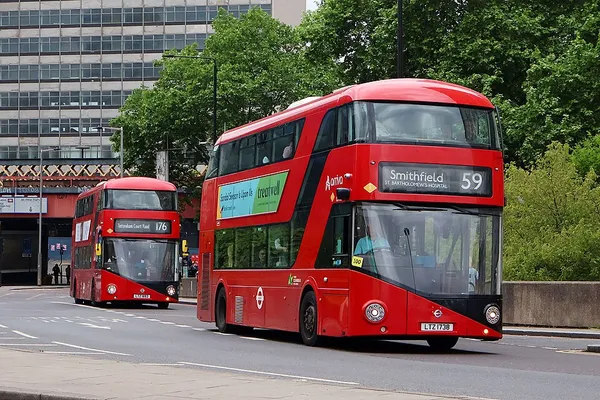
Mayor Sadiq Khan and TfL Accelerate Express Transit with Superloop 2 Orbital and Radial Routes
LONDON, Greater London — Transforming outer and suburban public transport connectivity across the British capital, Mayor of London Sadiq Khan and Transport for London (TfL) have advanced major operational rollouts under the Superloop 2 expansion initiative. Building upon the proven ridership success of the original 10-route outer orbital network—which generated millions of additional passenger journeys and cut crosstown travel times by up to 25 minutes—Superloop 2 deploys high-frequency, limited-stop zero-emission electric buses to unite town centers, hospitals, and rail interchanges historically bypassed by the London Underground.
The flagship addition to the express network is the BL1 'Bakerloop' service, linking Waterloo to Lewisham via Elephant & Castle, Old Kent Road, and New Cross Gate. Operating as a fast, high-capacity surface express transit link along the proposed Bakerloo line extension corridor, the Bakerloop provides immediate relief to southeastern London commuters while long-term heavy rail capital financing undergoes national statutory reviews.
Zero-Emission Fleets and Targeted Cross-Suburban Express Connections
TfL's strategic Superloop 2 blueprint focuses on vital corridors unlocking employment hubs and educational facilities:
- SL11 Express Activation: Connecting North Greenwich to Abbey Wood via Charlton and Woolwich Arsenal, integrating directly with Elizabeth line and DLR platforms.
- SL12 East London Spine: Operating between Gants Hill and Rainham (Ferry Lane) via Romford and Elm Park, slashing orbital transit times across Havering and Redbridge.
- Future Priority Routes in Pipeline: Advancing detailed consultations for the SL13 (Ealing Broadway to Hendon via Brent Cross) and SL15 (Clapham Junction to Eltham via Tulse Hill).
- 100% Zero-Emission Technology: Powered exclusively by state-of-the-art battery-electric double-decker buses featuring USB charging at every seat, digital countdown infotainment displays, and whisper-quiet regenerative braking.
Economic Productivity and Sustainable Outer-London Decarbonization
Econometric analysis conducted by City Hall confirms that limited-stop express buses represent one of the most cost-effective transit interventions available, delivering immediate economic stimulus to local high streets and commercial districts. By providing reliable, low-cost alternatives to private car ownership, Superloop 2 directly reinforces the Ultra Low Emission Zone (ULEZ) standards, purifying roadside air quality and driving London toward its statutory target of net-zero carbon emissions by 2030.
Through disciplined capital prioritization, intelligent route planning, and cutting-edge zero-emission bus technology, London demonstrates how modern surface transit networks deliver immediate social equity and sustainable metropolitan growth.
📰 Related Stories
- Transport for London and City Hall Advance Bakerloo Line Extension to Lewisham and Commission New Fleet Upgrades London • Oct 23, 2026
- Mayor Sadiq Khan and OSDC Finalize Preparations to Pedestrianize Oxford Street, Transforming London Retail Hub into Traffic-Free Boulevard London • Oct 19, 2026
- Transport for London Advances Live Operational Testing on New £2.9 Billion Walk-Through Siemens Piccadilly Line Train Fleet London • Oct 19, 2026
- Birmingham Launches £11 Billion Mayoral Development Corporation to Drive Knowledge Quarter and 60,000-Seat Sports Campus Birmingham • Oct 23, 2026