Transport for London Opens Landmark £1.2 Billion Silvertown Tunnel Under River Thames with Zero-Emission Bus Transit
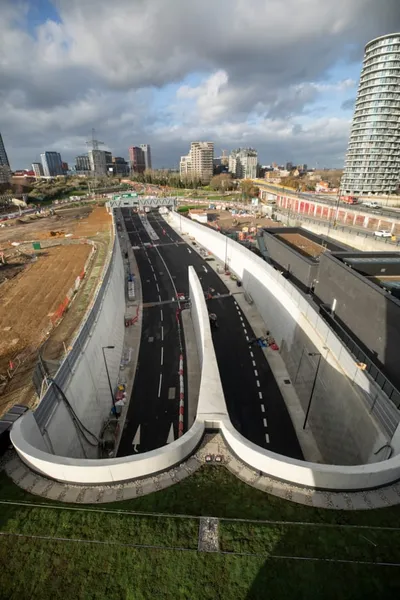
A Historic Subterranean Connection Uniting East London Across the Thames
LONDON, Greater London — In a transformative milestone for cross-river connectivity, public mass transit, and regional economic revitalization in East London, Transport for London (TfL) and the Riverlinx consortium have officially opened the landmark £1.2 billion Silvertown Tunnel for commercial operations. Spanning 1.4 kilometres of dual-bore highway bored beneath the River Thames, the modern subterranean artery links the thriving commercial and residential regeneration zone of Silvertown and the Royal Docks in Newham directly to the Greenwich Peninsula.
Marking the first new road crossing built east of Tower Bridge in over three decades, the Silvertown Tunnel resolves chronic congestion and unreliable journey times historically caused by the neighboring 127-year-old Blackwall Tunnel. Constructed through complex riverbed geology using 'Jill'—the UK's largest tunnel boring machine with an 11.91-metre diameter cutterhead—the twin-tube crossing features state-of-the-art tunnel ventilation systems, automated incident detection sensors, and full CCTV surveillance.
Tripling Cross-River Public Transit Capacity with Zero-Emission Superloop Buses
Central to the design of the Silvertown Tunnel is a major expansion of sustainable public mass transit. Each tunnel bore incorporates a dedicated bus, coach, and heavy-goods vehicle (HGV) lane, allowing double-deck buses to reliably cross the River Thames east of central London for the very first time. The infrastructure increases cross-river public transit capacity from just 6 buses an hour to 21 zero-emission buses per hour during weekday peak periods.
The tunnel facilitates the immediate launch of the brand-new Superloop express route SL4, operated by Go-Ahead London, which connects Canary Wharf directly to Grove Park via the Silvertown Tunnel and Blackheath. In tandem, TfL has extended Route 129 through the tunnel to link North Greenwich and the Royal Docks. To encourage public transport adoption, TfL has made all bus journeys on routes using the Silvertown Tunnel completely free for the first full year for contactless and Oyster pay-as-you-go passengers.
Dedicated Cross-River Bicycle Shuttle and Intelligent User Charging
To guarantee safe, accessible river crossings for active transport users, TfL has introduced a bespoke, zero-emission bicycle shuttle bus service. Operating every 12 minutes from 06:30 to 21:30 seven days a week, the purpose-built shuttles transport cyclists and their bicycles seamlessly between dedicated portal hubs at Royal Victoria DLR station in the north and Millennium Way on the Greenwich Peninsula in the south, completely free of charge.
To manage vehicular traffic demand, eliminate gridlock, and safeguard local air quality, a coordinated user charging scheme has been implemented across both the Silvertown and Blackwall tunnels. Monitored through automated number plate recognition (ANPR) cameras, variable peak and off-peak tariffs incentivize off-peak freight deliveries while funding continuous tunnel maintenance. Substantial discounts and exemptions are provided for local low-income residents, blue badge holders, small business commercial fleets, and zero-emission vehicles.
Catalyst for East London Regeneration, Job Growth, and Decarbonization
London municipal authorities, business leaders, and urban planners emphasized that the Silvertown Tunnel acts as an indispensable catalyst for regional economic growth across the Thames Estuary. The enhanced cross-river resilience supports major housing, commercial, and tech masterplans across the Royal Docks Enterprise Zone, Canary Wharf, and Greenwich Millennium Village, unlocking tens of thousands of new homes and commercial jobs.
By eliminating the notorious stop-and-go idling traffic jams that plagued the Victorian-era Blackwall Tunnel approaches along the A12 and A102 corridors, the project delivers a substantial localized improvement in air quality. Powered by 100 percent renewable electricity and supported by extensive green landscaping at tunnel portals, the Silvertown Tunnel exemplifies modern, balanced infrastructure engineered to support London's statutory drive toward net-zero carbon by 2030.
📰 Related Stories
- HS2 and Network Rail Advance Construction on Landmark 14-Platform Old Oak Common Super-Hub Station in West London London • Oct 13, 2026
- London Advances Underground Modernization as TfL Accelerates Nocturnal Testing on 94 New Air-Conditioned Piccadilly Line Trains London • Oct 05, 2026
- Transport for London Expands Orbital Superloop Network with SL12 Express Route to Connect Outer Boroughs and Town Centres London • Oct 04, 2026
- Transport for London Finalizes £1.7 Billion DLR Extension to Beckton Riverside and Thamesmead to Unlock 30,000 New Homes Across East London London • Oct 03, 2026