London Advances Underground Modernization as TfL Accelerates Nocturnal Testing on 94 New Air-Conditioned Piccadilly Line Trains
Upgrading the Deep Tube Network with Next-Generation Rolling Stock
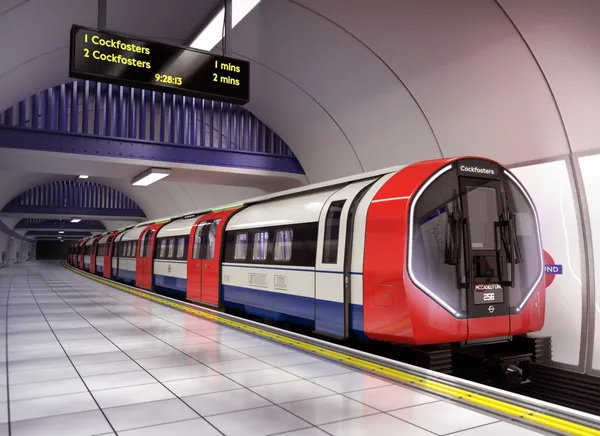
LONDON, Greater London — In the largest fleet renewal program on the Deep Tube network in more than half a century, Transport for London (TfL) and global rail manufacturer Siemens Mobility have accelerated round-the-clock nocturnal testing of the brand-new Inspiro trainsets for the Piccadilly line. Under the £2.9 billion Deep Tube Upgrade Programme, the 94 custom-engineered trainsets are undergoing rigorous dynamic route testing along the line’s 44-mile alignment, validating regenerative braking systems, platform-train interfaces, and automated communications ahead of phased passenger rollout.
The Piccadilly line, which carries more than 200 million passenger journeys annually across 53 stations from Cockfosters through central London to Heathrow Airport and Uxbridge, currently relies on 1973-stock trains approaching 50 years of continuous service. The new fleet introduces the first air-cooled walk-through carriages ever operated on a deep-level London Underground line.
Walk-Through Design, Air Conditioning, and 23 Percent Capacity Leap
The new nine-car trainsets feature continuous open-gangway walk-through carriages, wider double doors positioned symmetrically along the carbody to speed up platform boarding, and state-of-the-art onboard digital passenger information screens displaying real-time interchange connections. Crucially, the trains feature full carriage air conditioning and temperature regulation, delivering welcome relief for millions of commuters during hot summer months inside London's subterranean clay tunnels.
Engineering optimizations have reduced the weight of each train by approximately 20 percent compared to legacy rolling stock, lowering track wear and cutting operational energy consumption by 20 percent. Once modern digital signaling is fully implemented alongside the fleet, TfL will increase train frequency from 24 to 27 trains per hour during peak travel periods, boosting total line capacity by an extraordinary 23 percent.
Industrial Renaissance at Siemens Mobility’s Goole Facility
The manufacturing of the fleet marks a landmark revival for British rail engineering. Approximately half of the 94 trainsets are being built and assembled at Siemens Mobility’s newly commissioned £200 million rail manufacturing facility in Goole, East Yorkshire. The project has created more than 700 direct jobs and supported up to 1,700 positions across the UK supply chain, cementing domestic industrial capability in advanced electric rail manufacturing.
At London depot sites, including Northfields and Cockfosters, TfL has invested tens of millions of pounds in upgrading maintenance facilities, installing extended maintenance sheds, high-voltage test tracks, and automated wheel-lathe pits to service the modern electric fleet.
Anchoring London’s Sustainable Urban Transit Future
London Mayor Sadiq Khan and TfL Transport Commissioner Andy Lord underscored that modernizing the Piccadilly line is essential to sustaining economic productivity and environmental sustainability in the British capital. By delivering quieter, cleaner, and significantly more spacious transport between central financial districts and Europe’s busiest international airport, London is establishing a world-class benchmark for metropolitan mass transit in the 21st century.
📰 Related Stories
- HS2 and Network Rail Advance Construction on Landmark 14-Platform Old Oak Common Super-Hub Station in West London London • Oct 13, 2026
- Transport for London Expands Orbital Superloop Network with SL12 Express Route to Connect Outer Boroughs and Town Centres London • Oct 04, 2026
- Transport for London Launches Public Consultation on Multi-Billion-Pound West London Orbital Line Connecting Hounslow to Hendon to Unlock 25,000 Homes London • Oct 03, 2026
- Birmingham Advances Landmark £1.7 Billion West Midlands Transport Acceleration and Metro Extension Milestones Birmingham • Oct 13, 2026