HS2 Advances Construction of Net-Zero Curzon Street Station Above Ground in Birmingham's City Centre
Transforming Birmingham's Eastside with Britain's High-Speed Rail Hub
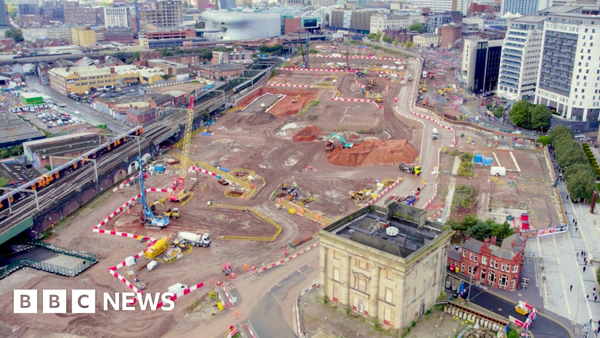
BIRMINGHAM, West Midlands — In a landmark structural milestone for the United Kingdom’s flagship rail modernization program, High Speed Two (HS2 Ltd) and principal construction contractor Mace Dragados Joint Venture (MDJV) have formally commenced above-ground superstructure construction on the iconic Birmingham Curzon Street Station. Marking the transition from heavy subterranean civil engineering to structural framework assembly, the sprawling terminus is designed to become the world's first high-speed railway station to achieve net-zero operational carbon certification.
Situated in the heart of Birmingham's Eastside regeneration district, the brand-new seven-platform station will serve as the primary northern terminus for HS2 Phase One services, connecting central Birmingham directly with London Euston in just 45 minutes. The new terminus replaces over a century of fragmented connectivity, slashing transit times and quadrupling intercity rail passenger capacity between the West Midlands and the capital.
Completion of Deep Ground Engineering and Over 2,000 Foundation Piles
The transition to above-ground construction follows the successful completion of an intensive, multi-year subterranean engineering campaign carried out across the 25,000-square-meter brownfield site. Engineering teams deployed specialized rotary drilling rigs to install over 2,000 reinforced concrete foundation piles, bored to depths of up to 30 meters into the underlying bedrock to support the colossal weight of the elevated tracks and monumental station canopy.
Civil crews systematically constructed massive reinforced pile caps, ground retaining beams, and an 8-meter-high western perimeter retaining wall, excavating approximately 47,000 cubic meters of earth. Concurrently, infrastructure partner Balfour Beatty VINCI (BBV) is accelerating construction on the adjoining Curzon 2 viaduct—a stunning 40-meter-tall steel-and-concrete viaduct that carries the high-speed tracks directly over city roadways into the station approaches.
Victorian-Inspired Timber Arch Architecture and Historic Heritage Integration
Designed by internationally renowned architectural firm WSP in partnership with Grimshaw Architects, Curzon Street Station draws aesthetic inspiration from Birmingham’s rich industrial heritage and the grand arched train sheds of the 19th century. The station features an elegant, sweeping timber-and-steel arched canopy engineered with sustainably sourced structural glulam timber trusses and high-performance, double-glazed crystalline roof lights that flood the passenger concourse with natural daylight.
The contemporary complex pays reverent homage to railway history by seamlessly incorporating the adjacent historic 1838 Curzon Street Station building—widely recognized as the world's oldest surviving monumental piece of railway architecture. The Grade I-listed Roman Doric landmark is undergoing meticulous historic preservation and will serve as a prominent public visitors center, exhibition gallery, and civic meeting space integrated into the wider public square.
Seamless Tram and Active Travel Links Driving Regional Economic Renaissance
Engineered as a multimodal transit interchange, Curzon Street Station connects effortlessly with regional transport networks. Transport for West Midlands (TfWM) is delivering the Eastside Metro extension, bringing the Midland Metro light rail tram network directly to the station forecourt to link arriving rail travelers seamlessly with Birmingham New Street, Digbeth, and the Jewellery Quarter.
Municipal leaders and the West Midlands Combined Authority (WMCA) emphasized that the station is already acting as an immense catalyst for regional economic regeneration. The project has directly created more than 1,000 local construction and engineering jobs, while anchoring the wider £1.5 billion Eastside masterplan that will deliver thousands of new homes, commercial tech quarters, and vibrant public realm parklands across Birmingham for decades to come.
📰 Related Stories
- Birmingham Accelerates Landmark Curzon Street HS2 Station as Concrete Piling Concludes and Platform Decks Rise Birmingham • Oct 13, 2026
- Birmingham Advances Landmark £1.7 Billion West Midlands Transport Acceleration and Metro Extension Milestones Birmingham • Oct 13, 2026
- Birmingham Curzon Street Station Reaches Major Engineering Milestone with Platform Deck Beams and Eastside Metro Integration Birmingham • Oct 05, 2026
- Liverpool City Region Secures £96 Million Investment to Construct Landmark Liverpool Baltic Merseyrail Station Liverpool • Oct 13, 2026