Glasgow Subway Progresses £288 Million Overhaul Toward Driverless Operations with New Stadler Fleet
Reinventing the World's Third Oldest Underground Rail Network
GLASGOW, Glasgow City — In the most comprehensive transformation of Scotland’s subterranean transit infrastructure in more than four decades, Strathclyde Partnership for Transport (SPT) has achieved landmark operational milestones across its £288 million Glasgow Subway Modernisation Programme. Serving as the third oldest underground railway system in the world—originating in 1896 behind only the London Underground and the Budapest Metro—Glasgow's historic 10.5-kilometre twin circular line (affectionately dubbed the 'Clockwork Orange') is undergoing a generational technological revolution.
The modernisation program reaches far beyond cosmetic station refurbishments. It comprehensively replaces aging mid-century signalling, electrical sub-stations, and legacy rolling stock with cutting-edge rolling stock, high-frequency digital signalling, and station safety enhancements that will transition the subterranean network into the United Kingdom's first fully driverless underground metro outside of London.
Custom-Built 4-Car Stadler Rolling Stock in Full Passenger Service
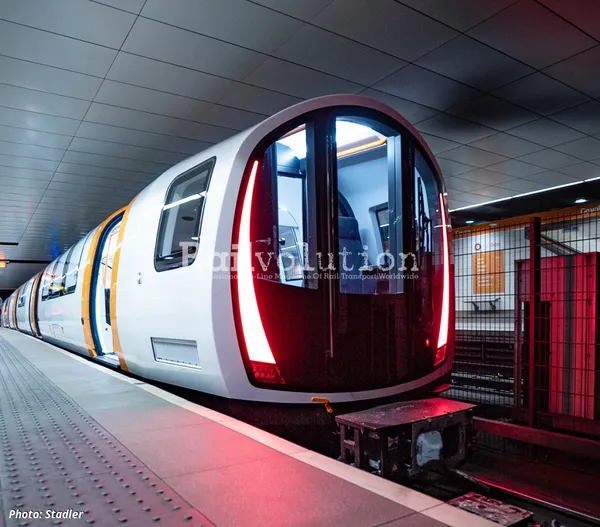
Central to this revitalization is the successful introduction and complete operational transition to a bespoke fleet of 17 four-car trainsets manufactured by Swiss rail engineering giant Stadler Rail. Engineered specifically to navigate Glasgow’s extraordinarily tight Victorian tunnel diameter (just 3.4 metres) and distinctive narrow 4-foot (1,219 mm) rail gauge, the custom trainsets replace the decommissioned 1980s Metro-Cammell fleet that carried generations of Glaswegian commuters.
The new Stadler trains feature modern open-gangway walk-through carriages, providing significantly greater passenger circulation space, enhanced accessibility zones for wheelchairs and prams, intuitive digital route displays, integrated CCTV safety coverage, and regenerative braking systems that return kinetic energy back into the traction power grid during deceleration.
Platform Screen Doors and Communications-Based Train Control (CBTC)
With the physical Stadler fleet operating daily across both the Inner and Outer circles, engineering consortiums led by Stadler, Hitachi Rail, and Ansaldo STS are advancing the decisive safety and signalling components required for unattended operation. Half-height Platform Screen Doors (PSDs) have been installed and integrated at key stations including Govan, Partick, and Ibrox, with rollout continuing systematically across all 15 subterranean stations on the network.
Synchronized directly with train doors, the automated glass barriers eliminate track intrusion risks and prevent accidental passenger falls onto the live traction rail. Concurrently, technical teams are executing dynamic system integration testing on the network's high-precision Communications-Based Train Control (CBTC) signalling and the modernized Broomloan Depot operational control center, establishing the safety architecture necessary to transition to complete Unattended Train Operation (UTO / GoA4 automation).
Catalyst for the Clyde Metro and Regional Decarbonization Across West Scotland
SPT executives and Scottish transport ministers emphasized that the modernized Glasgow Subway represents the core operational anchor for Greater Glasgow’s long-term mobility vision, including the proposed multi-billion-pound Clyde Metro regional rapid transit network. By delivering a dependable, high-frequency, turn-up-and-go underground service, the revitalized subway removes thousands of private automobile journeys each day from congested crossings along the River Clyde and the M8 motorway corridor.
Furthermore, the 100 percent electric railway powers urban regeneration across vital community nodes, connecting dense university campuses in Hillhead and Kelvinbridge directly with major hospital facilities, cultural districts in the West End, and industrial rejuvenation corridors in South Glasgow. The modernization ensures Glasgow’s iconic Victorian subway enters its second century of operation as a world-leading model of sustainable municipal rail transit.
📰 Related Stories
- Network Rail Reaches Superstructure Milestones on £211 Million Cambridge South Station Serving Biomedical Campus Cambridge • Oct 14, 2026
- Liverpool City Region Secures £96 Million Investment to Construct Landmark Liverpool Baltic Merseyrail Station Liverpool • Oct 13, 2026
- Birmingham Accelerates Landmark Curzon Street HS2 Station as Concrete Piling Concludes and Platform Decks Rise Birmingham • Oct 13, 2026
- HS2 and Network Rail Advance Construction on Landmark 14-Platform Old Oak Common Super-Hub Station in West London London • Oct 13, 2026