Transport for Greater Manchester Integrates First 14 Heavy Rail Stations into the Bee Network with Contactless Capping
Landmark Rail Integration Phase Launches Across 14 Greater Manchester Commuter Stations
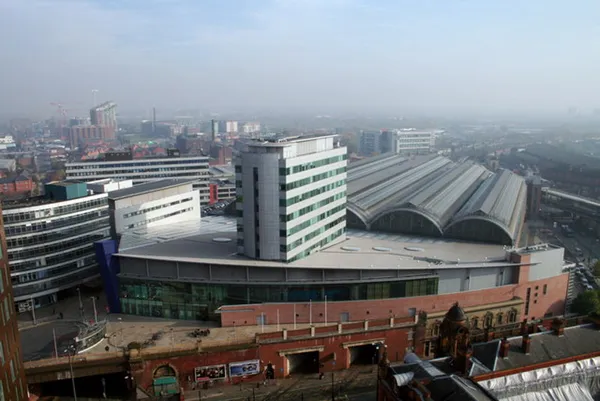
MANCHESTER, Greater Manchester — In the most transformative expansion of regional public mobility since the inception of the unified transport network, Transport for Greater Manchester (TfGM) and the Greater Manchester Combined Authority (GMCA), chaired by Mayor Andy Burnham, have confirmed the operational integration of the first 14 local heavy rail stations into the publicly controlled Bee Network. Commencing along high-demand commuter corridors connecting Manchester Piccadilly with Glossop and Hadfield, the milestone marks the physical convergence of heavy rail with the city-region's bus and tram systems.
The milestone integration introduces seamless contactless tap-in, tap-out smart ticketing across rail journeys, backed by automatic multi-modal daily and weekly fare capping. For the first time in northern rail history, commuters can transition between yellow Bee Network buses, Metrolink trams, and national rail services without purchasing disjointed paper tickets, delivering immediate cost-of-living savings for hundreds of thousands of daily passengers.
Unified Digital Architecture and Expanded Second-Wave Station Roadmap
Underpinning the operational rollout is a major overhaul of regional digital passenger communications, folding heavy rail tracking into TfGM's central platform:
- Bee Network App Live Telemetry: Real-time GPS train location tracking, live platform departure boards, and automated delay notifications integrated directly into the unified mobile app.
- Station Universal Accessibility: Step-free access data, audible guidance systems, and live lift status updates embedded across all newly integrated rail stations.
- Phase Two Expansion (March 2027): Formal preparation underway to fold a second tranche of key commuter stations—including Manchester Victoria, Stalybridge, and Wigan—into the integrated fare boundary.
- Fleet Decarbonization Synergy: Synchronizing rail timings with zero-emission electric bus routes to establish frictionless neighborhood feeder loops across peripheral boroughs.
City Centre Transport Strategy 2040 Transforms Albert Square and Piccadilly Gardens
Parallel to regional rail integration, Manchester City Council, in collaboration with Salford City Council, is accelerating structural milestones under the City Centre Transport Strategy 2040. The strategic blueprint commits Greater Manchester to achieving a bold modal target: ensuring that 90 percent of all morning peak-period journeys into the city core are made via walking, cycling, or clean public transit.
To achieve this, urban work crews are reconfiguring heavily trafficked public spaces, notably transforming Albert Square into a grand pedestrian-first civic realm and redesigning Piccadilly Gardens to reduce idling diesel buses. By dismantling historic transport silos and unifying rail, tram, and active travel, Greater Manchester solidifies its standing as the United Kingdom's leading municipal pioneer in integrated regional transit governance.
📰 Related Stories
- Greater Manchester Surpasses 500 Electric Buses on Bee Network and Outlines Multimodal Rail Integration Manchester • Oct 24, 2026
- Greater Manchester Achieves Full Bee Network Integration as Public Bus Franchising Completes Across All Ten Metropolitan Boroughs Manchester • Oct 23, 2026
- Greater Manchester Integrates First Local Rail Lines into Bee Network with Contactless Fares Across 17 Stations Manchester • Oct 18, 2026
- Birmingham Launches £11 Billion Mayoral Development Corporation to Drive Knowledge Quarter and 60,000-Seat Sports Campus Birmingham • Oct 23, 2026