Brisbane City Council Expands Turn-Up-and-Go Brisbane Metro as Electric Bi-Articulated Fleet Operates Across M1 and M2 Lines and Regional Extensions Advance
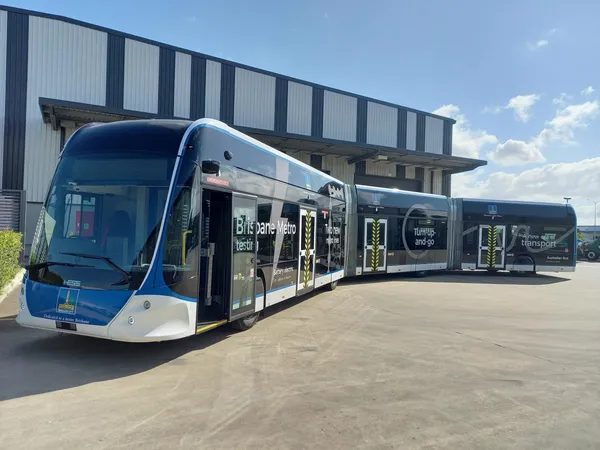
High-Frequency Turn-Up-and-Go Transit Transforms Brisbane Commutes
BRISBANE, Queensland — Brisbane City Council and transport partner Translink are expanding service frequencies across the landmark Brisbane Metro rapid transit system as the city’s fleet of 24.5-metre, fully electric bi-articulated vehicles logs record commuter volumes across both initial trunk corridors. Operating along dedicated busways segregated from general traffic, the turn-up-and-go system delivers services every 5 to 10 minutes during peak hours, providing high-capacity, emission-free transit between outer growth corridors and the Brisbane central business district.
The network's primary routes—Line M1 connecting Eight Mile Plains to Roma Street via the South East Busway, and Line M2 linking the Royal Brisbane and Women’s Hospital (RBWH) to the University of Queensland (UQ Lakes) via the King George Square bus station—cover approximately 25 kilometers and serve 18 accessible station precincts.
Next-Generation Vehicle Engineering and Fast-Charging Flash Depots
Built by Swiss vehicle manufacturer HESS with electric propulsion systems from ABB, each lighTram 25 bi-articulated vehicle can comfortably carry up to 170 passengers. The modern low-floor vehicles feature three wide accessibility doorways, panoramic floor-to-ceiling double-glazed windows, advanced USB-C device charging ports, digital real-time route progress monitors, and dedicated wheelchair and pram bays.
To sustain round-the-clock operations without lengthy depot recharging delays, the system deploys high-powered 600-kilowatt overhead flash-charging pantographs at terminal stations. These smart chargers automatically dock with incoming vehicles to replenish battery reserves in under six minutes while passengers disembark and board.
Adelaide Street Tunnel and Bus Network Modernization
A critical civil engineering cornerstone enabling the Metro's smooth CBD flow is the newly completed Adelaide Street Tunnel. The 213-meter subterranean passage diverts hundreds of daily bus and Metro movements beneath central city streets directly into the King George Square underground bus station, removing surface gridlock and reclaiming street space for outdoor dining and wide pedestrian walkways.
Ridership on the Metro has also surged following the continued success of Queensland’s permanent 50-cent public transport fare policy, which has spurred thousands of daily commuters to switch from private cars to public transit across South East Queensland.
Business Cases Progressing for Outer Corridors and Brisbane Airport
With M1 and M2 services established, the Lord Mayor and council transportation planners are actively finalizing comprehensive business cases for the next development phases of the Brisbane Metro. Future expansion proposals evaluate extending the network north to Carseldine, east to Capalaba, south to Springwood, and creating a direct link to Brisbane Airport, ensuring the mass transit backbone is fully expanded ahead of the 2032 Olympic and Paralympic Games.
📰 Related Stories
- Brisbane Accelerates Rail Transformation Ahead of 2032 Games as Cross River Rail Enters Tunnel Testing and Electric Brisbane Metro Expands Brisbane • Sep 30, 2026
- Queensland Advances ETCS Level 2 Signalling Validation and Station Commissioning Across $6.3 Billion Cross River Rail Project Brisbane • Sep 28, 2026
- Queensland Advances ETCS Level 2 Signalling Validation and Station Commissioning Across $6.3 Billion Cross River Rail Project Brisbane • Sep 28, 2026
- South Australia Launches Historic Simultaneous Three-TBM Tunnelling on $15.4 Billion River Torrens to Darlington Project Across Adelaide's North-South Corridor Adelaide • Sep 30, 2026