Rome Advances €776 Million Metro Line C Northward Extension to Flaminio and Launches 121 Zero-Emission Trams Across TVA Transit Corridor
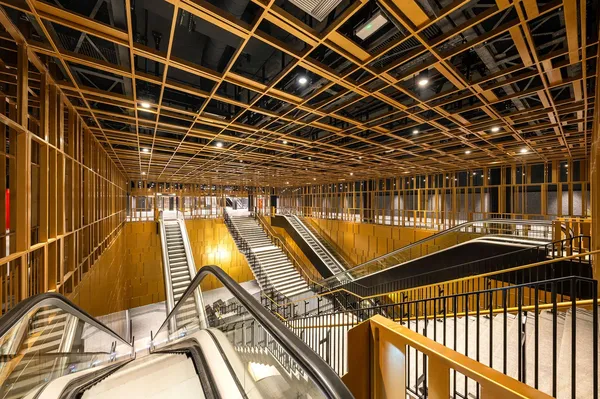
Subterranean Mega-Engineering Beneath 2,000 Years of History
ROME, Lazio — In a historic engineering milestone for Italy’s Eternal City, Roma Capitale and the Italian Ministry of Infrastructure and Transport have entered the heavy excavation phase for the €776 million T1 northern extension of Metro Line C. Awarded to the specialized Metro C Consortium, led by Italian global engineering giant Webuild in partnership with Vianini Lavori and Hitachi Rail, the mega-project will extend Rome's driverless automated metro deep beneath the historic Tiber riverbed, connecting the central monument core at Piazza Venezia directly with the northern sports and cultural districts of Flaminio and Foro Italico.
The project will deliver crucial underground interchange stations at Auditorium (Parco della Musica) and Farnesina, drastically enhancing regional connectivity for millions of annual concertgoers, university students, and daily commuters.
Precision Slurry Shield Tunneling and Archaeological Preservation
Operating in one of the most archaeologically dense subterranean environments on Earth, the engineering consortium is deploying bespoke pressurized Earth Pressure Balance (EPB) Tunnel Boring Machines paired with high-precision fiber-optic laser monitoring grids. The advanced sensor networks continuously monitor surface settlements across centuries-old Renaissance palazzos, ancient Roman ruins, and historic bridges along the Lungotevere with sub-millimeter accuracy.
Like the newly completed multi-level museum station at Colosseo / Fori Imperiali, the new subterranean stations along the northern corridor will incorporate excavated archaeological artifacts directly into their public gallery architecture, transforming routine daily commutes into an immersive historical voyage.
121 Next-Generation Zero-Emission Streetcars for the TVA Tram Network
Parallel to subterranean subway boring, Rome is carrying out a multi-million-euro tramway renaissance, expanding the municipal streetcar network by 31 kilometres across high-ridership arterial boulevards. Groundwork is accelerating along the flagship TVA (Termini–Vatican–Aurelio) Line, which will establish an uninterrupted, whisper-quiet electric surface link between Rome's central rail terminal, the Vatican City, and western residential quarters.
To service the expanding network, municipal transport operator ATAC is taking delivery of 121 next-generation, low-floor zero-emission streetcars manufactured by CAF. Designed with regenerative braking, continuous panoramic glazing, and roof-mounted energy storage modules, the new trams can traverse historic catenary-free architectural plazas on onboard battery power alone, preserving historic sightlines.
Reclaiming Urban Space from Automobile Gridlock
Rome’s civic and environmental leadership emphasized that the tandem rollout of Metro Line C and the TVA tramway marks the definitive turning point in the city's fight against chronic automotive congestion and vehicle-induced smog. By diverting an estimated 80,000 vehicle trips each day away from the historic centre, Rome is actively reclaiming public piazzas for pedestrian promenades, outdoor cafes, and protected cycleways.
The integrated transit revolution ensures that Rome approaches its upcoming international cultural events and Jubilee celebrations with a whisper-quiet, modern, and universally accessible public transit backbone worthy of a 21st-century European capital.
📰 Related Stories
- Rome Opens Colosseo-Fori Imperiali and Porta Metronia 'Archeo-Stations' on Metro Line C in Historic Transit Triumph Rome • Sep 26, 2026
- Milan City Council Accelerates 'Full Electric 2030' Transit Transition and M4 Metro Network Expansion Milan • Sep 24, 2026
- Oksana Masters Claims 11th Paralympic Gold in Emotional Sprint Redemption at Milan Cortina Val Di Fiemme • Mar 11, 2026
- Mount Etna Awakens with Fiery Spectacle as Ash and Smoke Tower Over Sicily Catania • Jun 03, 2025