Brisbane City Council Expands Brisbane Metro Electric Fleet and Underground Cross River Rail Stations
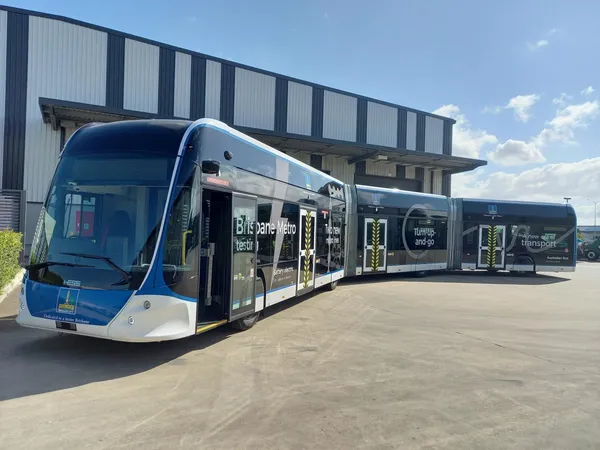
High-Capacity Electric Mobility on Dedicated Transitways
BRISBANE, Australia — Brisbane City Council has solidified operations across its revolutionary Brisbane Metro transit network, deploying a full operational fleet of 59 Swiss-manufactured HESS lighTram 25 bi-articulated electric vehicles across high-volume commuter routes. Operating along dedicated busway alignments, Route M1 (connecting Eight Mile Plains to Roma Street) and Route M2 (linking Royal Brisbane and Women's Hospital to UQ Lakes) provide high-capacity, turn-up-and-go mass transit without competing with street-level vehicular traffic.
Each 24-metre, triple-door Brisbane Metro vehicle accommodates 150 to 170 passengers and features low-floor step-free access, panoramic passenger windows, dedicated wheelchair spaces, and on-board USB charging ports. The zero-emission vehicles utilize flash opportunity-charging overhead pantographs installed at end-of-line depots and key transit stations, replenishing high-capacity traction batteries in under six minutes while maintaining continuous passenger schedules.
Synchronizing with Underground Cross River Rail Infrastructure
The expansion of Brisbane Metro directly complements ongoing construction and mechanical fit-out works across Queensland's landmark Cross River Rail project. Deep beneath central Brisbane, heavy civil engineering crews have completed underground tunneling and are advancing architectural fit-outs, track laying, and European Train Control System (ETCS) digital signalling installations across four underground stations: Albert Street, Roma Street, Woolloongabba, and Boggo Road.
At Roma Street, the new underground rail terminal is being integrated into a world-class multimodal transport interchange. Commuters will be able to transition seamlessly between regional passenger rail, suburban Queensland Rail services, Brisbane Metro electric busways, and long-distance coach networks through wide subterranean concourses equipped with high-speed escalators and expansive digital navigation hubs.
Accelerating Citywide Transport Preparedness Ahead of 2032 Olympics
Municipal transport planners and Queensland State authorities emphasized that the combined capability of Brisbane Metro and Cross River Rail provides the essential mass transit foundation required to support South East Queensland's rapid population growth and the upcoming 2032 Olympic and Paralympic Games. Infrastructure Australia has prioritized further business cases to extend Metro routes north to Carseldine, east to Capalaba, and directly to Brisbane Airport.
By pairing zero-tailpipe-emission electric bus rapid transit with an untangled subterranean passenger rail spine, Brisbane is setting a benchmark for sustainable urban transport in the Asia-Pacific region, removing over 50,000 tonnes of annual carbon emissions from municipal transit corridors.
📰 Related Stories
- Queensland Government Unveils Five-Year Freight Delivery Plan to Modernize Supply Corridors Across Brisbane Brisbane • Sep 24, 2026
- Queensland and Federal Governments Sign Funding Pact for Brisbane 2032 Venues Brisbane • Sep 24, 2026
- Gold Coast Light Rail Stage 3 Commences Full Passenger Operations Connecting Broadbeach to Burleigh Heads Gold Coast • Sep 25, 2026
- Canberra Light Rail Stage 2A Reaches Milestone Track and Stop Construction Along London Circuit Corridor Canberra • Sep 25, 2026