Minneapolis Christian Castro Extradition Bid Denied by Federal Judge
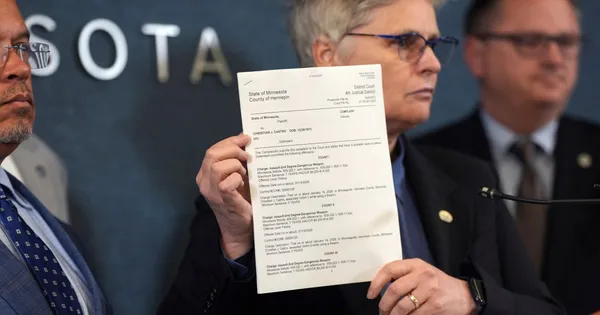
Minnesota vows to continue fight over ICE agent charged after north Minneapolis shooting
A federal judge on Wednesday rejected Minnesota’s emergency attempt to prevent the release of Christian Castro, an Immigration and Customs Enforcement agent charged in connection with a January shooting in north Minneapolis. The ruling leaves Minnesota officials facing the prospect that Castro could be released from a Texas jail before Gov. Greg Abbott acts on the state’s extradition request.
Castro is accused of shooting a Venezuelan migrant in the leg during an encounter in north Minneapolis on Jan. 14, amid the federal immigration enforcement operation known as Operation Metro Surge. Minnesota prosecutors have charged Castro with four counts of second-degree assault and one count of falsely reporting a crime.
Authorities allege Castro falsely claimed that the man had attacked him with a broomstick and a shovel before the shooting. Investigators said video from a nearby camera contradicted that account. Two other people were arrested following the confrontation, according to the information released in the case.
Castro was arrested in Texas on May 29 and has been held at the Cameron County Jail while Minnesota sought his return. The Cameron County sheriff said he was scheduled for release Thursday morning, raising fears among Minnesota officials that he could leave the country before facing the charges filed in Hennepin County.
Judge says dispute is not yet ready for federal intervention
In a 13-page order, U.S. District Judge Fernando Rodriguez Jr. denied Minnesota’s request for a temporary restraining order. The judge found that the dispute was not ripe for court action because the available record did not show that Abbott had formally refused to issue a rendition warrant for Castro.
Rodriguez wrote that Abbott had neither approved nor rejected the request. Instead, the Texas governor asked the secretary of state to investigate Minnesota’s demand and report on Castro’s circumstances and whether he should be surrendered.
The decision does not resolve Minnesota’s broader lawsuit against Abbott, filed last week by Attorney General Keith Ellison. Ellison argues that Texas has delayed the extradition process for an unusually long period and that Abbott is failing to meet constitutional obligations governing the transfer of fugitives between states.
Ellison said Minnesota would continue pursuing the case despite the setback. He said the court recognized Castro as a flight risk and acknowledged the potential harm to Minnesota if he were able to flee to Mexico.
“Christian Castro will not escape justice in Minnesota,” Ellison said, adding that Abbott was “playing with constitutional fire” by not signing the extradition paperwork.
Texas and Minnesota officials trade accusations
Abbott spokesperson Andrew Mahaleris defended the governor after the ruling, saying the Constitution requires Texas to consider extradition demands carefully and permits the governor to determine whether the person sought is a fugitive. Mahaleris called Minnesota Gov. Tim Walz’s claim “absurd” and said the court had rejected an effort to force federal courts to take over Abbott’s authority.
At a recent news conference, Abbott shifted attention to allegations involving fraud in Minnesota federal programs, saying he would not respond to the extradition demand until the state addressed what he described as fraud concerns. Ellison has said the extradition process is ministerial and does not give a governor discretion to withhold a person wanted on criminal charges.
Hennepin County Attorney Mary Moriarty renewed her call for Abbott to sign the warrant, saying he still had the power to stop Castro from leaving jail. The dispute has drawn heightened attention because interstate extradition is ordinarily handled through established procedures rather than prolonged litigation between state governments.
Video shared after the January shooting appeared to show its aftermath, including the wounded man’s wife telling a 911 dispatcher that ICE agents had chased and shot her husband in front of their family. The Department of Homeland Security offered a sharply different account, saying the man fled federal officers, struck a parked vehicle and resisted arrest.
As of Wednesday’s ruling, Castro remained in Texas custody, Minnesota’s lawsuit against Abbott was continuing, and state officials said they would keep working to secure his return to Minneapolis for prosecution.
📰 Related Stories
- Met Council Advances $2.74 Billion METRO Green Line Extension with Track Completion and Systems Testing Across 16 Stations Minneapolis • Oct 14, 2026
- ICE Officer Christian Castro Charged With Lying About Minneapolis Shooting Minneapolis • Sep 04, 2026
- Minnesota Extradition Lawsuit Targets Abbott Over Minneapolis ICE Shooting Case Minneapolis • Aug 19, 2026
- Tragic Incident at Hopkins, Minnesota Daycare: Man Kills Woman and Child Before Taking His Own Life Hopkins • Aug 12, 2026