Family sues Salt Lake City over airport death of Park City man
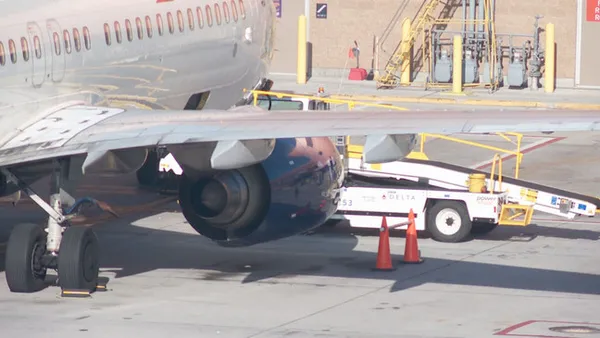
Family Files Lawsuit After Death at Salt Lake City Airport
The family of Park City resident Kyler Efinger has filed a lawsuit against Salt Lake City following his death on January 1, 2024, after he accessed the engine of an aircraft at Salt Lake City International Airport.
According to the lawsuit, Efinger was scheduled to fly on a Delta flight from Salt Lake City to Denver that day to visit his sick grandfather. The filing states that Efinger, who had lived with bipolar disorder for ten years and occasionally experienced visibly disorienting episodes, began to show signs of a manic episode at approximately 9:00 p.m. while inside the airport terminal.
Alleged Behavior Inside Terminal Before Security Breach
The lawsuit claims airport surveillance footage shows Efinger leaving his gate area and walking and speaking with another person at around 9:03 p.m. Lawyers for the family state that Efinger then walked and ran along the moving walkways several times, including moving against the flow of foot traffic.
At 9:28 p.m., Efinger entered the Utah Jazz store near Gate A31. The store manager reported that Efinger was acting unusually and sold him a jersey for less than half price in an effort to speed up the transaction, according to the lawsuit. After Efinger left, the manager noticed he had left behind his roller bag and reported it, prompting Airport Operations to make two announcements asking the bag’s owner to return to the store, the filing states.
The manager told lawyers that Efinger later returned to the store without shoes and with his shirt half unzipped. The lawsuit says Efinger yelled at the manager about his bag and demanded a refund for the jersey. The manager offered to process a return, but Efinger left, running toward his gate as the manager prepared to call the airport emergency line, according to the complaint.
Passage Through Emergency Exit and Security Area
Lawyers for the Efinger family allege the airport took no steps to address Efinger, described in the lawsuit as an incoherent and agitated ticketed passenger. The filing states that Efinger lay on his stomach on the handrail of a moving walkway and attempted to open doors leading to the jet bridge. Janitorial staff reportedly observed these actions and briefly spoke with him.
At approximately 9:54 p.m., the lawsuit claims Efinger went through an emergency exit door near Gate A4. That door led from the Sterile Area of the terminal to the Secure Identification Display Area. The complaint alleges the door was not equipped with a delayed egress locking system, which would have delayed opening and alerted security. From there, lawyers say Efinger ran down a stairway and exited through an outside door that they allege also lacked a security system.
Search Efforts and Communication Issues
The lawsuit states that city employees did not initially know where Efinger had exited and did not clearly communicate this information to officers. The filing quotes one officer referring to the situation as a “wild goose chase.”
According to the complaint, audio communications reflect confusion between dispatchers and officers. At one point, dispatchers informed police that Efinger had exited from a stairwell near Gate A31, although he had actually exited closer to Gate A4, the lawsuit claims. The filing states that officers were not correctly informed of the actual exit location until 10:02 p.m.
Movement Onto Runway and Aircraft Encounter
During the period when officers were searching, the lawsuit claims Efinger reached a runway area at the airport. The filing states that he removed his pants and undergarments, leaving him in a jersey and socks in below-freezing temperatures.
At 10:04 p.m., a city employee received a report from a pilot who had seen Efinger on the runway, according to the lawsuit. The filing states that at 10:07 p.m., Efinger reached the deicing area near runway 34L and ran toward an Airbus A220-100 aircraft that had just begun taxiing for departure.
The lawsuit claims air traffic control instructed the aircraft to begin taxiing and that the city did not inform air traffic controllers or pilots about the presence of a disoriented person on the tarmac. Investigators later received a statement from the aircraft’s pilot that he stopped the plane’s engines only after seeing Efinger, according to the filing.
Access to Aircraft Engine and Fatal Outcome
The lawsuit states that detectives reported Efinger climbed into the cowling of one of the aircraft’s engines while it was running. The filing says his dreadlocked hair was pulled into the engine blades.
The lawsuit asserts that Salt Lake City breached its duty to maintain safe premises, properly monitor security systems, and train airport employees. The Efinger family seeks $300,000 in damages, the cost of attorney’s fees, and is requesting a jury trial. The complaint states the family is bringing the suit both to obtain redress for Efinger’s death and to prevent future incidents.
📰 Related Stories
- No New Domestic Violence Charges for Reality TV Star Taylor Frankie Paul in Utah Case Salt Lake City • Apr 15, 2026
- Utah's Redrawn 1st District Sparks Competitive Democratic Primary Ahead of Midterms Salt Lake City • Mar 31, 2026
- Two Killed, Several Injured in Shooting Outside Salt Lake City Church Salt Lake City • Jan 09, 2026
- Mayor Todd Gloria and City Council Champion Neighborhood Homes Reform and Prioritize Critical Stormwater Upgrades San Diego • Oct 24, 2026