Tennessee Executes Harold Wayne Nichols for 1988 Murder of Karen Pulley
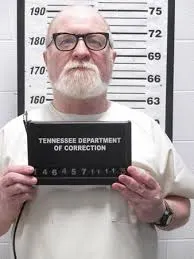
Execution Carried Out in Nashville
Tennessee executed Harold Wayne Nichols by lethal injection on Thursday in Nashville for the 1988 rape and murder of Karen Pulley, a 20-year-old student at Chattanooga State Community College. Nichols was 64 years old at the time of his execution and had been sentenced to death in 1990.
Officials conducted the execution in an execution chamber where Nichols was strapped to a gurney. A sheet covered him to just above his waist, and a long tube extended from an adjoining room to an IV line inserted into the inside of his elbow. Witnesses observed a spot of blood near the injection site during the procedure.
Crimes and Legal Proceedings
Nichols had confessed to killing Pulley and to raping several other women in the Chattanooga area. During his trial, he expressed remorse and admitted that he would have continued his violent behavior if he had not been arrested. Following his conviction, a court sentenced him to death in 1990.
His attorneys sought to have his sentence commuted to life in prison. They argued in a clemency petition that Nichols took responsibility for his crimes and pleaded guilty, and stated that he would be the first person executed in Tennessee for a crime to which he pleaded guilty since the state re-enacted the death penalty in 1978. The effort to commute his sentence was unsuccessful.
On Thursday, the U.S. Supreme Court declined to issue a stay of execution, allowing the lethal injection to proceed as scheduled. Nichols had previously faced two execution dates that did not go forward, including an August 2020 date for which he received a reprieve due to the COVID-19 pandemic.
Final Moments in the Execution Chamber
Before Nichols died, a spiritual adviser, J.R. Davis, prayed over him in the execution chamber. The two recited together the 23rd Psalm and the Lord’s Prayer. At several points during the prayers, they teared up and their voices became strained. After they concluded with “Amen,” Davis continued talking quietly while Nichols nodded along.
Witnesses reported that at one point Nichols took a very heavy breath, causing his torso to rise up, followed by a series of short, huffing breaths that sounded like snorting or snoring. His face turned red and he groaned. His breathing then appeared to slow and stop, and his face became purple before he was pronounced dead.
Family and Witness Reactions
Nichols’ sister, Deborah Perry, attended the execution and watched from a witness chamber. She cried quietly during the procedure and did not speak publicly in the chamber.
Pulley’s sister, Lisette Monroe, wanted to be present for the execution but became too overwhelmed to attend, according to her husband and Pulley’s brother-in-law, Jeff Monroe. He spoke afterward, stating that the family “was destroyed by evil” the night Pulley was killed. He also said, “Taking a life is serious, and we take no pleasure in it,” and described the crimes as involving multiple victims who were stalked and attacked, characterizing the acts as deliberate, violent, and horrific.
In a recent interview prior to the execution, Lisette Monroe said the wait for Nichols’ execution had lasted 37 years. She described her sister as gentle, sweet, and innocent, and said she hoped to focus on happy memories of Pulley after the execution instead of the murder.
Jeff Monroe stated that Pulley had just finished Bible college and was attending Chattanooga State Community College to become a paralegal at the time she was killed.
Statements from Defense and Spiritual Adviser
Nichols’ attorney, Debbie Drew, spoke after the execution. She said Nichols turned his life over to God after speaking to Pulley’s mother decades earlier, shortly after he was sentenced.
Davis, the spiritual adviser, said after the execution that he had known Nichols for a decade through a prison men’s group. He stated that Nichols had committed horrible crimes and gave his view on the meaning of the execution.
Executions in the United States
Including Nichols, a total of 46 men have died by court-ordered execution this year in the United States.
📰 Related Stories
- Nashville Launches Gallatin Pike Safety Overhaul as Metro Advances $37M Affordable Housing Allocations Nashville • Sep 27, 2026
- Nashville Enacts Mandatory Water Conservation Protocols as 57th Nashville Film Festival Convenes Downtown Nashville • Sep 26, 2026
- Vanderbilt Health Celebrates First LPN Nurse Cohort as TDOT Initiates Nashville Pike Bridge Upgrades Nashville • Sep 26, 2026
- Memphis Residents File Federal Class-Action Lawsuit Over SpaceXAI Data Center Noise and Vibrations Memphis • Sep 26, 2026