Hellenic Republic and Elliniko Metro Officially Inaugurate Greece’s First Driverless Thessaloniki Metro with Venizelos Museum Station
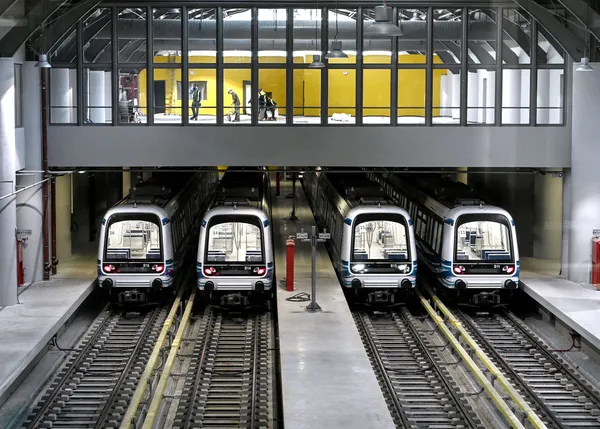
Historic Milestone Delivers Greece’s Premier Automated Rapid Transit Network
THESSALONIKI, Central Macedonia — Marking one of the most momentous transportation and cultural heritage milestones in the modern history of southeastern Europe, the Hellenic Republic, state infrastructure authority Elliniko Metro S.A., and operating consortium THEMA (led by Milan's ATM and Egis) have officially inaugurated the landmark €3+ billion Thessaloniki Metro into commercial revenue passenger service. Spanning 9.6 kilometres of twin subterranean rail tunnels and 13 architecturally distinctive underground stations, the system represents Greece’s very first fully automated, driverless rapid transit railway, fundamentally modernizing urban mobility across the nation’s second-largest metropolitan center.
Co-financed by the Greek State and the European Union through the European Regional Development Fund (ERDF), the Base Line extends from the New Railway Station (Neos Sidirodromikos Stathmos) through the historic urban core to the southern terminus at Nea Elvetia and the 50,000-square-metre Pylaia maintenance depot. The launch concludes a complex multi-decade engineering journey that successfully harmonized modern subterranean construction with the unprecedented preservation of classical antiquities.
The Venizelos Archaeological Miracle: An In-Situ Roman & Byzantine Museum Station
The crowning international triumph of the Thessaloniki Metro is its seamless synthesis of mass transit and world-class archaeology, highlighted by two landmark museum stations:
- Venizelos Station: Universally celebrated as an archaeological wonder, the station incorporates an in-situ subterranean open-air museum. Commuters descend into the station to walk above an impeccably conserved 84-metre section of the 6th-century AD marble-paved Roman Decumanus Maximus highway, flanked by Byzantine commercial shops, monumental porticos, and public baths suspended beneath a monumental floating concrete slab.
- Agia Sofia Station: Features a permanent subterranean exhibition displaying a monumental Roman marble semicircular public plaza, antique fountain basins, and ancient craft workshops unearthed during excavation.
- New Railway Station: Establishes a major intermodal hub directly linking the driverless metro with Hellenic Train regional and national rail lines, long-distance bus networks, and city transit routes.
- Nea Elvetia & Pylaia Depot: Anchors the southeastern terminus with high-capacity bus transfer interchanges, park-and-ride facilities, and the centralized Operations Control Centre (OCC).
Cutting-Edge Hitachi Rail GoA4 Automation and High-Frequency Operation
Delivered by Hitachi Rail as part of the turnkey system contract, Thessaloniki Metro deploys state-of-the-art Grade of Automation 4 (GoA4) unattended train technology. The fleet consists of 33 four-car articulated electric trainsets equipped with full walk-through gangways, high-capacity air conditioning, onboard digital infotainment displays, and dedicated spaces for passengers with reduced mobility.
Governed by advanced Communications-Based Train Control (CBTC) digital signaling, trains operate safely at headways of just 90 seconds during peak commuting periods. For universal safety, every station platform is fitted with automated full-height glass platform screen doors (PSDs) that open only when trainsets are precisely docked, completely eliminating platform edge hazards.
Transforming Urban Mobility and Slashing Citywide Carbon Emissions
The driverless metro delivers profound travel-time savings across Thessaloniki's densely populated urban core. End-to-end journeys between Nea Elvetia and the New Railway Station take just 17 minutes—slashing commute times by more than half compared to navigating congested surface boulevards like Egnatia Street by car or bus.
Projected to transport more than 254,000 passengers daily, the metro removes over 57,000 private vehicles from metropolitan roadways each day, eliminating approximately 212 metric tonnes of greenhouse gas emissions daily. By perfectly blending ancient Byzantine heritage with 21st-century autonomous transit engineering, the Thessaloniki Metro stands as a historic triumph for Greece and Europe.
📰 Related Stories
- Tragic Helicopter Collision During Wildfire Combat Near Athens Kills Two Crew Members Megara • Aug 02, 2026
- Firefighters Combat Major Wildfires Across Southern Europe Athens • Jul 06, 2026