IndyGo Ramps Up $170M Blue Line BRT Construction Across Washington Street Under City-County Council Budget
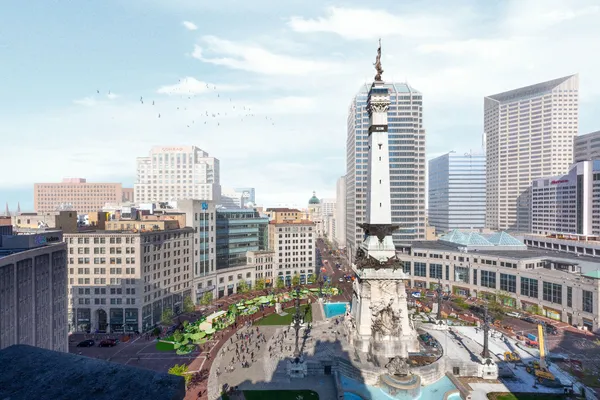
IndyGo Accelerates Heavy Construction Along 24-Mile Blue Line BRT Corridor
INDIANAPOLIS, Indiana — Transforming transit infrastructure across Marion County, IndyGo and the Indianapolis City-County Council advanced major roadway and utility reconstruction in mid-October 2026 along the 24-mile Blue Line Bus Rapid Transit (BRT) route. Representing IndyGo’s largest active capital investment at $170.7 million, the rapid transit corridor will connect the Indianapolis International Airport through downtown to the eastern boundary of Cumberland along historic Washington Street (U.S. 40).
Construction crews are executing intensive utility relocations in coordination with Citizens Energy Group and telecommunication providers, replacing aged subsurface drainage, pouring modern sidewalks, and installing ADA-compliant curb ramps ahead of vertical rapid transit station construction.
Federal FTA Small Starts Grant Safeguards Capital Project Delivery
The massive multi-million-dollar transit project is backed by a $150 million Small Starts grant from the Federal Transit Administration (FTA), combined with local income tax (LIT) revenue bonds authorized by the City-County Council. Once operational in late 2028, the Blue Line will operate high-capacity electric bus fleets in dedicated lanes with optical guidance and signal prioritization, cutting commuter transit times between downtown and the airport by over 20 minutes.
Transportation leaders highlighted that the Blue Line modernizes nearly 10 miles of complete streets, delivering new pedestrian crossings and safety lighting along a corridor historically characterized by high vehicular speeds and pedestrian safety hazards.
Council Champions Transit-Oriented Affordable Housing Partnerships
Recognizing the corridor’s potential to spark private commercial investment, the City-County Council’s Metropolitan Development Committee is collaborating with local community development corporations (CDCs) to establish transit-oriented affordable housing land banks. Council members emphasized that pairing heavy transit investment with proactive housing protections guarantees longtime Washington Street residents and business owners share in the economic revitalization.
📰 Related Stories
- Indianapolis City-County Council Readies Final Vote on $1.9B Budget as Lawmakers Advance TRUST Surveillance Ordinance Indianapolis • Oct 18, 2026
- IndyGo Accelerates 24-Mile Blue Line BRT Sewer and Utility Work Along Washington Street as Purple Line Ridership Climbs Indianapolis • Oct 18, 2026
- IndyGo Accelerates 24-Mile Blue Line Construction as City-County Council Evaluates Landmark Parking Reform Proposal Indianapolis • Oct 17, 2026
- GMG Racing Wins Thrilling Indianapolis 8 Hour Endurance Race as Former Postal Worker Pleads Guilty in $34M Scheme Indianapolis • Oct 13, 2026