City of San Diego Advances $3 Billion Pure Water Program Toward Operational Startup to Secure Local Drinking Water Supply
Major Commissioning Milestone for Southern California's Water Independence
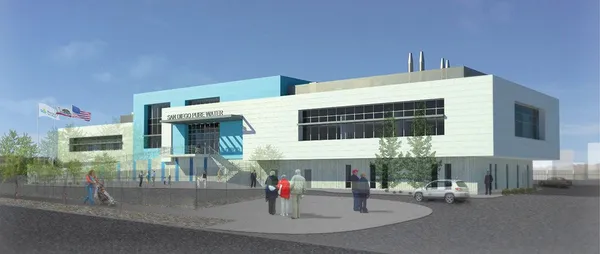
SAN DIEGO, California — In a transformative environmental and civil engineering milestone for the southwestern United States, the City of San Diego and the Public Utilities Department are accelerating final commissioning and testing across Phase 1 of the landmark $3 billion Pure Water San Diego Program. Designed as the single largest multi-year infrastructure investment in municipal history, the initiative will deliver 30 million gallons per day (MGD) of high-quality, drought-resilient purified drinking water directly into Miramar Reservoir, laying the foundation to supply nearly half of San Diego's water demand locally by 2035.
Historically dependent on importing up to 85 percent of its municipal drinking water from the Colorado River and the State Water Project in Northern California, San Diego's Pure Water program establishes critical security against persistent droughts, rising imported water tariffs, and regional climate fluctuations. Phase 1 represents a monumental shift toward closed-loop circular water management, recycling treated wastewater into pristine drinking water through rigorous, multi-barrier purification technology.
Five-Stage Multi-Barrier Purification Process Exceeds Strict Safety Standards
At the technological heart of the system is the newly constructed North City Pure Water Facility, paired with the comprehensive expansion of the adjacent North City Water Reclamation Plant (NCWRP) led by prime contractor Kiewit. The facility harnesses a rigorous five-stage purification train that removes micro-pollutants, viruses, bacteria, pharmaceuticals, and dissolved minerals to levels exceeding all state of California and federal Safe Drinking Water Act standards.
The purification process begins with ozonation and biological activated carbon (BAC) filtration to break down organic compounds, followed by high-pressure microfiltration membranes that capture particles 300 times smaller than a human hair. Next, reverse osmosis (RO) forces water through semi-permeable membranes under intense pressure to filter out microscopic impurities, salts, and forever chemicals (PFAS). The final safeguard pairs ultraviolet (UV) light disinfection with hydrogen peroxide advanced oxidation to neutralize trace organic molecules, ensuring unmatched chemical and biological purity.
Subaqueous Reservoir Pipeline and Morena Conveyance Tunnel Engineering
Civil engineering joint ventures have completed critical subterranean and underwater conveyance networks linking the purification facilities across urban San Diego. Key milestones include the precision placement of an eight-mile pipeline terminating in a one-mile subaqueous branched diffuser pipeline laid across the bed of the Miramar Reservoir, engineered to ensure optimal natural circulation and blending with regional reservoir water.
Simultaneously, specialized tunneling teams have navigated intricate underground utility alignments, microtunneling deep beneath Interstate 805 and executing heavy dewatering and ground-freezing maneuvers at the Morena Pump Station and conveyance corridor. The newly laid pipelines route recycled wastewater northward from metropolitan sewer sheds without disrupting arterial highway corridors or established residential communities in Clairemont, University City, and Scripps Ranch.
Regional Economic Growth, Labor Standards, and Environmental Benefits
San Diego civic leaders and water authorities highlighted that Phase 1 construction has generated more than 2.5 million craft labor hours under enforceable Project Labor Agreements (PLAs), employing local union trades, veterans, and local apprentices. Furthermore, the Pure Water program delivers immediate environmental safeguards for coastal waters by diverting millions of gallons of treated effluent away from the Point Loma Wastewater Treatment Plant, drastically cutting ocean discharges into the Pacific marine ecosystem.
With rigorous operational verification underway and full facility startups progressing smoothly, San Diego stands as a global model for water sustainability. Phase 2 planning is already advancing to double purification capacity to over 83 MGD by 2035, securing clean, affordable, and climate-resilient water for generations of San Diego families and businesses.
📰 Related Stories
- Mayor Todd Gloria Appoints Bethany Bezak as Chief Operating Officer as San Diego Council Advances Dark Money Election Reforms San Diego • Oct 18, 2026
- San Diego Land Use Committee Advances $4.2B Midway Rising Project to Full Council as City Considers $50M Wastewater Loan San Diego • Oct 18, 2026
- San Diego City Council Reviews Midway Rising Master Agreement as County Accelerates Affordable Housing Deliveries San Diego • Oct 17, 2026
- Denver City Council Establishes $65M Transit Land Trust as RTD Reviews $1.34B Budget for 2027 Denver • Oct 18, 2026