Chicago Transit Authority Awards $2.93 Billion Contract to Walsh-VINCI to Build Landmark Red Line Extension
A Generational Leap for Transit Equity on Chicago's Far South Side
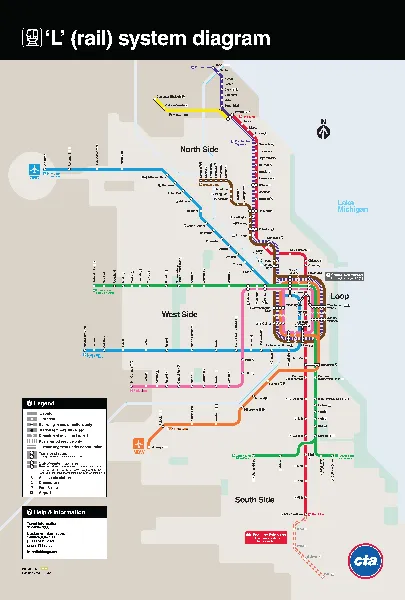
CHICAGO, Illinois — In a historic milestone for transportation equity, civic infrastructure, and urban mobility, the Chicago Transit Authority (CTA) Board has officially approved the award of a transformative $2.93 billion design-build contract for the monumental Red Line Extension (RLE) project to Walsh-VINCI Transit Community Partners. Marking the single largest capital infrastructure investment in the CTA's history, the megaproject will extend the iconic Red Line rail corridor 5.6 miles southward from its long-standing southern terminal at 95th/Dan Ryan to 130th Street, delivering rapid transit access to historically underserved communities across Chicago's Far South Side.
Supported by a transformative $1.973 billion federal Capital Investment Grant (New Starts) from the Federal Transit Administration (FTA) alongside local Transit Facility Improvement Area (TFIA) financing, the extension will cut commuting times between 130th Street and the Chicago Loop by up to 30 minutes. The direct rail link eliminates cumbersome, multi-leg bus transfers for tens of thousands of daily riders, connecting residents to regional employment centers, healthcare systems, and educational campuses.
Walsh-VINCI Consortium to Deliver 5.6 Miles of Elevated Guideway and Modern Systems
The Walsh-VINCI Transit Community Partners joint venture unites prominent infrastructure constructors Walsh Construction and VINCI Construction Grands Projets, supported by lead engineering and design partners SYSTRA and EXP. The scope of civil works encompasses the construction of 5.6 miles of dual-track elevated heavy rail guideway, advanced traction power substations, automated train control signaling, and integrated communications networks.
The project also includes the development of a state-of-the-art 360-railcar storage yard and modern overhaul maintenance facility located near 120th Street and Cottage Grove Avenue. This high-capacity maintenance depot will service CTA’s next-generation 7000-series railcars, enhancing overall fleet reliability, reducing maintenance turnaround times, and supporting elevated train frequency across the entire 26-mile Red Line trunk.
Four Universally Accessible ADA Stations and Multimodal Interchanges
The extension introduces four brand-new, universally accessible passenger stations designed to full Americans with Disabilities Act (ADA) guidelines: 103rd Street (near Eggleston Avenue), 111th Street (near Eggleston Avenue), Michigan Avenue (near 116th Street), and the terminal hub at 130th Street (adjacent to the Bishop Ford Freeway and Altgeld Gardens).
Each station will feature high-efficiency LED-illuminated elevated platforms, redundant dual elevators, modern escalators, weather-protected passenger waiting areas, interactive digital transit arrival displays, and customer assistant stations. To facilitate seamless regional multimodal commuting, the project will establish expansive park-and-ride commuter parking facilities accommodating over 5,400 vehicles, alongside dedicated bus transfer turnarounds and protected bicycle storage racks.
Catalyst for South Side Economic Revival, Workforce Training, and Decarbonization
Civic leaders, community advocates, and municipal officials hailed the contract approval as a watershed moment for South Side economic revitalization. The CTA has implemented stringent local workforce participation goals, requiring that significant portions of the construction labor force and subcontracts be awarded to Disadvantaged Business Enterprises (DBE) and local South Side trade workers, supported by targeted union apprenticeship and pre-apprenticeship workforce training programs.
Beyond economic stimulus, the Red Line Extension will play a pivotal role in advancing the City of Chicago's Climate Action Plan. By shifting an estimated millions of private vehicle trips to clean, electrified heavy rail annually, the extension will substantially curb tailpipe emissions, improve regional air quality along the Interstate 94 corridor, and establish a green, high-speed transit lifeline that will anchor community development for generations to come.
📰 Related Stories
- Chicago City Council Approves Permanent Citywide 'Smart Streets' Automated Transit Enforcement Across All 50 Wards Chicago • Oct 17, 2026
- Chicago City Council Moves to Make Smart Streets Automated Transit Enforcement Permanent Across All 50 Wards Chicago • Oct 17, 2026
- 55,000 Runners Power 47th Chicago Marathon to Victory as Downtown Hotel Workers Strike and City Launches Film Tour Chicago • Oct 13, 2026
- San Antonio International Airport Celebrates Terminal C Topping-Off as VIA Advances $1.1B Rapid Green Line Transit Network San Antonio • Oct 17, 2026