Chicago Breaks Ground on Historic $5.7 Billion CTA Red Line Extension to 130th Street
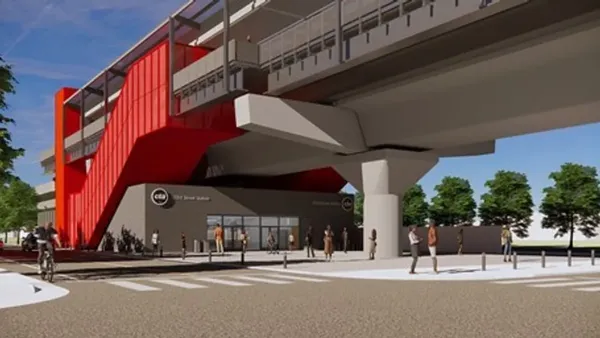
Historic Transit Equity Milestone for Chicago's Far South Side
CHICAGO, Illinois — In the single largest infrastructure endeavor in the transit authority's history, the Chicago Transit Authority (CTA) and the City of Chicago have officially broken ground on the long-awaited $5.7 billion Red Line Extension (RLE) Project. Extending the CTA's busiest rapid transit artery by 5.5 miles southward from its current terminus at 95th/Dan Ryan down to 130th Street, the transformative project fulfills a multi-decade civic promise to bring modern, rapid rail transit to historically underserved communities across Chicago's Far South Side, including Roseland, Pullman, West Pullman, and Riverdale.
Backed by a record-shattering $1.966 billion Full Funding Grant Agreement (FFGA) secured through the Federal Transit Administration's (FTA) Capital Investment Grants program—the largest federal transit grant ever awarded to the CTA—the megaproject connects over 100,000 South Side residents directly to downtown jobs, educational institutions, and healthcare centers while slashing average commute times by up to 30 minutes each way.
Walsh-VINCI Consortium Executes $2.9 Billion Mainline Design-Build Contract
Mainline engineering and construction of the extension are being spearheaded by Walsh-VINCI Transit Community Partners, a powerhouse joint venture comprising Chicago-based Walsh Construction and global engineering giant VINCI Construction, following the formal award of a landmark $2.9 billion design-build contract. The consortium's scope encompasses the construction of elevated dual-track guideways, heavy civil viaducts, power sub-stations, and modern train storage and maintenance facilities.
A central pillar of the engineering footprint is a sprawling, 54-acre state-of-the-art train rail yard and maintenance shop facility situated near 120th Street and Cottage Grove Avenue. Capable of storing and servicing up to 104 CTA railcars, the facility will accommodate next-generation 7000-series railcars, ensuring high-frequency dispatching and continuous fleet reliability across the entire 26-mile Red Line trunk alignment.
Four State-of-the-Art Accessible Stations with Multimodal Transit Hubs
The 5.5-mile extension introduces four brand-new, fully ADA-compliant stations at 103rd Street, 111th Street, Michigan Avenue (near 116th Street), and the southern terminus at 130th Street. Each station is designed with contemporary architectural canopies, high-capacity escalators, dual elevators, real-time arrival digital displays, and extensive public art installations celebrating local South Side heritage and culture.
To maximize regional connectivity, the stations incorporate multimodal ground transportation hubs featuring dedicated CTA bus turnaround loops, sheltered pedestrian plazas, secure bicycle parking facilities, and extensive park-and-ride commuter lots offering over 1,500 total parking spaces. The 130th Street terminus will also provide seamless pedestrian connections to the nearby Altgeld Gardens community and future regional active transit trails.
Catalyst for Equitable Transit-Oriented Development and Economic Growth
Beyond steel and rails, city officials and the Chicago Department of Planning and Development (DPD) are leveraging the RLE to trigger comprehensive Equitable Transit-Oriented Development (ETOD). The city’s adopted 95th Street and RLE corridor plans allocate millions of dollars in Tax Increment Financing (TIF) and municipal bond proceeds to stimulate affordable housing construction, commercial retail plazas, fresh food grocery markets, and neighborhood health clinics adjacent to each new station site.
Furthermore, the project includes stringent local hiring and Disadvantaged Business Enterprise (DBE) participation commitments, ensuring hundreds of millions of dollars flow directly to minority- and women-owned contractors and neighborhood residents through union apprenticeship programs. Scheduled for complete operational commissioning in 2030, the Red Line Extension stands as an enduring benchmark of racial equity, urban reinvestment, and sustainable mass mobility in the American Midwest.
📰 Related Stories
- 55,000 Runners Power 47th Chicago Marathon to Victory as Downtown Hotel Workers Strike and City Launches Film Tour Chicago • Oct 13, 2026
- McCormick Place Convenes Global APTA Transit Summit as Mayor Johnson Unveils Youth Climate Action Fund Chicago • Oct 06, 2026
- Chicago Hosts Global APTA Transit Summit as CTA Balances $2.23B Operations Under Historic State Funding Chicago • Oct 06, 2026
- Chicago Aldermen Draw Red Lines on $882M Deficit as CDOT Activates Michigan Avenue Dedicated Bus Lane Chicago • Oct 05, 2026