RTC Southern Nevada Advances $378M Maryland Parkway BRT Red Line as Clark County Adopts Transit-Oriented Zoning
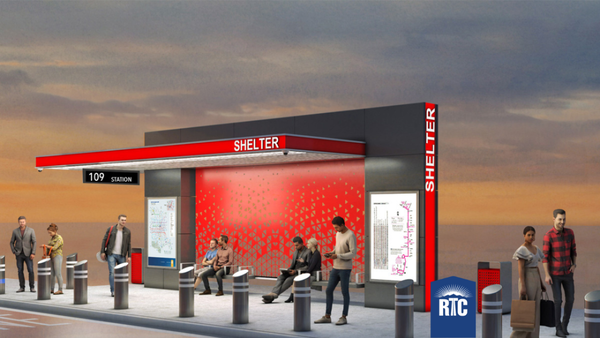
Heavy Construction Accelerates on $378 Million Maryland Parkway BRT Spine
LAS VEGAS, Nevada — Reaching transformative structural milestones along Southern Nevada’s most heavily traveled commercial artery, the Regional Transportation Commission of Southern Nevada (RTC) accelerated physical construction in October 2026 on the $378 million Maryland Parkway Bus Rapid Transit (BRT) 'Red Line'. The 12.5-mile high-capacity transit corridor provides a modern transit spine connecting the Las Vegas Medical District, Downtown Las Vegas, the University of Nevada Las Vegas (UNLV), and Harry Reid International Airport.
Civil engineering contractors completed underground utility line relocations and roadway median installations between Sahara Avenue and Flamingo Road, preparing the right-of-way for specialized dedicated transit lanes, raised level-boarding curbs, and automated traffic signal preemption hardware.
Clark County and City of Las Vegas Enact Transit-Oriented Development Standards
Working in close legislative alignment with transit delivery, the Clark County Board of Commissioners and the Las Vegas City Council ratified coordinated Transit-Oriented Development (TOD) zoning districts along Maryland Parkway. The progressive zoning rules encourage high-density mixed-use residential buildings, ground-floor retail, shade tree canopies, and pedestrian-friendly boulevards within walking distance of designated BRT stations.
County officials noted that establishing pedestrian-first zoning prevents car dependency, protects regional air quality, and attracts private commercial investment to revitalize aging retail plazas into walkable, dynamic neighborhood hubs.
Airport Transit Link and Modern Rider Amenities Near Integration
At the corridor's southern terminus, RTC engineers coordinated with Harry Reid International Airport administrators to complete passenger transfer concourses linking BRT platforms directly to Terminal 1 and Terminal 3 baggage claims. The system will feature zero-emission hydrogen fuel-cell articulated buses equipped with high-speed passenger Wi-Fi and real-time electronic displays.
Regional transportation leadership highlighted that uniting rapid bus transit with dense mixed-use zoning guarantees sustainable mobility and economic vitality for generations of valley residents and visitors.
📰 Related Stories
- RTC Deploys Zero-Emission Hydrogen Buses on 12.5-Mile Red Line as $22M I-11 SafeTech Corridor Takes Shape Las Vegas • Oct 06, 2026
- Las Vegas Deploys $2.7M Arterial LED Safety Lighting as RTC Celebrates Week Without Driving Las Vegas • Oct 05, 2026
- RTC Champions Week Without Driving as Las Vegas Advances Boulder Highway BRT and Housing Attainability Las Vegas • Oct 05, 2026
- El Paso Implements Sun Metro Rising Network Restructuring as City Secures $5.5M Federal Clean Fuel Grant El Paso • Oct 13, 2026