Las Vegas Deploys $2.7M Arterial LED Safety Lighting as RTC Celebrates Week Without Driving
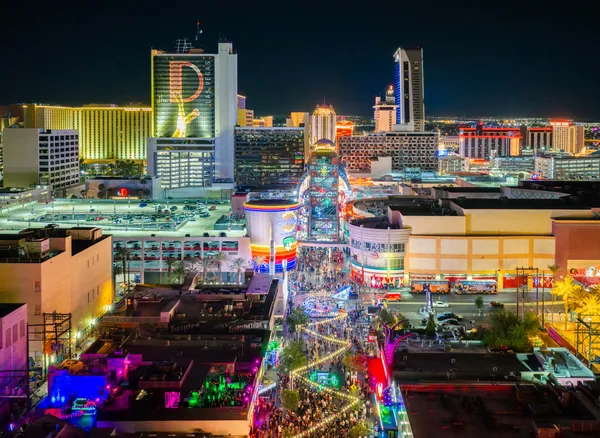
City Council Authorizes $2.7 Million High-Visibility LED Safety Corridor Program
LAS VEGAS, Nevada — Enacting critical pedestrian protection measures across Southern Nevada, the Las Vegas City Council approved and broke ground on a $2.7 million arterial lighting modernization initiative in October 2026. Municipal Public Works crews began replacing aging high-pressure sodium street lamps with energy-efficient smart LED fixtures across designated high-injury transit corridors, including Sahara Avenue, Rainbow Boulevard, Charleston Boulevard, and Buffalo Drive.
Featuring automated photocell controls and high-clarity illumination profiles, the smart lighting project dramatically boosts nighttime sightlines at mid-block crosswalks and high-traffic signalized intersections, providing essential safeguards for pedestrians, transit riders, and motorists.
RTC Southern Nevada Champions Mobility During National 'Week Without Driving'
In public transit advocacy, the Regional Transportation Commission of Southern Nevada (RTC) spearheaded valley-wide participation in the national 'Week Without Driving' (October 1–8, 2026). The initiative invites elected officials, community leaders, and residents to experience daily transit routines without personal vehicles, utilizing RTC transit buses, paratransit services, and regional micro-mobility corridors.
Transit planners showcased ongoing testing along the Maryland Parkway Bus Rapid Transit (BRT) 'RED LINE', which provides dedicated transit lanes connecting Harry Reid International Airport, the UNLV campus, and the Downtown Las Vegas Medical District. In tandem, the agency launched its annual 'Biketoberfest' community campaign, offering promotional bike-share passes across the Arts District and Fremont Street.
Development Coalition Addresses Attainable Housing and Conservation Standards
Alongside transit advancements, regional builders and civic planners announced the formation of the Southern Nevada Development Coalition to tackle attainable housing shortages and land constraints across Clark County. Meeting with Southern Nevada Water Authority representatives, the group reinforced stringent water-conservation building standards to maintain drought resilience under ongoing Lake Mead Tier 1 operational thresholds.
📰 Related Stories
- RTC Champions Week Without Driving as Las Vegas Advances Boulder Highway BRT and Housing Attainability Las Vegas • Oct 05, 2026
- RTC Operates Zero-Emission Maryland Parkway Red Line as Las Vegas Medical District Adds $130M Infrastructure Las Vegas • Oct 05, 2026
- RTC Southern Nevada Operates 12.5-Mile Red Line BRT as Las Vegas Medical District Adds Healthcare Housing Las Vegas • Oct 05, 2026
- RTC Southern Nevada Expands Hydrogen Red Line BRT Operations as Clark County Advances Maryland Parkway TOD Corridors Las Vegas • Oct 03, 2026