Monaco Expands Seawater Heat Pump Thalassothermal Network to Decarbonize Monte-Carlo Historic Landmarks
Harnessing the Mediterranean Sea as the Principality’s 'Blue Gold'
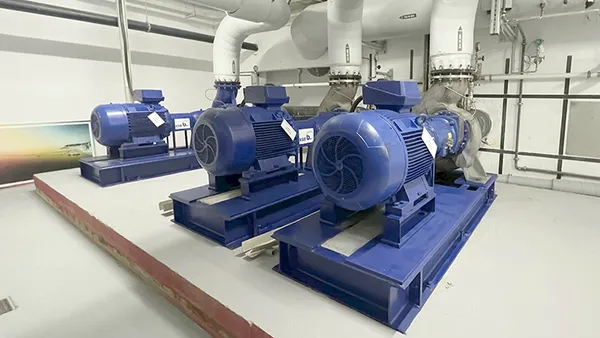
MONTE-CARLO, Monaco — Spearheading global innovation in marine renewable energy, the Prince’s Government of Monaco and national energy operator SMEG (Société Monégasque de l'Électricité et du Gaz), through its specialized subsidiary SeaWergie, are expanding the Principality’s world-renowned thalassothermie (seawater heat pump) networks. Widely hailed as Monaco’s 'blue gold' (*l'or bleu*), this cutting-edge thermal technology now supplies approximately 17 percent of the Principality’s total thermal energy consumption, serving as the cornerstone of Monaco's national climate strategy.
First pioneered in Monaco as early as 1960 at the Rainier III Nautical Stadium, thalassotherapy utilizes the massive thermal inertia of the Mediterranean Sea. Deepwater intake pipelines extend up to 1.4 kilometres offshore to draw seawater from depths of 80 metres, where Mediterranean water temperatures remain remarkably stable at approximately 14.5°C year-round. Operating through closed-circuit heat exchangers without chemical additives or environmental disturbance, the water’s calories are extracted for heating in winter and absorbed for cooling in summer before the seawater is cleanly returned to the marine environment.
Decarbonizing Monte-Carlo’s World-Famous Heritage and SBM Palaces
The latest strategic expansion of the Larvotto and Condamine thalassothermal loops brings clean marine heating and cooling directly into the historic heart of Monte-Carlo. Landmark heritage properties operated by the prestigious Société des Bains de Mer (SBM)—including the iconic Casino de Monte-Carlo, the Hôtel de Paris Monte-Carlo, the Hôtel Hermitage, and the modernized Café de Paris—have phased out legacy fuel oil and fossil gas boilers in favor of direct connection to the seawater network.
This technological transition delivers immense thermodynamic efficiency, achieving a Coefficient of Performance (COP) exceeding 4.0—generating more than four units of heating or cooling energy for every single unit of electricity consumed. By eliminating rooftop cooling towers and mechanical chillers, the conversion also reduces urban acoustic noise, saves valuable real estate, eliminates localized Legionella risks, and safeguards the architectural integrity of Monte-Carlo's Belle Époque facades.
High-Capacity Subterranean Infrastructure and Smart Microgrids
Engineered within Monaco’s extraordinarily dense, vertical urban footprint, the thalassothermal distribution networks feature miles of insulated underground piping running beneath Boulevard du Larvotto, Avenue Princesse Grace, and Place du Casino. Advanced computerized telemetry monitors water pressure, temperature differentials, and flow rates in real time, dynamically balancing thermal supply across residential towers, commercial offices, and luxury hospitality venues.
The marine energy network is tightly integrated with the Principality's broader smart grid initiatives, which combine seawater thermal loops with rooftop solar photovoltaic installations and smart metering. During extreme summer heatwaves, the deep cold seawater provides clean, effortless air conditioning without imposing severe peak strain on the regional electrical transmission grid.
Anchoring Monaco’s Bold 2030 and 2050 Climate Commitments
Monegasque environmental authorities and government ministers emphasized that thalassothermie is indispensable to achieving the ambitious goals established by His Serene Highness Prince Albert II. Under Monaco's White Paper on the Energy Transition, the Principality is legally mandated to slash greenhouse gas emissions by 55 percent by 2030 (relative to 1990 levels) and attain complete carbon neutrality by 2050.
Because building heating, ventilation, and air conditioning (HVAC) historically represented more than 35 percent of Monaco's territorial greenhouse emissions, replacing hydrocarbon fuels with marine energy systematically eliminates thousands of tons of CO2 annually. Monaco’s scalable thalassothermal model offers a proven, highly replicable blueprint for coastal cities across the globe striving to build climate resilience and fossil-free urban environments.
📰 Related Stories
- Monaco Delivers 1,790-Space Parking des Salines and Underground Pedestrian Gallery to Ease Cross-Border Traffic Jardin Exotique • Oct 05, 2026
- Monaco Delivers Landmark Testimonio II Megaproject Integrating 348 State Residences, Bay House Villas, and New International School Larvotto • Oct 05, 2026
- Monaco Advances €300 Million Fontvieille Commercial Centre and Waterfront Regeneration Project Designed by Massimiliano Fuksas Fontvieille • Oct 05, 2026
- Monaco Advances Public Integration of €2 Billion Mareterra Eco-District Marking Historic Six-Hectare Sovereign Territorial Expansion Monte Carlo • Oct 05, 2026