Chicago Transit Authority Accelerates $5.7 Billion Red Line Extension as Heavy Civil Construction and Utility Relocations Advance South of 95th Street
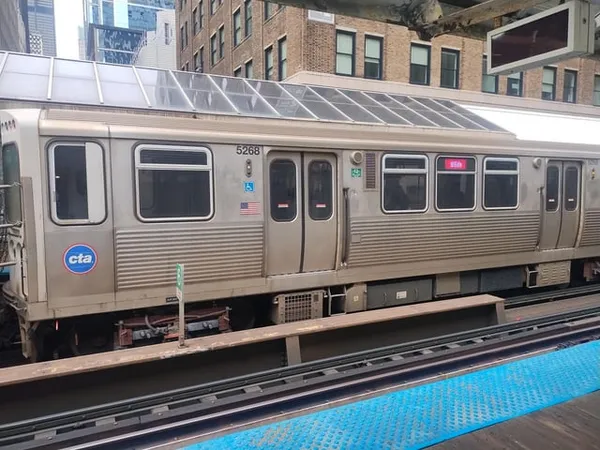
Delivering the Largest Capital Transit Project in CTA History
CHICAGO, Illinois — In a transformative stride toward transit equity and economic revitalization across Chicago's Far South Side, the Chicago Transit Authority (CTA) and municipal infrastructure leadership have accelerated major construction milestones on the landmark $5.7 billion Red Line Extension (RLE). Extending the transit network's busiest artery 5.5 miles south from the existing 95th/Dan Ryan terminal to 130th Street, the generational megaproject represents the most substantial capital infrastructure investment in the transit agency's history.
Backed by a historic $1.97 billion Full Funding Grant Agreement (FFGA) from the Federal Transit Administration (FTA) alongside regional transit funding partnerships, the extension is engineered to dismantle transit deserts that have burdened Far South Side communities for decades. Once completed, the modern heavy rail corridor will cut round-trip commute times from the 130th Street corridor to downtown Chicago's Loop by up to 30 minutes, delivering direct, affordable access to regional employment, healthcare, and educational hubs.
Heavy Civil Engineering, Haul Routes, and Utility Relocations
Civil engineering teams under the project's primary contractor, Walsh-VINCI Transit Community Partners, are executing wide-scale corridor preparation and subterranean utility realignments. Crews have established dedicated heavy-equipment haul routes, dismantled obsolete structures along the right-of-way, and begun column foundation drilling for the massive elevated viaduct segments that will carry trainsets smoothly over freight lines, industrial parcels, and waterways.
The engineering scope features four brand-new, fully accessible ADA-compliant transit stations located at 103rd Street, 111th Street, Michigan Avenue (near 116th Street), and 130th Street. Each station complex is designed with state-of-the-art multimodal facilities, including multi-modal bus boarding bays, extensive park-and-ride commuter lots, protected bicycle parking enclosures, and step-free elevators connecting seamlessly from street level to sheltered platforms.
Modern Rail Yard and Environmental Sustainability Benchmark
Crucial to the operational scalability of the Red Line is the concurrent construction of a comprehensive rail storage yard and maintenance shop facility near 120th Street. Spanning tens of acres, the state-of-the-art rail yard will house, service, and inspect up to 104 CTA rail cars, significantly easing fleet maintenance bottlenecks across the entire transit network and ensuring rapid train deployment during peak morning and evening travel surges.
The entire extension is designed according to rigorous sustainable transit benchmarks. Stormwater management systems incorporate bioswales and permeable ground surfaces to minimize runoff into local water bodies, while energy-efficient regenerative traction power substations will capture kinetic braking energy from decelerating trains to feed directly back into the electrical grid.
Catalyzing Thousands of Union Jobs and Neighborhood Revitalization
City and state leadership emphasized that the Red Line Extension is a generational economic engine for Illinois. The project is projected to generate more than 25,000 direct and indirect jobs, bolstered by stringent workforce development mandates that prioritize local hiring, union apprenticeships, and contracts for Disadvantaged Business Enterprises (DBE). By connecting long-overlooked neighborhoods to the metropolitan transit grid, Chicago is creating an enduring model for equitable urban transit development in the 21st century.
📰 Related Stories
- CTA Advances Elevated Column Drilling on $3.6B Red Line Extension as O'Hare 21 Satellite Terminals Expand Chicago • Oct 04, 2026
- Northern Illinois Transit Authority Assumes Oversight Over CTA and Metra as Chicago Installs Michigan Avenue Bus Lane Chicago • Oct 03, 2026
- CTA and Walsh-VINCI Finalize Engineering for $2.9B Red Line Extension as Council Transportation Committee Convenes Hearing Chicago • Oct 03, 2026
- Mayor Bowser Advances 1,200-Home Economic Package as D.C. Council Strengthens Tenant Protections Washington • Oct 04, 2026