D.C. Council Reviews Final RFK Campus Master Plan Delivering 6,500 Homes, Gold Line BRT, and 30% Affordability Mandate
D.C. Council Holds Decisive Public Hearing on Final RFK Campus Master Plan
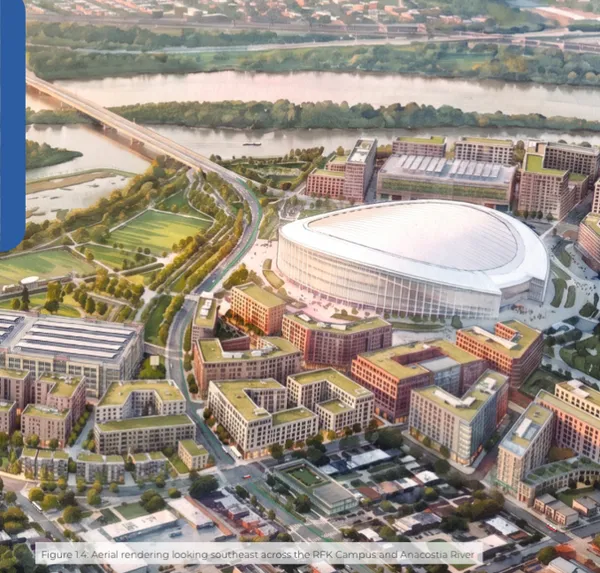
WASHINGTON, D.C. — Marking a historic turning point for the District of Columbia’s eastern riverfront, the Council of the District of Columbia convened a pivotal oversight hearing following the official transmittal of the finalized RFK Campus Master Plan by Mayor Muriel Bowser and the D.C. Office of Planning. The visionary roadmap establishes binding land-use, zoning, and design parameters for the 180-acre federally transferred riverfront site, setting up a final council adoption vote before the conclusion of 2026.
The campus framework balances generational civic entertainment with urgent municipal priorities. While accommodating a world-class, 65,000-seat multi-purpose stadium envisioned as the future home of the NFL's Washington Commanders targeting a 2030 kickoff, the plan reserves more than 70 percent of the site for residential neighborhoods, civic green spaces, and cultural facilities.
6,500 Mixed-Income Homes with Enforceable 30% Affordability Mandate
At the center of the housing component is an enforceable requirement guaranteeing that the campus will deliver up to 6,500 residential units, with at least 30 percent permanently designated as income-restricted affordable housing for working-class District households. The master plan also integrates neighborhood retail, local grocery options, child-care facilities, and dedicated incubator space reserved for Ward 7 and Ward 8 minority entrepreneurs.
More than 30 percent of the 180-acre footprint will remain permanently protected parkland, featuring an expansive indoor-outdoor community SportsPlex, ecological wetland boardwalks along Kingman Lake, and seamless pedestrian-bicycle connections to the Anacostia Riverwalk Trail network.
Gold Line Bus Rapid Transit and WMATA Stadium-Armory Modernization
Emphasizing a rigorous 'transit-first' mobility paradigm, the final plan prioritizes the Gold Line Bus Rapid Transit (BRT) corridor, establishing a dedicated, high-frequency transit link between Union Station and an on-campus multi-modal transit plaza along dedicated transit rights-of-way on H Street and Benning Road NE.
Concurrently, the Washington Metropolitan Area Transit Authority (WMATA) finalized plans to enhance mezzanine flow and gate capacity at the adjacent Stadium-Armory Metro station, while scheduling increased train frequencies during marquee events. District officials praised the master plan as an equitable, transit-connected blueprint for generational urban prosperity.
📰 Related Stories
- D.C. Council Holds Decisive Hearing on 180-Acre RFK Campus Master Plan Delivering 6,500 Homes and Gold Line Rapid Transit Washington • Sep 30, 2026
- D.C. Council Holds Decisive Public Hearing on Final 180-Acre RFK Campus Master Plan as Bowser Advances 1,200 New Homes Washington • Sep 30, 2026
- Mayor Bowser Delivers Final 180-Acre RFK Campus Master Plan to D.C. Council Featuring 6,500 Homes, Stadium, and Gold Line BRT Washington • Sep 28, 2026
- El Paso Submits $2.5 Million Multifamily Housing Plan to HUD as Sun Metro Deploys Upper East Side Microtransit El Paso • Oct 03, 2026