Chicago Advances Historic $5.7 Billion CTA Red Line Extension as Walsh-VINCI Joint Venture Drills Foundations for Four Far South Side Stations
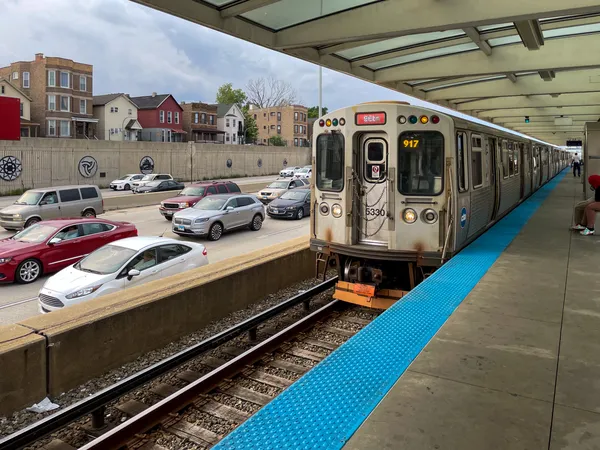
Heavy Construction Accelerates on Chicago's Historic $5.7 Billion Transit Corridor
CHICAGO, Illinois — Marking the most transformative infrastructure and transit-equity investment in the modern history of western Great Lakes transportation, heavy civil engineering is actively progressing on the Chicago Transit Authority (CTA) $5.7 billion Red Line Extension (RLE) project. Extending 5.5 miles south from the existing 95th/Dan Ryan terminal to 130th Street, the generational expansion directly bridges decades of spatial isolation for Chicago’s historic Far South Side neighborhoods, including Roseland, Pullman, West Pullman, and Riverdale.
Once commissioned, the high-speed rail line will slash travel times between 130th Street and the downtown Chicago Loop by more than 30 minutes, providing hundreds of thousands of south suburban commuters with a direct, single-seat journey to world-class employment centers, educational institutions, and healthcare complexes.
$2.9 Billion Design-Build Contract Awarded to Walsh-VINCI Joint Venture
Field operations are spearheaded by Walsh-VINCI Transit Community Partners, a formidable design-build joint venture uniting heavy civil construction leaders Walsh Construction and VINCI Construction Grands Projets, alongside premier engineering firms EXP and SYSTRA under a $2.9 billion primary contract. Construction crews are drilling deep reinforced concrete foundation columns and caissons, relocating legacy municipal utilities, and erecting elevated guideway bents along the Union Pacific railroad right-of-way.
The project delivers four brand-new, fully ADA-accessible rapid transit stations at 103rd Street, 111th Street, Michigan Avenue (near 116th Street), and 130th Street. Each multi-modal terminal features enclosed climate-controlled passenger platforms, high-speed traction elevators, extensive covered bus interchange bays, bicycle storage facilities, and spacious commuter park-and-ride surfaces.
Modern 120th Street Rail Yard and High-Efficiency Traction Power
Crucial to systemwide operations, the extension incorporates a sprawling, state-of-the-art train storage yard and heavy maintenance shop near 120th Street capable of servicing up to 104 rail cars. The facility features computerized train inspection portals, automated pantograph and third-rail diagnostic sensors, and closed-loop stormwater recapture ponds.
The alignment also deploys next-generation electrical traction power substations engineered with regenerative train dynamic braking systems. These substations channel kinetic deceleration energy back into the local power grid, substantially reducing CTA’s net electricity consumption while maintaining uncompromising train frequencies during peak morning and evening travel windows.
Transit-Oriented Communities and Long-Term South Side Renaissance
Backed by nearly $2 billion in federal Capital Investment Grants (CIG) through the Federal Transit Administration (FTA) alongside designated local Transit Tax Increment Financing (TIF) districts, the RLE serves as a powerful catalyst for municipal urban regeneration. The City of Chicago Department of Planning and Development (DPD) is implementing its comprehensive RLE Transit-Oriented Development (TOD) Strategic Plan across surrounding station precincts.
The master plan incentivizes mixed-income workforce housing, pedestrian-friendly commercial corridors, grocery stores, and community healthcare facilities adjacent to each new station. Municipal leaders and neighborhood advocates emphasized that the Red Line Extension delivers long-overdue economic revitalization, clean air mobility, and generational wealth-building opportunities for Chicago's South Side families.
📰 Related Stories
- Chicago Introduces 12-Month Data Center Moratorium Ordinance as CTA Reports 27.9% Drop in Transit Crime Chicago • Sep 30, 2026
- 29 Chicago Aldermen Form Budget Accountability Coalition Over FY 2027 Deficit as West Garfield Park Missing-Middle Housing Advances Chicago • Sep 29, 2026
- Chicago City Council Weighs Dueling Rental Reform Ordinances as Mayor Johnson Advances West Garfield Park Infill Housing Chicago • Sep 28, 2026
- San Francisco Rallies Around Transit Funding Measures to Avert 2027 Deficit as SB 79 Accelerates Housing Groundbreakings San Francisco • Sep 30, 2026