Queensland Advances ETCS Level 2 Signalling Validation and Station Commissioning Across $6.3 Billion Cross River Rail Project
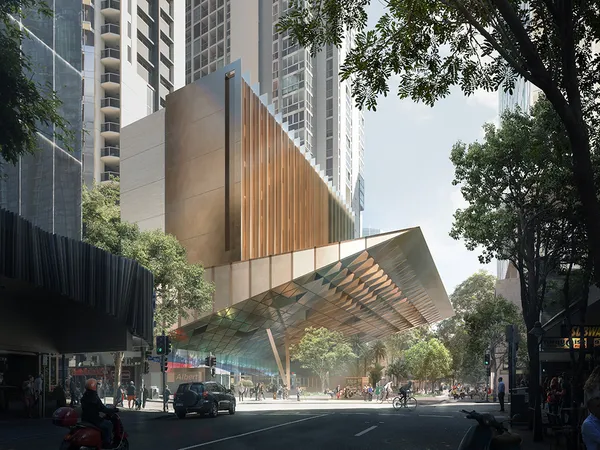
Unlocking Brisbane's Subterranean Heavy Rail Bottleneck
BRISBANE, Queensland — Progress on Queensland's single largest public transport infrastructure undertaking reached a critical operational milestone as the Cross River Rail Delivery Authority and Queensland Rail advanced extensive dynamic validation and signaling commissioning across the transformational $6.3 billion Cross River Rail project. Engineered to unblock the acute capacity bottleneck across the Brisbane River and inner-city network, the 10.2-kilometre rail corridor incorporates 5.9 kilometres of twin tunnels bored deep beneath the riverbed and central business district.
With heavy civil structural works completed across the entire alignment, engineering teams are now rigorously testing integrated train propulsion, ventilation safety, and electrical substations ahead of scheduled passenger services.
Pioneering European Train Control System (ETCS) Level 2 in Queensland
A centerpiece of the project’s technological modernization is the deployment of the European Train Control System (ETCS) Level 2—a state-of-the-art digital cab-signaling standard being introduced to the Queensland rail grid for the first time. The digital train control system communicates continuously between onboard computers and trackside radio block centers, enabling real-time speed monitoring and automated safety interventions.
Dynamic nighttime and weekend pilot testing along the Shorncliffe line and the central underground tunnel segment has verified centimeter-accurate train positioning and instantaneous data transmission, paving the way for significantly closer train headways and safer operational frequencies across South East Queensland.
Four Landmark Underground Stations Advance Toward Final Fitout
The project delivers four architecturally iconic underground stations: Boggo Road, Woolloongabba, Albert Street, and Roma Street. Station fitout teams have completed the installation of full-height glass platform screen doors (PSDs), heavy-duty express escalators, and intuitive architectural wayfinding concourses.
The Albert Street station—the first new inner-city railway hub built in Brisbane’s CBD in more than a century—descends 31 metres below ground, directly linking commuters to Queen Street Mall, corporate office towers, and the Queen’s Wharf leisure precinct via step-free high-speed elevator shafts.
Catalyst for Brisbane 2032 Olympic Transit and Regional Growth
Transport authorities highlighted that Cross River Rail serves as the foundational backbone for regional mobility preparing for the Brisbane 2032 Olympic and Paralympic Games. By doubling passenger capacity through the inner core, the system facilitates seamless transfers to the all-electric Brisbane Metro rapid bus network at Roma Street and Boggo Road.
The project slashes travel times from the Gold Coast and Sunshine Coast corridors, eliminating tens of thousands of private vehicular trips daily, lowering carbon emissions, and steering Brisbane toward an integrated, sustainable metropolitan future.
📰 Related Stories
- Queensland Advances ETCS Level 2 Signalling Validation and Station Commissioning Across $6.3 Billion Cross River Rail Project Brisbane • Sep 28, 2026
- Brisbane Metro Advances Capalaba Transit Expansion as Cross River Rail Enters Critical Systems Commissioning Phase Brisbane • Sep 26, 2026
- Brisbane City Council Expands Brisbane Metro Electric Fleet and Underground Cross River Rail Stations Brisbane • Sep 25, 2026
- Victoria Launches 1,000-Tonne TBM Alice from Burwood as Subterranean Excavation Commences on $34.5 Billion Suburban Rail Loop East Melbourne • Sep 27, 2026