Chicago Transit Authority Transitions to Reconfigured Regional Board Under NITA Act as City Manages FY 2026 Fiscal Operations
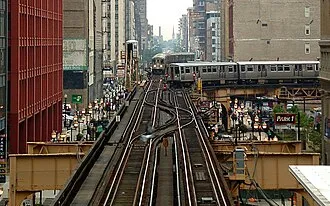
Reconfigured CTA Board Expands Regional and Suburban Governance
CHICAGO, Illinois — The Chicago Transit Authority (CTA) entered a significant new chapter of regional governance in late September 2026, implementing board restructuring mandated under the comprehensive Northern Illinois Transit Authority (NITA) provisions of state transit legislation (SB2111). The newly configured board architecture establishes expanded representation for suburban Cook County and neighboring collar counties, shifting away from historic structures where the Chicago Mayor held an outright voting majority.
Regional transportation planners highlighted that the reformed governance model fosters closer operational synchronicity between the CTA, Metra regional rail, and Pace suburban bus systems, paving the way for harmonized fare structures and integrated multi-agency scheduling across northeastern Illinois.
Stable Transit Budgets Avoid Service Curtailments and Fare Increases
During a series of public Budget Town Hall forums conducted across city neighborhoods, CTA leadership confirmed that the agency's 2026 and 2027 fiscal projections remain fully balanced. State-level transit stabilization funding successfully neutralized previously forecast 'fiscal cliff' deficits, ensuring the CTA avoids damaging route cutbacks, scheduled fare increases, or frontline staff layoffs.
The fiscal stability enables the CTA to aggressively accelerate its systemwide 'Refresh and Renew' station enhancement initiative, deploying specialized deep-cleaning and repair crews to overhaul lighting, tiling, and platform signage across downtown subway stations and neighborhood 'L' terminals.
City Hall Evaluates Municipal Deficit Balancing Mechanisms
Across downtown at City Hall, Mayor Brandon Johnson and members of the Chicago City Council continued working through administrative measures to manage an $85 million municipal deficit for the 2026 fiscal year. The administration’s fiscal strategy centers on refinancing approximately $500 million in outstanding municipal bonds to capture lower interest debt service costs, combined with prudent departmental spending controls.
Aldermen emphasized that responsible financial stewardship combined with robust, dependable public transit remains essential to driving downtown commercial revival and strengthening neighborhood economic development across Chicago's South and West Sides.
📰 Related Stories
- CTA Advances Heavy Construction on $5.7 Billion Red Line Extension as Walsh-VINCI Mobilizes 130th Street Transit Corridor Chicago • Sep 26, 2026
- Chicago City Council Deliberates One-Year Data Center Moratorium as West Loop Approves 26-Story Residential Tower Chicago • Sep 26, 2026
- Northern Illinois Transit Authority Assumes Regional Transit Oversight as CTA Completes Phase 1 of $2.1 Billion Red-Purple Modernization Chicago • Sep 26, 2026
- Chicago Transit Authority Advances $5.7 Billion Red Line Extension to 130th Street with Four New Stations Chicago • Sep 25, 2026