HS2 Curzon Street Station Rises Above Ground with Platform Deck Beams as West Midlands Metro Eastside Tram Extension Advances
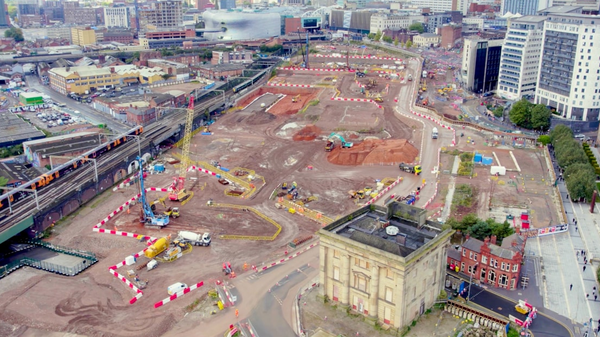
Above-Ground Superstructure Takes Shape at Birmingham High-Speed Hub
BIRMINGHAM, United Kingdom — Marking a decisive leap forward in Britain’s flagship high-speed rail megaproject, HS2 Ltd and delivery partner Mace Dragados Joint Venture (MDJV) have reached a major engineering milestone at Birmingham Curzon Street Station with the structural installation of the terminal’s first precast concrete platform deck beams. Following the flawless subterranean installation of 2,011 deep foundation piles across the Eastside construction site, the massive zero-emission terminal is officially rising above ground level, beginning vertical framework buildouts for its seven high-capacity passenger platforms.
Engineered to be the first railway terminus in the world to achieve BREEAM 'Outstanding' environmental certification, the station superstructure incorporates low-carbon geopolymer concrete, expansive arched timber trusses harvested from sustainably managed forests, and a sweeping curved glass roof designed to maximize natural day-lighting and passive ventilation.
Subterranean Metro Tram Integration and Eastside Extension Delivery
Crucial to Curzon Street’s architectural masterplan is its seamless integration with the West Midlands Metro Eastside Extension, managed by the Midland Metro Alliance on behalf of Transport for West Midlands (TfWM). Phase 1 of the tram extension—bringing new tram stops to Moor Street Station and Millennium Point—is actively carrying passengers, while Phase 2 civil tunneling and track laying are progressing through Meriden Street and New Canal Street.
The tram alignment passes directly beneath the Curzon Street station concourse, providing a fully sheltered, barrier-free interchange that links high-speed rail passengers directly into Birmingham’s regional light rail grid and forward into the historic cultural and media quarter of Digbeth.
Birmingham City Council Approves Strategic Highway and Urban Realm Plan
Synchronizing municipal infrastructure with HS2 construction, the Birmingham City Council Cabinet formally approved an updated statutory approach to urban highways and public realm stewardship across the city center. The policy framework establishes priority zero-emission bus transit loops, expanded protected cycle highways along Corporation Street and Bull Street, and a tree-canopied civic pedestrian boulevard connecting Curzon Street Station directly to St. Philip's Cathedral square.
Local planning officials noted that the harmonized urban realm ensures seamless connectivity between the high-speed rail terminal, major educational institutions including Birmingham City University, and surrounding commercial development zones.
Generational Economic Catalyst for the West Midlands Region
Regional business bodies and civic leaders emphasized that the physical rise of Curzon Street Station solidifies Birmingham's status as the definitive high-speed crossroads of the United Kingdom. Forecast to support more than 36,000 regional jobs and unlock upwards of £10 billion in private commercial and residential regeneration, the project establishes a world-class, net-zero transport gateway that permanently redefines British regional connectivity.
📰 Related Stories
- Transport for West Midlands Restores Passenger Rail to Historic Camp Hill Line with New Stations at Moseley Village, Kings Heath, and Pineapple Road Birmingham • Sep 27, 2026
- West Midlands Metro Unveils High-Tech Wednesbury Operations Control Centre Ahead of Dudley Line Passenger Launch Birmingham • Sep 25, 2026
- Birmingham City Council Advances £350 Million Central Heart Transformation of Former Rackhams Site Birmingham • Sep 24, 2026
- Edinburgh Council Approves Strategic Business Case for Southern Tram Line to BioQuarter and Royal Infirmary as Granton Route Aligns with Regional Studies Edinburgh • Sep 26, 2026